New River
The New River is a 255-mile (410 km) waterway formed by the junction of the North and South forks in Ashe County, northwestern North Carolina. It flows…
What is New River?
The New River is a 255-mile (410 km) waterway formed by the junction of the North and South forks in Ashe County, northwestern North Carolina. It flows northward through Virginia and into West Virginia, where it joins the Gauley River to form the Kanawha River.12
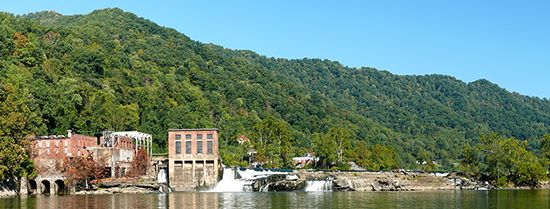
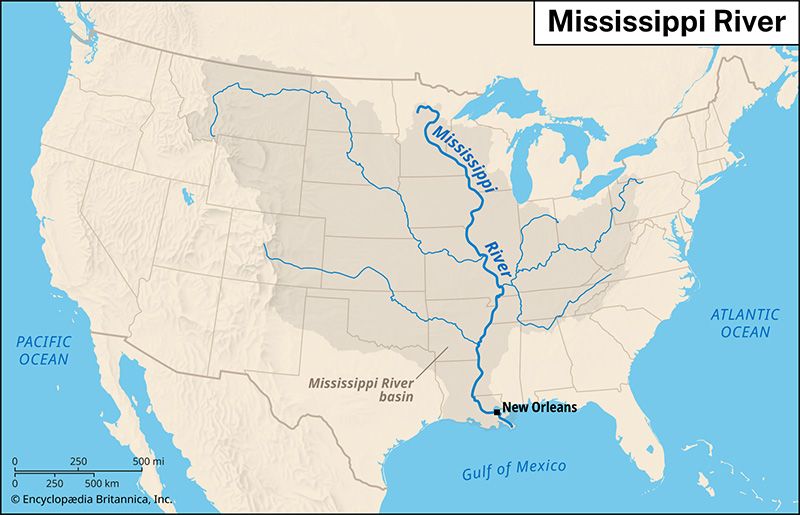
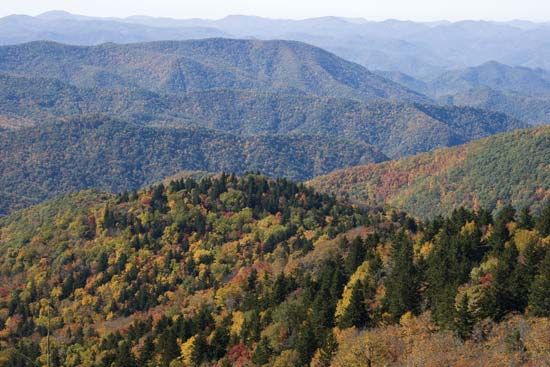
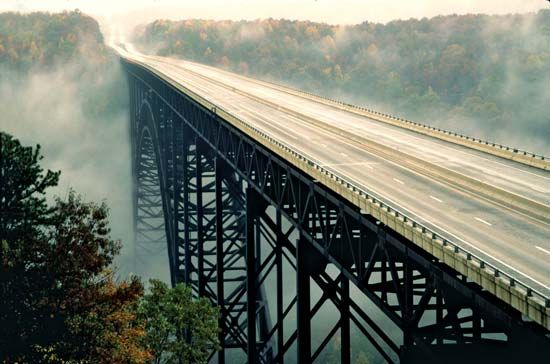
The river is significant for its role in hydroelectricity, with notable features including Claytor Lake in Virginia and the Bluestone Dam in West Virginia. The river is also home to the New River Gorge Bridge, a prominent steel arch span, and the New River Gorge National Park and Preserve, which protects over 70,000 acres of the surrounding landscape. Geologically, the river rises on the Blue Ridge and eventually empties into the Mississippi River basin.12
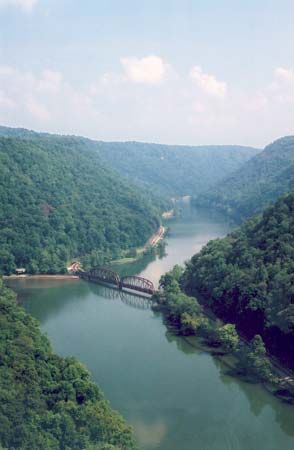
How did the New River Gorge become a national park?
The New River Gorge was initially established as the New River Gorge National River in 1978 to protect the area’s natural and cultural resources. Following decades of recognition for its scenic and recreational value, it was officially redesignated as the New River Gorge National Park and Preserve in 2021.1
This designation encompasses more than 70,000 acres (28,300 hectares) along approximately 50 miles (80 km) of the river, preserving the rugged landscape that features the iconic New River Gorge Bridge.1
What makes the New River one of the oldest rivers in the world?
The claim that the New River is one of the oldest rivers in the world is a common geological perspective, though it is more accurate to state that many major rivers in the Appalachian Mountains are older than the mountains themselves.1
The New River’s status as an ancient waterway is tied to the geological evolution of the Appalachians. As the mountains were thrust upward through tectonic activity—specifically the Alleghenian orogeny—the land rose to block the rivers’ original westward paths toward an ancient sea that once covered the American Midwest. Because these rivers already existed, they maintained their courses by cutting through the rising rock, a process that created the spectacular water gaps, canyons, and gorges characteristic of the region.1
This continuous process of erosion and landscape shaping over geologic time demonstrates that the river predates the current mountain structures, which were formed by massive folding and faulting.1
How do dams like the Bluestone Dam affect the river’s ecosystem?
Dams like the Bluestone Dam significantly alter river ecosystems by transforming natural, free-flowing waterways into managed reservoirs. These structures impact the environment in several key ways:
- Sediment Trapping: Dams act as barriers that capture much of a river’s sediment load within their reservoirs. This process reduces the downstream supply of nutrients and materials necessary for maintaining natural riverbed habitats and delta health.42
- Habitat Alteration: By creating large, still-water reservoirs, dams inundate original landscapes, which can lead to the loss of terrestrial flora and fauna and the displacement of human communities.5
- Disruption of Migratory Paths: Dams often block or impede the movement of aquatic species, particularly migratory fish. While technologies like fish passes (such as ladders or locks) are sometimes employed to mitigate these effects, they are not always successful in preventing population declines.15
- Flow Regulation: Dams are frequently used for flood control and power generation, which changes the natural timing and volume of water flow. This shift can fundamentally alter the riparian ecosystem that relies on seasonal fluctuations.645
Sources
- New River — Encyclopædia Britannica
- Appalachian Mountains - Drainage — Encyclopædia Britannica
- Appalachian Mountains - Geology of the Appalachian Mountains — Encyclopædia Britannica
- dam - Fish passes — Encyclopædia Britannica
- river - Environments of deposition — Encyclopædia Britannica
- dam - Reservoirs — Encyclopædia Britannica
- dam - Rise of environmental and economic concerns — Encyclopædia Britannica
Published on · 3 min read