Nighthawk
The term "Nighthawk" refers to several distinct subjects:
What is Nighthawk?
The term “Nighthawk” refers to several distinct subjects:
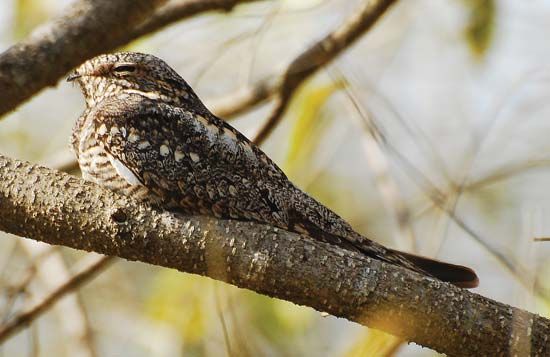
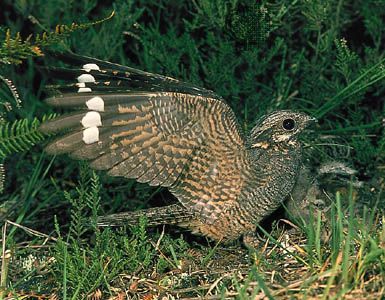
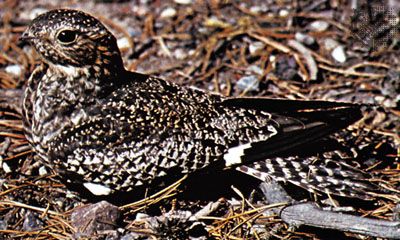
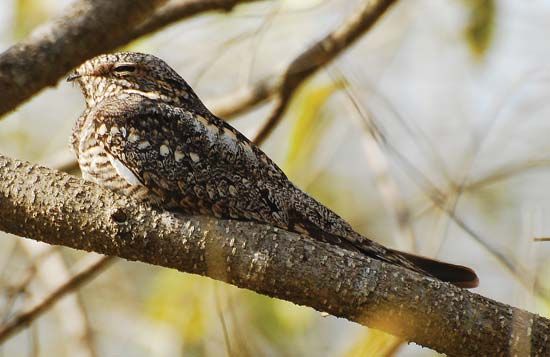
- Biology: Nighthawks are birds in the subfamily Chordeilinae, part of the Caprimulgidae family. Despite their name, they are not related to true hawks; they are caprimulgiform birds related to nightjars. These nocturnal or crepuscular birds are known for catching insects in flight and their distinct diving courtship displays.12
- Aviation: The F-117A Nighthawk was the world’s first operational stealth ground-attack fighter. Developed by Lockheed and introduced in 1983, it utilized an unconventional, faceted design to minimize radar reflection.3
- Idiomatic Usage: The term is also used to describe a person who is habitually active late at night, synonymous with a “night owl”.42
How does stealth technology make an aircraft invisible to radar?
Stealth technology minimizes an aircraft’s visibility to radar by reducing the “radar echoes”—electromagnetic radiation—that bounce off the vehicle and return to an enemy receiver. This is achieved through several key design strategies:5
- Shape Optimization: Designers control the aircraft’s external geometry to deflect radar waves away from the transmitter. This is accomplished either through complex, large-radius curved surfaces or by using a series of small, flat, carefully oriented planes. Avoiding right angles and sharp curves is essential to prevent radar energy from reflecting back to its source.6
- Radar-Absorbent Materials: Aircraft are often treated with specialized surface coatings and materials designed to absorb radar energy rather than reflect it.57
- Internal Carriage: To maintain a smooth profile, weapons, fuel, and ordnance are carried internally rather than on external protrusions, which would otherwise increase the radar signature and aerodynamic drag.56
- Signature Management: Engineers also minimize infrared signatures by shielding engine exhausts and avoiding afterburners, which produce significant heat. Additionally, stealth aircraft often rely on non-emitting navigation systems, such as inertial guidance, to avoid detection by electronic warning systems.567
What are the physical characteristics of the nightjar family?
The Caprimulgidae family, commonly known as nightjars, consists of sparrow- to raven-sized birds, typically measuring between 14 and 55 cm (about 5.5 to 22 inches) in length. They are characterized by several distinct physical features:910
- Plumage and Coloration: They possess soft, cryptically patterned plumage in shades of gray, brown, or reddish brown, which provides effective camouflage against the ground or tree bark.1110
- Head and Bill: Nightjars have flat heads with large eyes placed laterally, rather than in a frontal facial disk like owls. They are famous for their enormous gapes and wide mouths, which are often fringed with rictal bristles to assist in catching insects.1011
- Body Structure: These birds have short legs and relatively long wings. Their soft plumage is an adaptation that facilitates noiseless flight.1011
- Anatomical Details: Taxonomic classification is defined by specific structures, including the form of the bill, the arrangement of pelvic muscles and flexor tendons, the presence of powder down patches, and the structure of the feet and legs, which are not raptorial.1210
Why do some birds prefer to hunt for insects at night?
Some birds, particularly those in the order Caprimulgiformes, prefer to hunt at night primarily to exploit abundant food sources that are uniquely available during those hours, such as night-flying insects. By foraging at night, these birds face little to no competition from other avian species, allowing them to occupy specialized ecological niches.9
Beyond the availability of prey, nocturnal activity offers several survival advantages:
- Reduced Predation: Hunting at night helps birds avoid visual predators that are active during the day.15
- Environmental Protection: Nocturnal behavior protects birds from the harsh effects of direct sunlight, high ambient temperatures, and low humidity, which can cause dehydration and heat stress.15
- Niche Specialization: Different species have evolved to hunt in specific environments—ranging from open savannas to forest clearings—at different times or from different perches, which minimizes competition between nocturnal insectivores.9
While most nocturnal birds rely on acute hearing to navigate and locate prey in the dark, some, like the oilbird, have developed echolocation to move freely in total darkness.131416
Sources
- Nighthawk — Encyclopædia Britannica
- military aircraft - The first operational craft — Encyclopædia Britannica
- nighthawk — Merriam-Webster
- nighthawk — Merriam-Webster
- stealth — Encyclopædia Britannica
- F-117 — Encyclopædia Britannica
- stealth: Top Questions — Encyclopædia Britannica
- military aircraft - Stealth technology — Encyclopædia Britannica
- Caprimulgidae — Encyclopædia Britannica
- Nightjar — Encyclopædia Britannica
- Caprimulgiform - Distinguishing taxonomic characters — Encyclopædia Britannica
- Caprimulgiform — Encyclopædia Britannica
- Caprimulgiform - Hibernation — Encyclopædia Britannica
- Caprimulgiform - Natural history — Encyclopædia Britannica
- How Do Birds Hear? — Encyclopædia Britannica
- Why do birds chirp at night? — Encyclopædia Britannica
- Caprimulgiform - Habitat — Encyclopædia Britannica
- Caprimulgiform - Food habits — Encyclopædia Britannica
- bat - Activity patterns — Encyclopædia Britannica
Published on · 3 min read