Norderney
Norderney is an island located off the North Sea coast of Germany. As one of the East Frisian Islands, it is part of the state of Lower Saxony and is…
What is Norderney?
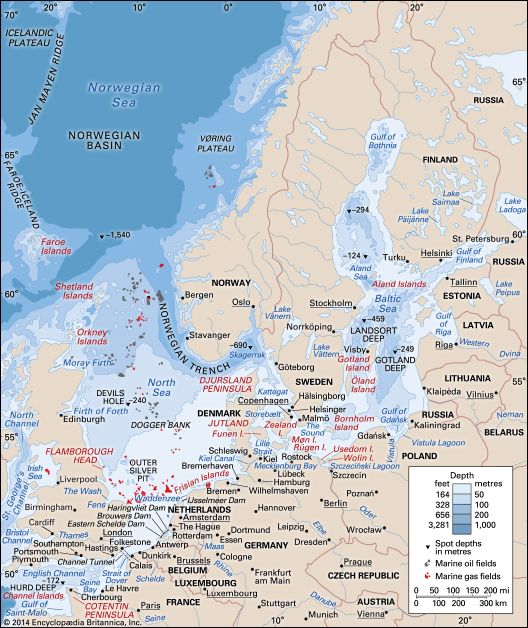
Norderney is an island located off the North Sea coast of Germany. As one of the East Frisian Islands, it is part of the state of Lower Saxony and is situated within the Wadden Sea National Park.1
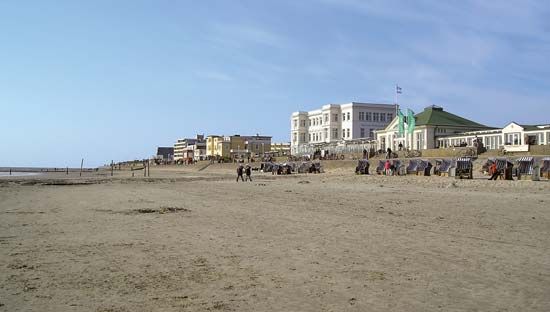
Measuring approximately 8 miles long and 1.25 miles wide, the island features dunes reaching heights of 68 feet. Its southern side faces the sheltered waters of the Wadden Sea, while the northern coast remains exposed to the open sea. The island is home to the town of Norderney, which serves as a fishing port and holds the distinction of being the oldest German seaside resort, established in 1797. Historically favored by international society, the town is well-regarded for its mild climate and expansive beaches, with ferry access connecting it to the mainland town of Norden.1
What are the East Frisian Islands?
The East Frisian Islands (German: Ostfriesische Inseln) are a chain of islands belonging to Germany that extend eastward from the Ems River estuary to the Jade Channel. They are part of the broader Frisian Islands chain, which stretches along the North Sea coast of Europe.2
The main islands in this group, listed from west to east, include:
- Borkum
- Juist
- Norderney
- Baltrum
- Langeoog
- Spiekeroog
- Wangerooge2
Additionally, the small islands of Scharhörn and Neuwerk are located near the Elbe River estuary. These islands are generally smaller than those in the West Frisian group and feature scattered farmsteads and small villages. The economy of the region is heavily supported by tourism, with popular resorts such as Nordseebad Borkum and Norderney attracting many visitors during the summer months. The islands are separated from the mainland by shallow tidal waters and mud flats known as Watten, and they are associated with the Wadden Sea region.234
What is the Wadden Sea National Park?
The Wadden Sea National Park refers to a system of protected areas established to conserve the unique tidal-flat ecosystems along the North Sea coast. In 2009, UNESCO designated the broader Wadden Sea tidal-flat region as a World Heritage site, recognizing its ecological significance.35
This protected region encompasses several distinct conservation areas:
- Wattenmeer National Park of Lower Saxony: Located in the state of Lower Saxony, this park protects fragile ecosystems and provides recreational opportunities along the coast.5
- Schleswig-Holstein Wattenmeer National Park: Situated along the west coast of Schleswig-Holstein, this park preserves tidal flats and coastal wetlands.6
- Waddenzee Conservation Area: Located in the Netherlands, this area is a vital part of the interconnected tidal delta.56
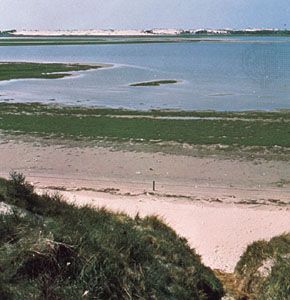
These parks protect a saltwater tidal delta consisting of sand flats and deep channels that are essential habitats for waterfowl and other marine life. The region is characterized by its dynamic environment, where large areas are uncovered at low tide, creating a specialized habitat that is rare in surrounding countries.37
How do tides affect the Wadden Sea mudflats?
The Wadden Sea is a dynamic saltwater tidal delta where the interaction between tides and sediment is fundamental to its geography. The area consists of extensive sand and mud flats that are largely uncovered during low tide, while being intersected by deep channels that connect to the North Sea.3
Tides play a critical role in shaping the physical composition of these mudflats through the movement and deposition of fine particles. When an advancing tide moves across the area, it carries fine sediments that become plastered onto the tidal flat. Due to complex electrochemical interactions among these fine particles, the mud becomes difficult to re-erode when the tide ebbs. This process contributes to the unique sediment distribution found in the region, where nearshore tidal flat muds often transition into coarser lag sands as one moves seaward.8
Sources
- Norderney — Encyclopædia Britannica
- Frisian Islands — Encyclopædia Britannica
- Wadden Sea — Encyclopædia Britannica
- East Friesland — Encyclopædia Britannica
- Lower Saxony - National parks and cultural life — Encyclopædia Britannica
- Schleswig-Holstein - Geography — Encyclopædia Britannica
- Netherlands - Plant and animal life — Encyclopædia Britannica
- sedimentary rock - Origin of shales — Encyclopædia Britannica
- North Sea - Physiography — Encyclopædia Britannica
Published on · 3 min read