Northern Giant Hornet
The northern giant hornet (Vespa mandarinia) is the world's largest wasp species, native to the mountainous regions of East Asia. Formerly known as the…
What is a northern giant hornet?
The northern giant hornet (Vespa mandarinia) is the world’s largest wasp species, native to the mountainous regions of East Asia. Formerly known as the “Asian giant hornet” or “murder hornet,” it was officially renamed in 2022 by the Entomological Society of America to avoid geographic references for invasive species.123
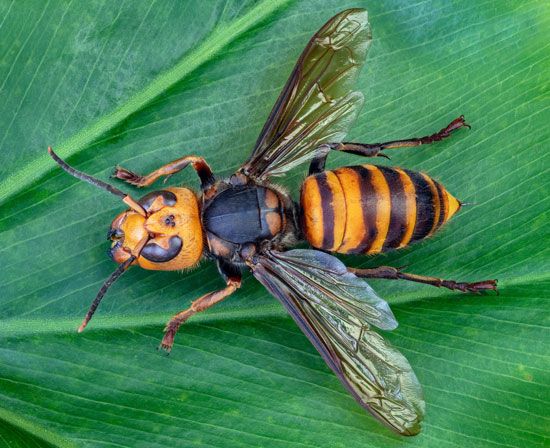
These insects are characterized by a large yellow or orange head, a dark thorax, and an abdomen with alternating black or brown and yellow-orange bands. Queens can exceed 2 inches in length with a 3-inch wingspan. They are social insects that typically nest underground or in tree cavities.12
While they are a natural part of Asian ecosystems, they pose a significant threat to western honeybees, which lack the defensive behaviors evolved by native Asian honeybees. Their stingers are long enough to pierce standard protective clothing and deliver potent venom that can cause anaphylaxis in humans. Following their 2019 arrival in North America, intensive eradication efforts were successful, and the species was declared eradicated from the United States in 2024.21
Where is the northern giant hornet found?
The northern giant hornet (Vespa mandarinia) is native to the subtropical and temperate mountainous regions of East Asia, including northern India, the Korean peninsula, Japan, and Taiwan.31
In 2019, the species was introduced to North America, with sightings reported in British Columbia, Canada, and Washington state in the United States. Following intensive eradication efforts by agricultural authorities in both countries, no hornets have been detected since 2021, and the species was officially declared eradicated from the United States in 2024.31
What does the northern giant hornet look like?
The northern giant hornet (Vespa mandarinia) is the world’s largest wasp species, with queens capable of exceeding 2 inches in length and possessing a 3-inch wingspan. Workers are generally smaller, typically ranging from 1.5 to 2 inches long.41
Their physical appearance is characterized by:
- Head: A distinct yellow or orange head.1
- Thorax: A dark-colored thorax.1
- Abdomen: The abdomen features alternating bands of black or brown and orange or yellow.1
- Stinger: They possess an unusually long stinger, measuring nearly 0.4 inches (1 centimeter), which is capable of piercing standard protective clothing like beekeeping gear.41
Formerly known as the “Asian giant hornet” or “murder hornet,” the species was officially renamed in 2022 to avoid geographic references for invasive species.41
What does the northern giant hornet eat?
The northern giant hornet (Vespa mandarinia) is a predatory species with a varied diet that changes throughout its life cycle and according to the needs of the colony.
- Adult Diet: When a queen first emerges in the spring, she feeds on tree sap. As the colony matures, workers forage for a range of substances, including tree resin, nectar, honey, soft fruits, and mushrooms.4
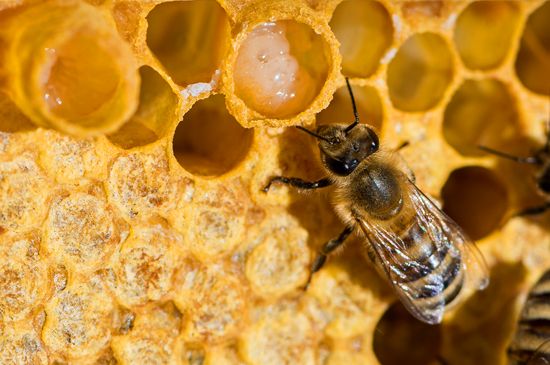
- Larval Diet: To support the growth of larvae, workers hunt for insects and spiders, such as beetles. They are particularly well-known for attacking colonies of other wasps and honeybees. The hornets kill the adult bees and carry the high-protein larvae and pupae back to their nest to feed their own developing brood.4
While they are aggressive predators of western honeybees, which lack natural defenses against them, the hornets are a natural part of the ecosystem in their native Asian range, where species like the Eastern honeybee have evolved specific defensive behaviors to survive their attacks.4
Sources
- northern giant hornet — Merriam-Webster
- Asian giant hornet — Merriam-Webster
- northern giant hornet — Encyclopædia Britannica
- hornet — Encyclopædia Britannica
Published on · 3 min read