Hornet
A hornet is a type of wasp belonging to the genus Vespa. While all hornets are wasps, not all wasps are hornets; hornets are distinguished by their larger…
What is a hornet?
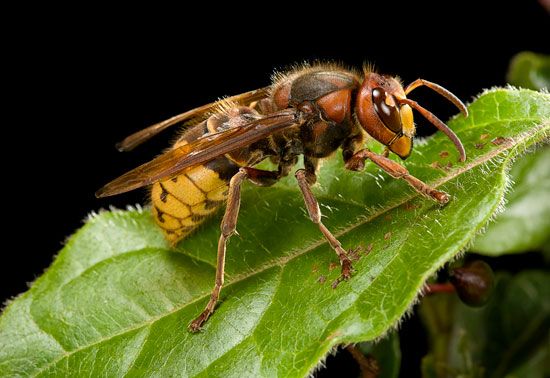
A hornet is a type of wasp belonging to the genus Vespa. While all hornets are wasps, not all wasps are hornets; hornets are distinguished by their larger size and their status as social insects that live in colonies organized into a caste system consisting of a queen, female workers, and male drones.12
Key characteristics of hornets include:
- Nesting: They typically build communal nests above ground, often in trees or within structures, using a paper-like substance created from wood pulp and saliva.12
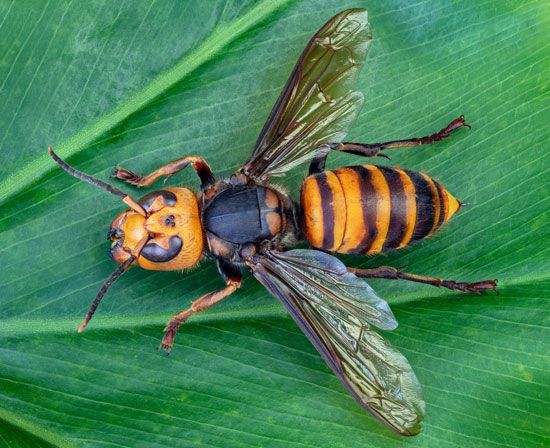
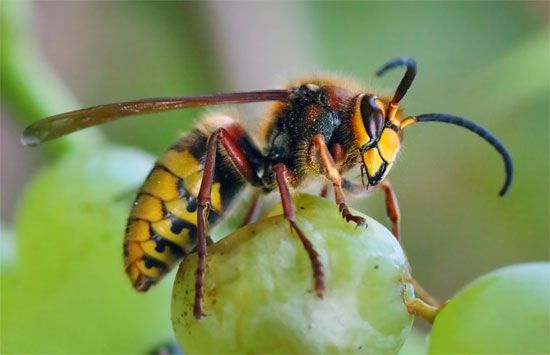
- Appearance: They are generally black or brown with yellow or yellowish markings.2
- Behavior: Like other social wasps, they can sting repeatedly, and their venom can cause painful reactions or, in some cases, anaphylactic shock in humans. Despite their intimidating size, they are not necessarily more aggressive than other wasp species.21
- Diversity: The genus includes about 20 species, such as the northern giant hornet, which is the largest known wasp species in the world.23
How are hornets different from other wasps or bees?
Hornets are a specific subset of wasps belonging to the genus Vespa. While all hornets are wasps, the vast majority of the over 100,000 wasp species are solitary, whereas all true hornets are social insects that live in colonies with a caste system.137
Key Differences: Hornets, Wasps, and Bees
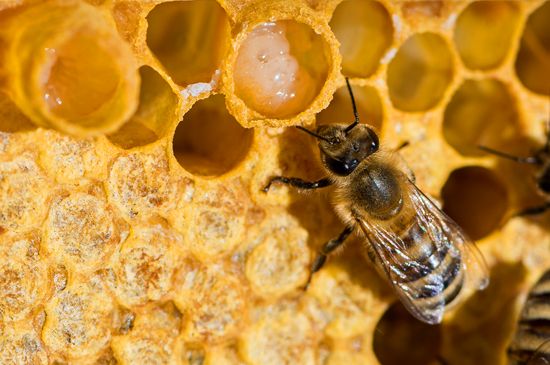
- Physical Appearance: Wasps generally have slender, smooth bodies with a narrow “waist” (petiole) and legs with few hairs. In contrast, bees typically have a light coat of downy hair, which helps them collect pollen. Hornets are generally larger than other wasps and are often black or brown with yellow markings.1387
- Stinging Ability: Unlike bees, which can sting only once—a process that is fatal to them—wasps and hornets possess barbless stingers that allow them to sting multiple times.18
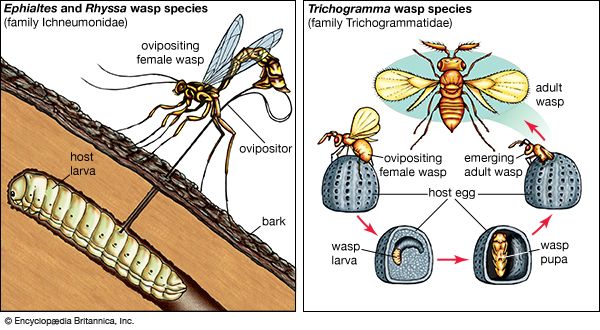
- Behavior and Diet: Many wasps are parasitoids that lay eggs in other insects, while others are predatory. Bees are primarily pollinators that feed on nectar and pollen. Hornets are predatory and hunt other insects to feed their larvae.1987
- Nesting: While many solitary wasps nest in the ground, hornets typically build communal, paper-like nests above ground in trees or structures. Yellow jackets, which are close relatives of hornets, often build their nests underground.137
Where do hornets typically live?
Most hornets are native to Eurasia and typically build their communal nests above ground. These nests are constructed from a paper-like substance made of wood pulp and saliva and are often found hanging from or located within trees, though they may also be built inside the walls or ceilings of human structures.12
Nesting habits can vary by species:
- General Hornet Species: Most true hornets prefer above-ground locations, distinguishing them from their close relatives, the yellow jackets, which frequently build nests underground.2
- Northern Giant Hornet: This species typically nests in tree cavities or in underground cavities previously excavated by other animals; they rarely build nests within human structures.4
Queens of these species often spend the winter hibernating in protected environments such as soil, straw, or rotting wood before emerging in the spring to establish a new colony.24
What do hornets eat?
Hornets are predatory social insects that consume a varied diet depending on their life stage and the needs of the colony. Their nutritional habits include the following:
- Adult Diet: Adult hornets frequently forage for energy-rich substances, including tree sap, nectar, honey, soft fruits, and mushrooms.1
- Larval Diet: To support the growth of the colony, worker hornets hunt for protein-rich prey, such as beetles, spiders, and other insects. They are particularly known for attacking colonies of wasps and honeybees, taking the immature larvae and pupae back to the nest to feed their own developing young.14
- Foraging Behavior: While a queen may forage for herself when establishing a new colony in the spring, once a sufficient number of workers are produced, they take over all hunting and foraging duties, allowing the queen to remain in the nest to focus on egg-laying.1
Sources
- What’s the difference between hornets and wasps? — Encyclopædia Britannica
- hornet — Encyclopædia Britannica
- wasp — Encyclopædia Britannica
- northern giant hornet — Encyclopædia Britannica
- Hymenoptera - Social forms — Encyclopædia Britannica
- insect - Insect societies — Encyclopædia Britannica
- How Are Ants, Wasps, and Bees Related? — Encyclopædia Britannica
- What’s the Difference Between a Bee and a Wasp? — Encyclopædia Britannica
- yellow jacket — Encyclopædia Britannica
- nectar — Encyclopædia Britannica
- nectary — Encyclopædia Britannica
- Hymenoptera - General features — Encyclopædia Britannica
Published on · 3 min read