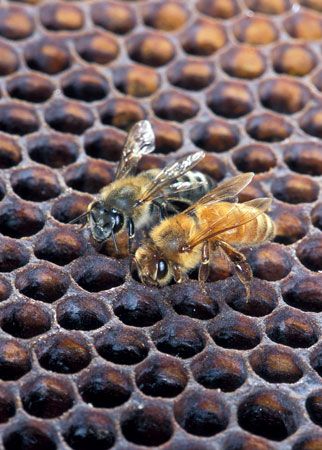
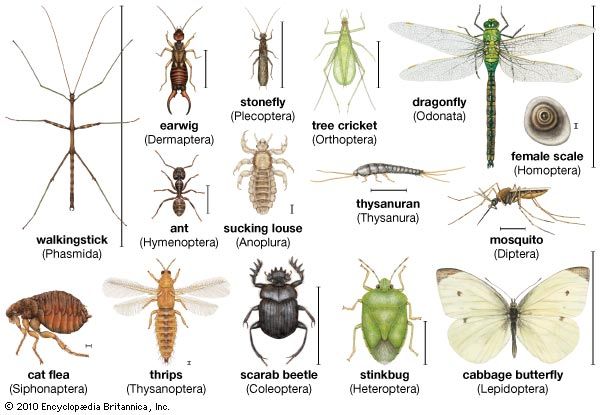
Honeybee
Honey production is a complex process performed by honeybees to create a vital food source for their colony. The transformation of nectar into honey involves…
What is the process of honey production by honeybees?
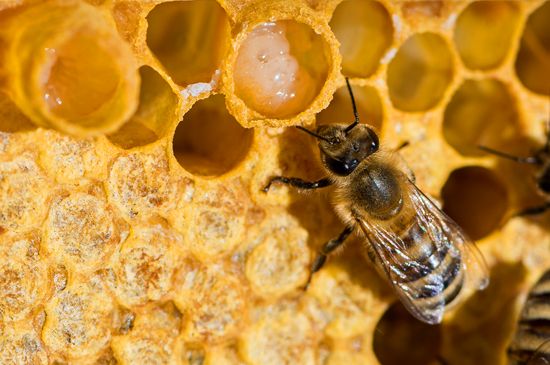
Honey production is a complex process performed by honeybees to create a vital food source for their colony. The transformation of nectar into honey involves several key steps:12
- Collection: Worker bees gather nectar—a sugary solution—from blossoms and occasionally from plant-sucking insects as honeydew.13
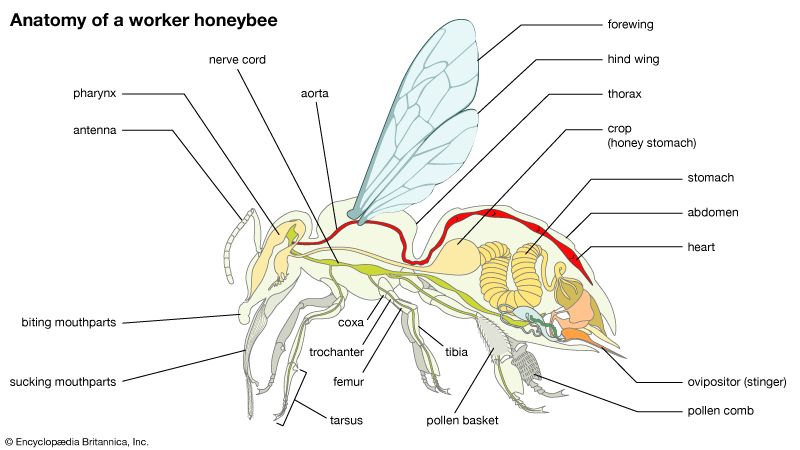
- Enzymatic Breakdown: As bees carry the nectar back to the hive in their “honey stomachs,” enzymes begin breaking down complex sucrose into simpler fructose and glucose molecules.2
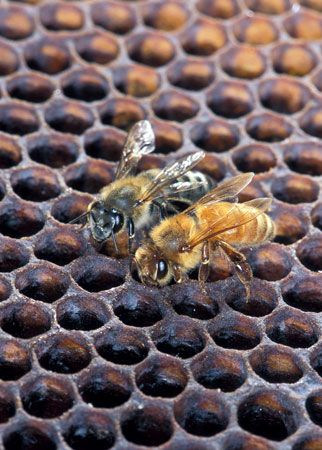
- Evaporation: Once in the hive, the nectar is deposited into honeycomb cells. Because raw nectar contains 50 to 80 percent water, bees must reduce this to about 16 to 18 percent to prevent spoilage. They achieve this by rapidly beating their wings to promote the evaporation of excess water.132
- Storage: Once the honey reaches the desired consistency, the bees seal the cells with beeswax to preserve it for future consumption.12
How do honeybees defend their hives from predators and intruders?
Honeybees employ a sophisticated, multi-layered defense strategy to protect their colonies from predators and intruders.
Hive Security and Guarding
The colony maintains a constant state of vigilance through the use of guard bees stationed at the hive entrance. These guards use their sense of smell to inspect every bee attempting to enter, as each colony possesses a unique odor that allows them to distinguish nest mates from potential intruders.5
Chemical Signaling
When a threat is detected, bees utilize alarm pheromones to coordinate their defense. These volatile chemical signals are released to rapidly alert other colony members, signaling them to be on high alert and, if necessary, to initiate defensive behaviors such as stinging.56
Defensive Tactics
- Stinging: When provoked, worker bees may sting perceived threats. In the case of the western honeybee, the stinger is barbed and becomes lodged in the skin of mammals, leading to the bee’s death.7
- Aggression Levels: Defensive behavior varies by species. For example, Africanized honeybees are notably more defensive than European honeybees; they react faster, attack in larger numbers, and pursue threats over greater distances.8
- Physical Barriers: Bees also collect propolis, a resinous material used to seal cracks in the hive or to entomb foreign objects that are too large to remove.2
Managing Predators
Colonies face threats from various animals, including mice, skunks, and bears. Beekeepers often assist in defense by using physical barriers like electric fences or traps to protect hives from these larger predators.9
What is the life cycle of a honeybee, from egg to adult?
The life cycle of a western honeybee follows a consistent developmental progression for queens, workers, and drones, beginning with the egg stage.
Developmental Stages
- Egg: The queen lays a single egg in a cell within the broodnest. Regardless of the bee’s future role, the egg hatches after three days.2
- Larva: Upon hatching, the bee enters the larval stage, often referred to as a grub. Initially, all larvae are fed royal jelly. While worker and drone larvae transition to other food sources, only future queens are fed royal jelly throughout their development.2
- Pupa: Once the larva is fully grown, it transforms into a pupa within a sealed cell.2
- Adult Emergence: The time required to reach adulthood varies by caste:
Following emergence, adult workers undergo a sequence of tasks based on their age, transitioning from cleaning cells and nursing brood to building comb and eventually foraging outside the hive.11
What are some of the most common diseases and parasites that affect honeybees?
Honeybee colonies are susceptible to a variety of diseases and parasites that can significantly impact their health and survival. These threats are often linked to colony collapse disorder (CCD), a phenomenon where colonies experience sudden population declines.1213
Common Parasites
- Varroa Mites (Varroa destructor): These are perhaps the most serious threat to western honeybees. They feed on both adult and immature bees and act as vectors for various viruses, such as deformed wing virus, which causes physical malformations.1213
- Phorid Flies (Apocephalus borealis): An emerging threat, these flies parasitize honeybees and have been associated with hive abandonment.13
Bacterial and Fungal Diseases
- American Foulbrood: Caused by the bacterium Paenibacillus larvae, this is a highly contagious and serious brood disease. It is characterized by a ropy, decayed mass within the cells.1415
- European Foulbrood: A similar brood disease caused by Streptococcus pluton, though it is generally less severe than the American variety.14
- Chalkbrood and Stonebrood: These are fungal infections caused by Ascosphaera apis and Aspergillus flavus, respectively, which affect the developing brood.14
Other Pathogens
Sources
- Beekeeping - Honeybees — Encyclopædia Britannica
- western honeybee - Colony and life cycle — Encyclopædia Britannica
- nectar — Encyclopædia Britannica
- How is honey made? — Encyclopædia Britannica
- Do bees die after stinging? — Encyclopædia Britannica
- Africanized honeybee — Encyclopædia Britannica
- Beekeeping - Predators — Encyclopædia Britannica
- western honeybee - Pests and diseases — Encyclopædia Britannica
- Hymenoptera - Chemical — Encyclopædia Britannica
- Chemoreception - Pheromones — Encyclopædia Britannica
- Hymenoptera - Division of labor — Encyclopædia Britannica
- varroa mite: Top Questions — Encyclopædia Britannica
- Beekeeping - Diseases — Encyclopædia Britannica
- American foulbrood — Merriam-Webster
- Nosema — Encyclopædia Britannica
- colony collapse disorder - Suspected causes — Encyclopædia Britannica
Published on · 4 min read