Northern White Rhinoceros
The northern white rhinoceros (Ceratotherium simum cottoni) is a critically endangered subspecies of the white rhinoceros and is currently the most…
What is a northern white rhinoceros?
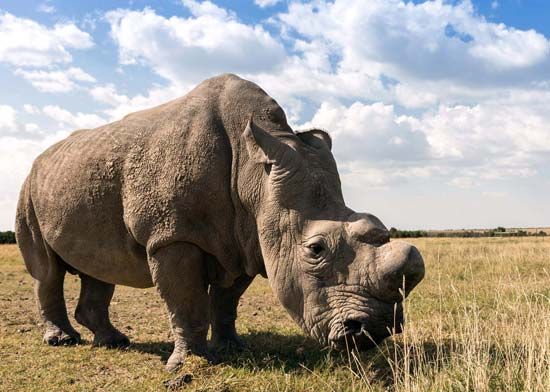
The northern white rhinoceros (Ceratotherium simum cottoni) is a critically endangered subspecies of the white rhinoceros and is currently the most endangered animal on Earth. Once native to parts of South Sudan, Uganda, the Democratic Republic of the Congo, and the Central African Republic, the subspecies is now functionally extinct in the wild.1
The last two remaining individuals, both females, reside at the Ol Pejeta Conservancy in Kenya1. These animals are grazing mammals characterized by a broad, square muzzle and a paler hide compared to other rhinoceros species. They are generally smaller and lighter than the southern white rhinoceros, with distinct anatomical differences including longer limbs and a shorter palate.12
Conservationists are currently utilizing advanced techniques, such as in vitro fertilization and stem cell research, in an urgent effort to prevent the total extinction of this subspecies.1
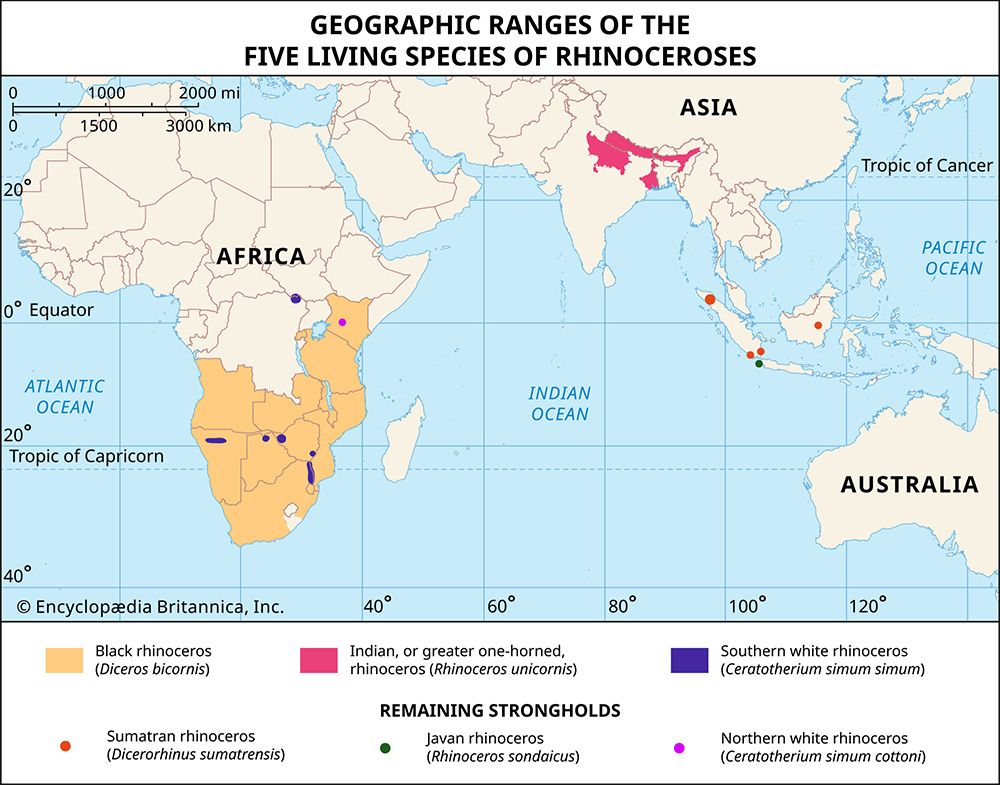
Where does the northern white rhinoceros live or come from?
The northern white rhinoceros (Ceratotherium simum cottoni) was historically native to a range spanning several countries in Africa. Its natural habitat formerly included South Sudan and adjacent regions of Uganda and the Democratic Republic of the Congo, with its territory extending westward into the Central African Republic.13
Today, the subspecies is considered extinct in the wild across these original territories. The only two remaining individuals, both females, are currently housed at the Ol Pejeta Conservancy in Kenya, where they are under constant protection and observation as part of international efforts to prevent the total extinction of the subspecies.13
What does the northern white rhinoceros look like?
The northern white rhinoceros (Ceratotherium simum cottoni) is a grazing mammal characterized by a broad, square muzzle and a hide that tends to be paler than that of other rhinoceros species.21
Compared to the southern white rhinoceros, the northern subspecies is smaller and lighter, with males weighing up to 1,600 kg (3,500 pounds). Anatomically, they are distinguished by longer limbs, a shorter palate, and a flatter top of the skull than their southern counterparts. While the largest males of both subspecies could reach lengths of 3.7 to 4 metres (about 12 to 13 feet) and stand nearly 2 metres (7 feet) tall, northern males generally tended to be shorter in length than southern males.21
Like other white rhinoceroses, they are social animals that historically lived in groups of up to 10 individuals and used their horns for fighting.21
Why is the northern white rhinoceros endangered?
The northern white rhinoceros is considered the most endangered animal on Earth, with its wild population now extinct. Its decline and current status are the result of several historical and ongoing factors:1
- Historical Pressures: In the past, the species suffered significant population losses due to the conversion of its natural habitat into agricultural land and the impact of sport hunting.4
- Poaching: The primary modern threat to the rhinoceros is poaching. Despite being protected in reserves, these animals are killed for their horns, which are in high demand for use in traditional medicines and as decorative materials like dagger handles.4
- Resource Constraints: Protecting rhinoceros populations requires immense financial resources to detect and deter poachers. The high costs associated with securing vast territories often exceed the budgets available to many African governments.4
- Biological Factors: The subspecies has a slow reproductive rate, with females typically giving birth to only one calf every three to four years, making it difficult for the population to recover once numbers drop to critical levels.12
Today, only two females remain, and conservationists are utilizing advanced techniques like in vitro fertilization to attempt to save the subspecies from total extinction.1
Sources
- northern white rhinoceros — Encyclopædia Britannica
- southern white rhinoceros — Encyclopædia Britannica
- perissodactyl - Rhinoceroses — Encyclopædia Britannica
- conservation - Protecting species — Encyclopædia Britannica
Published on · 3 min read