Nubian Desert
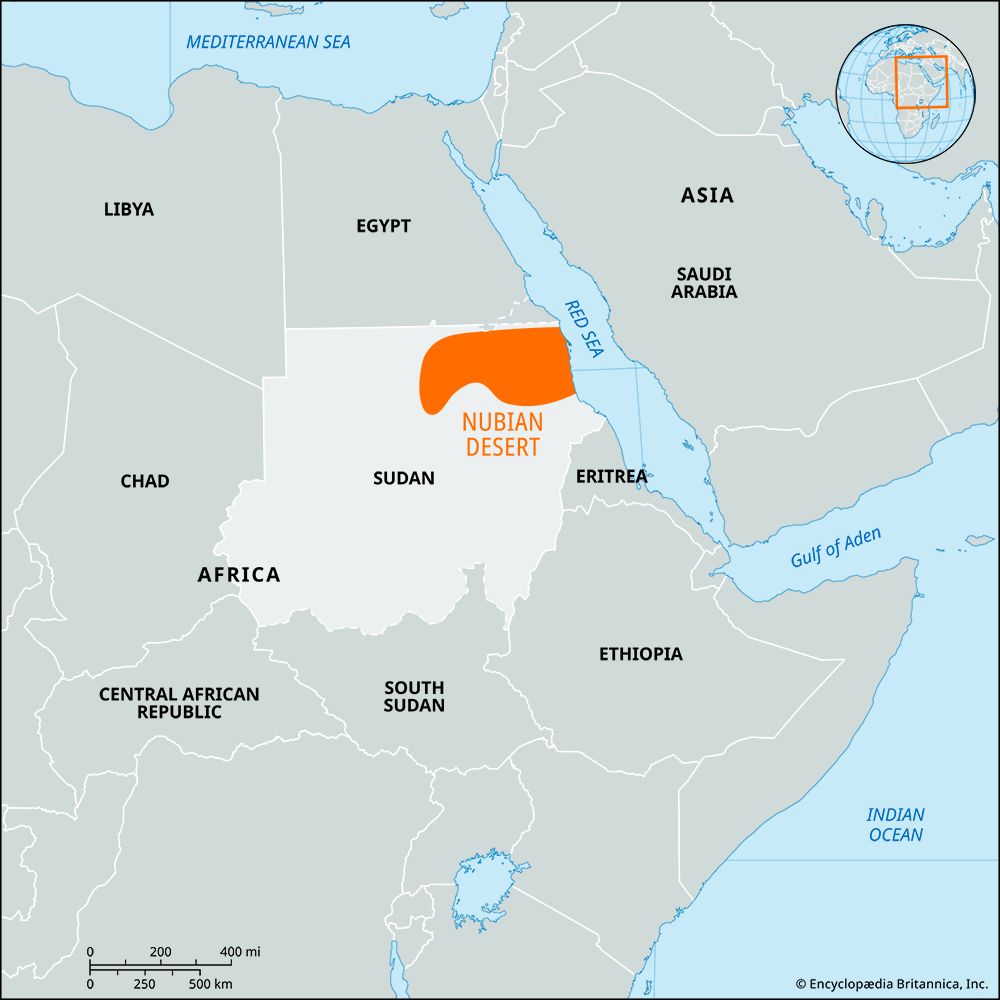
The Nubian Desert is a vast, arid region located in northeastern Sudan. It is geographically defined by the Nile River valley to the west, Egypt to the…
What is Nubian Desert?
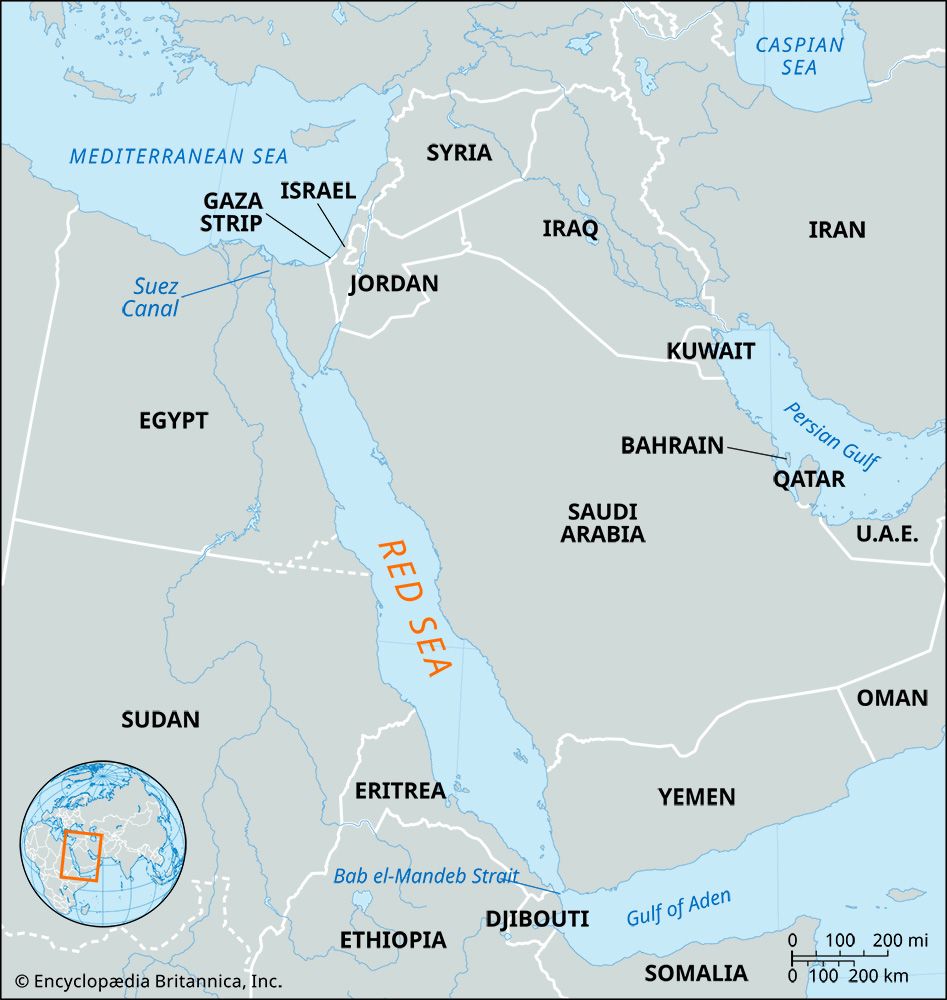
The Nubian Desert is a vast, arid region located in northeastern Sudan. It is geographically defined by the Nile River valley to the west, Egypt to the north, and the Red Sea to the east.12
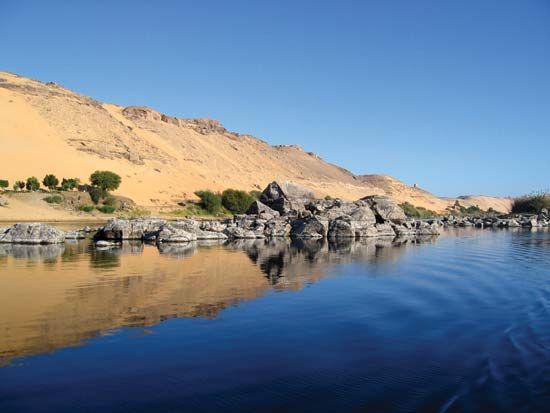
Unlike the sandy Libyan Desert, the Nubian Desert is characterized by a rocky, rugged landscape. It consists primarily of a sandstone plateau, which is intersected by numerous wadis—seasonal riverbeds that typically dry up before reaching the Nile. The terrain rises gradually toward the east, culminating in the precipitous uplands of the Red Sea Hills. The region is extremely dry, receiving an average annual rainfall of less than 5 inches (125 mm).1
How does the Nubian Desert differ from the Libyan Desert?
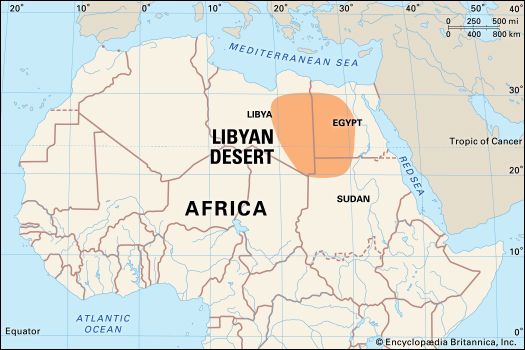
The Nubian Desert and the Libyan Desert are distinct regions separated by the Nile River valley. While both are arid parts of the Sahara, they differ primarily in their physical composition and topography:1
- Terrain: The Nubian Desert is characterized as a rocky, rugged sandstone plateau interspersed with numerous wadis (seasonal riverbeds) that typically dry up before reaching the Nile. In contrast, the Libyan Desert is known for its harsh, inhospitable landscape of bare rocky plateaus and extensive stony or sandy plains.14
- Geography: The Nubian Desert is located in northeastern Sudan, rising in gentle slopes toward the east to culminate in the Red Sea Hills. The Libyan Desert covers a much larger area, extending from eastern Libya through southwestern Egypt into the northwestern reaches of Sudan.14
- Notable Features: The Libyan Desert contains significant depressions, such as the Qattara Depression, which sits below sea level, and is home to several isolated oases.4
What are wadis and why are they important in desert landscapes?
A wadi is a stream bed or valley in the arid regions of northern Africa and southwestern Asia that is typically dry, except during the rainy season. These features are often defined as shallow, sharply marked depressions in the desert landscape.7
Wadis are significant for several reasons:
- Water Source: They often serve as vital locations for oases, as they can contain underground water that supports vegetation, such as date palms, tamarisk, and acacia trees, which are otherwise scarce in the desert.789
- Human Utility: Historically, wadis have been essential for human survival. Inhabitants have utilized them to tap into dispersed groundwater through methods like foggaras—inclined underground tunnels—and have used them for small-scale irrigation to support agriculture.10
- Geological Impact: Wadis are the primary drainage systems in many desert areas. While floods are infrequent, they can be powerful and destructive, acting as the main force in shaping the landscape through the transport of sediment and the erosion of plateaus.11
- Ecological Role: They provide a habitat for drought-resistant plant life that cannot survive in the surrounding desert proper.89
What was the significance of the ancient Kingdom of Kush?
The ancient Kingdom of Kush was a significant power in northeastern Africa, centered in the region of Nubia. Its importance stemmed from its strategic location, unique cultural synthesis, and role as a major regional power.
Strategic and Economic Importance
Kush served as a vital crossroads for trade, positioned across routes connecting Egypt to the Red Sea and the Nile to the African interior. This geography brought the kingdom considerable wealth, bolstered by rich agricultural lands and valuable gold and emerald mines. Additionally, the Kushites were highly valued as skilled soldiers and mercenaries, influencing military dynamics in the region for centuries.12
Cultural and Political Legacy
Kush developed a distinct civilization that blended Egyptian influences with indigenous African traditions. This syncretistic culture was expressed through:
- Religion and Language: While Kushites worshipped Egyptian gods like Amon, they maintained their own deities and developed their own language and scripts.12
- Governance: The kingdom reached its zenith during the 8th century BCE, when its rulers—most notably Piye and Taharqa—conquered Egypt and established the 25th dynasty, effectively ruling as pharaohs.1213
- Architecture: The Kushites built unique pyramids to bury their royalty, distinct from Egyptian styles.12
Following the loss of control over Egypt, the kingdom shifted its capital to Meroe, where it flourished for nearly a millennium before its eventual decline and destruction by the Aksum empire in 350 CE. Today, the archaeological remains of Kush, such as those at Gebel Barkal and Meroe, are recognized as UNESCO World Heritage sites.1214
Sources
- Nubian Desert — Encyclopædia Britannica
- Sudan - Medieval Christian kingdoms — Encyclopædia Britannica
- Nubian Desert — Merriam-Webster
- Sahara - Physiography — Encyclopædia Britannica
- Libyan Desert — Encyclopædia Britannica
- Libya - Climate of Libya — Encyclopædia Britannica
- wadi — Merriam-Webster
- Arabian Desert - Physiography — Encyclopædia Britannica
- Algeria - Plant and animal life — Encyclopædia Britannica
- Libya - Plant and animal life — Encyclopædia Britannica
- Sahara - People of the Sahara — Encyclopædia Britannica
- history of Sudan - The kingdom of Kush — Encyclopædia Britannica
- list of pharaohs of ancient Egypt - 25th (Kushite) dynasty (c. 722–c. 655) — Encyclopædia Britannica
- Sudan - Cultural institutions — Encyclopædia Britannica
- Nubia — Encyclopædia Britannica
Published on · 3 min read