Nuthatch
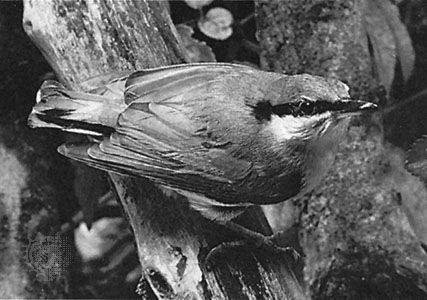
There are approximately 25 species of nuthatches, which are small, short-tailed birds belonging to the family Sittidae. They are widely distributed across…
How many species of nuthatches are there, and where are they found?
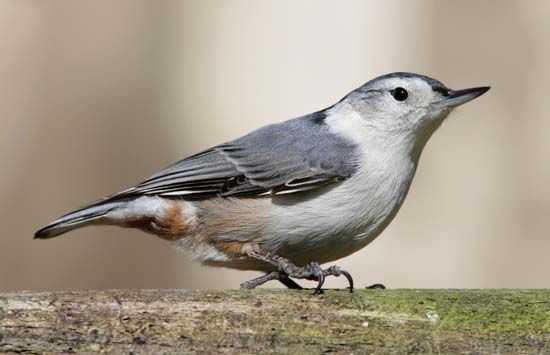
There are approximately 25 species of nuthatches, which are small, short-tailed birds belonging to the family Sittidae. They are widely distributed across the globe, inhabiting regions throughout the world with the notable exception of South America1.
These birds are well-regarded for their unique ability to navigate tree trunks and branches in any direction—including walking headfirst down a tree—to forage for insects and seeds. Because of this behavior, they are sometimes referred to as “upside-down birds.” All species within this family are cavity nesters and are known for using bark crevices to store food or to wedge seeds in place while they use their bills to crack them open.1
What is unique about the way nuthatches move on tree trunks?
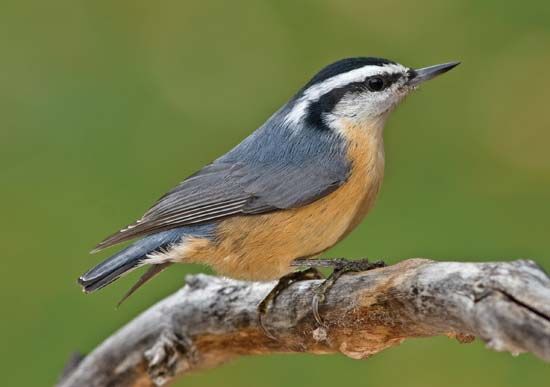
The most unique aspect of a nuthatch’s movement is its ability to descend tree trunks as easily as it ascends. While other climbing birds, such as woodpeckers, are typically restricted to moving vertically upward, nuthatches can navigate trunks and branches in any direction, including walking headfirst down a tree.13
This distinct locomotion is achieved by climbing obliquely; the bird uses its upper foot to cling to the bark while utilizing the lower foot as a brace. This agility allows them to hang upside down on the undersides of limbs to forage for insects and seeds in areas often overlooked by other species. Because of these specialized movement patterns, they are frequently referred to as “upside-down birds”.13
What do nuthatches typically eat, and how do they forage for food?
Nuthatches primarily consume a diet consisting of insects and seeds.1
Their foraging behavior is highly specialized, allowing them to exploit food sources that other birds often overlook. By navigating tree trunks and branches in any direction—including headfirst—they search for insects hidden deep within the bark.1
Nuthatches also utilize bark crevices in two distinct ways to manage their food:
- Storing: They frequently cache seeds in crevices, demonstrating the ability to remember these locations for months.1
- Processing: They use these same crevices to wedge a hard seed in place. Once secured, the bird uses the full force of its body to “hack” at the seed, pounding it with its bill to crack it open.1
In human-inhabited areas, species like the white-breasted nuthatch are known to frequent feeders, where they readily consume suet and sunflower seeds.1
How do nuthatches differ from other similar bird species like woodpeckers or treecreepers?
Nuthatches differ from other climbing birds like woodpeckers and treecreepers primarily in their unique movement patterns and physical adaptations.14
Locomotion and Anatomy
- Directional Agility: While woodpeckers and treecreepers are generally restricted to climbing vertically upward, nuthatches can move up, down, and around tree trunks with equal ease. They are the only group among these that can descend a tree headfirst.14
- Tail Structure: Woodpeckers and many treecreepers rely on stiffened tail feathers to act as a prop against the tree for stability while climbing. In contrast, nuthatches do not have stiffened tails.34
- Climbing Technique: Nuthatches climb obliquely, using their upper foot to cling to the bark while the lower foot serves as a brace. Other climbing birds typically move by hopping upward with both feet moving simultaneously.4
Foraging and Behavior
- Niche Exploitation: Because of their ability to move in any direction, nuthatches forage in areas of the bark that are often ignored by birds restricted to upward movement, allowing them to find insects that other species overlook.1
- Tool Use: Nuthatches are known for “hacking” seeds by wedging them into bark crevices and pounding them with their bills, a behavior supported by their ability to work in various orientations on a tree.1
Sources
- Nuthatch — Encyclopædia Britannica
- red-breasted nuthatch — Merriam-Webster
- Locomotion - Climbing birds and mammals — Encyclopædia Britannica
- Treecreeper — Encyclopædia Britannica
Published on · 3 min read