Nyiri Desert
The Nyiri Desert, located in south-central Kenya, is characterized by several distinct geological and natural features rather than traditional desert dunes.
Are there any unique geological features or landmarks in the Nyiri Desert?
The Nyiri Desert, located in south-central Kenya, is characterized by several distinct geological and natural features rather than traditional desert dunes.
The landscape is defined by:
- Rocky Hills: The plain is dotted with rocky hills that overlie much older rock formations.1
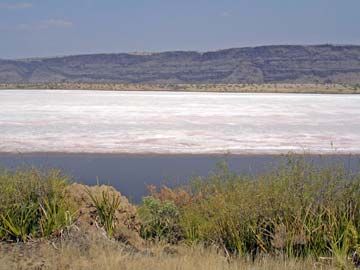
- Water Sources: While water is generally scarce, the desert contains a few large springs and widely spaced riverbeds.1
- Lake Amboseli: The desert encompasses the northern half of this lake, which is situated within the Amboseli National Park.1
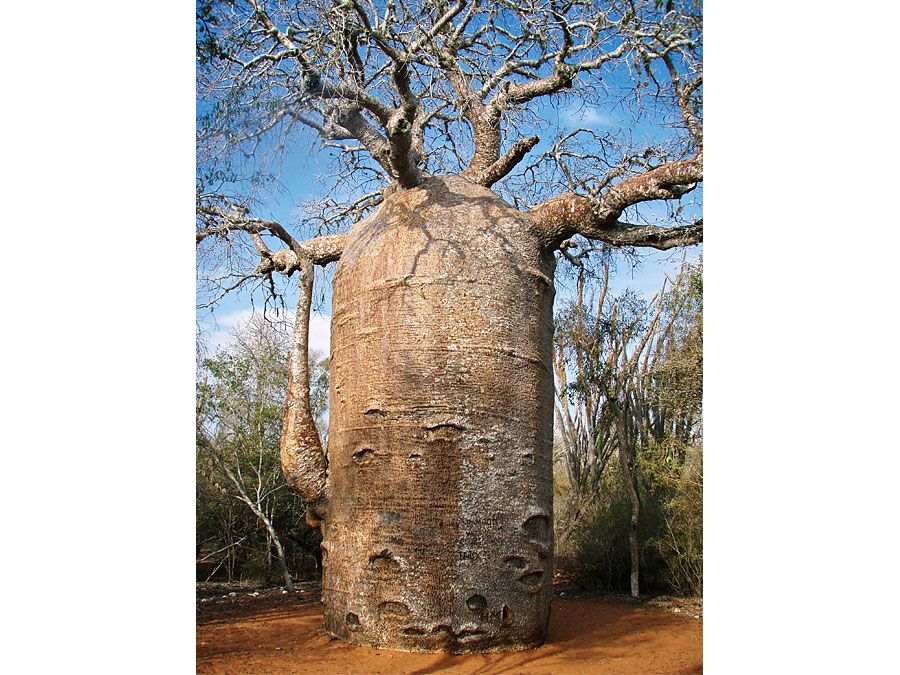
- Flora: The area features dense growths of thorny and sometimes poisonous trees. Notably, it is home to ancient baobab trees, some of which are up to two thousand years old and reach diameters of 10 feet.1
How does the Nyiri Desert affect Kenya’s overall climate and weather patterns?
The premise that the Nyiri Desert significantly affects Kenya’s overall climate and weather patterns is inaccurate. The Nyiri Desert is a localized, arid region in south-central Kenya rather than a major climatic driver for the country.1
Kenya’s broader climate is primarily dictated by its position on the Equator, its varying topography, and the influence of the Indian Ocean monsoon winds, rather than the presence of this specific desert. The Nyiri Desert itself is characterized by its own localized environmental conditions, such as scarce water, rocky hills, and specific vegetation like baobab trees, but it does not function as a primary regulator of national weather systems.1
What indigenous plants and animals have adapted to survive in the Nyiri Desert?
The Nyiri Desert features specialized flora and fauna that have adapted to its arid, often harsh environment.
Plant Life
The vegetation in the Nyiri Desert is largely defined by its ability to survive in dry conditions. Key plants include:
- Baobab Trees: These iconic, long-lived trees are well-adapted to the desert’s dryness, with some specimens reaching up to two thousand years in age and 10 feet in diameter. Their trunks often serve as vital water reserves.12
- Thorny and Poisonous Vegetation: Much of the desert is covered in dense growths of small, thorny trees. Some of these are poisonous, providing a defense against herbivores.1
- Seasonal Adaptations: During the brief rainy season, these trees bloom with green leaves and flowers. In the dry season, they shed their leaves and are often entwined with grayish-green creepers and the hornlike fronds of prickly euphorbia.1
Animal Life
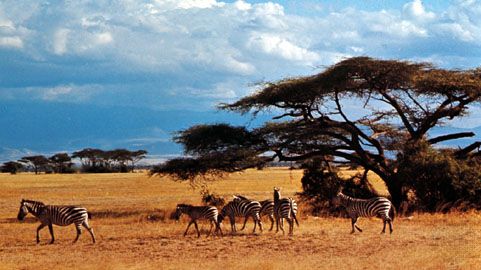
The desert supports a variety of wildlife, particularly within the protected areas like Amboseli National Park. Notable fauna include:
- Large Mammals: The region is home to elephants, rhinoceroses, giraffes, and various ungulates such as impalas and the lesser kudu.13
- Predators: Lions and leopards are prominent predators found throughout the area.14
Where is the Nyiri Desert located in Kenya, and what are its geographical boundaries?
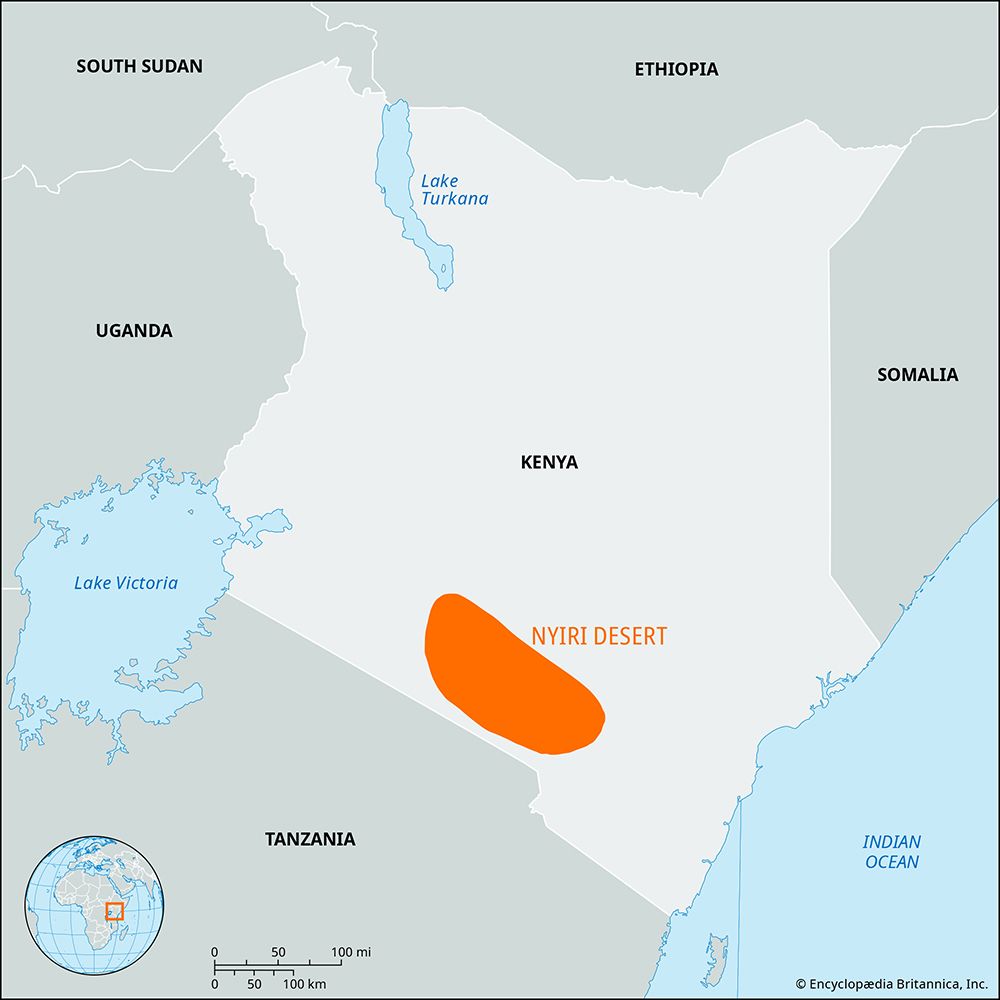
The Nyiri Desert is located in south-central Kenya. Its geographical position is defined by the following boundaries and landmarks:
- West: It lies approximately 50 miles (80 km) east of Lake Magadi.
- South: It is situated near the northern border of Tanzania and extends to the southern extremity of Tsavo West National Park.
- North: The desert reaches its northern extremity at Nairobi National Park.
- Central Features: The region encompasses Amboseli National Park, which includes the northern half of Lake Amboseli.1
The landscape is characterized by a plain dotted with rocky hills that overlie much older rock formations, with water availability limited primarily to a few large springs and widely spaced riverbeds.1
Sources
- Nyiri Desert — Encyclopædia Britannica
- Amboseli National Park — Encyclopædia Britannica
- Takla Makan Desert - Plant and animal life — Encyclopædia Britannica
- Baobab — Encyclopædia Britannica
- Kenya - Plant and animal life — Encyclopædia Britannica
Published on · 3 min read