Octopus
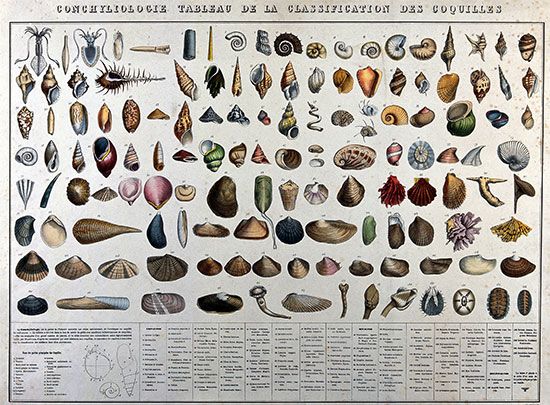
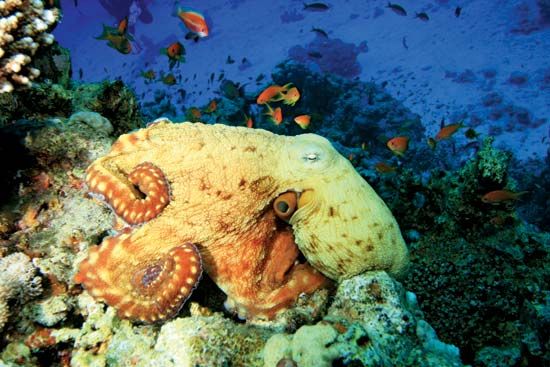
Octopuses are classified as members of the phylum Mollusca because they share the fundamental body plan characteristic of all mollusks, despite their highly…
What are the key characteristics that define octopuses as members of the mollusk order?
Octopuses are classified as members of the phylum Mollusca because they share the fundamental body plan characteristic of all mollusks, despite their highly specialized evolution.1
The defining features that link octopuses to this phylum include:
- Soft-bodied Anatomy: Like other mollusks, octopuses are soft-bodied invertebrates.2
- Mantle: They possess a mantle, a hallmark molluscan structure that covers the body and, in the case of cephalopods, plays a vital role in their locomotory system by surrounding the mantle cavity.23
- Foot Modification: A primary characteristic of the class Cephalopoda is that the typical molluscan foot has been modified to surround the head, forming the arms and tentacles.3
- Shell Reduction: While many mollusks are defined by a calcium carbonate shell, octopuses belong to the subclass Coleoidea, in which the shell has become vestigial or entirely lost through evolutionary modification.23
While octopuses exhibit advanced traits—such as a highly developed brain encased in a cartilaginous cranium and complex eyes—they remain structurally rooted in the molluscan body plan.3
How do scientists study octopuses, and what recent discoveries have been made about their biology and behavior?
Scientists study octopuses through a combination of laboratory experiments and field observations to understand their complex biology and behavior. In laboratory settings, researchers use surgical techniques to map the functional centers of the octopus brain, allowing them to study nerve impulse conduction and the transmission pathways that support the animal’s high level of intelligence. Behavioral studies often focus on learning processes, such as maze navigation, shape discrimination, and food acceptance, which have revealed that octopuses can solve puzzles and recognize individual humans.56
Recent discoveries and observations have highlighted several remarkable aspects of octopus biology:
- Tool Use: In 2009, biologists documented the veined octopus excavating and carrying coconut shells to use as portable shelters, marking the first recorded instance of tool use by an invertebrate.57
- Arm Specialization: A 2025 study of octopuses in the Caribbean Sea and near Spain found that while octopuses can use all their arms, they show a preference for using anterior pairs for complex tasks like grasping objects, searching the substrate, and attacking prey.7
- Rapid Camouflage: Research into chromatophores has shown that octopuses can change their skin color and texture with astonishing speed—the giant Pacific octopus, for example, can blend into its surroundings in as little as one-tenth of a second.57
What is the typical lifecycle of an octopus, from egg to adult?
The lifecycle of an octopus is a complex process characterized by distinct stages of development, reproduction, and a relatively short lifespan.
Reproduction and Mating
Octopuses have separate sexes. During courtship, the male uses a specialized, modified arm called a hectocotylus to transfer spermatophores—packets of sperm—into the female’s mantle cavity. In many species, the male dies shortly after mating.10117
Egg Development and Parental Care
Females lay their eggs in protected areas, such as holes or crevices, often attaching them to rocks or shells. The number of eggs varies significantly by species, ranging from a few dozen to over 100,000. Many female octopuses exhibit parental care, guarding the eggs for weeks, cleaning them with their suckers, and agitating the water to ensure proper aeration. The female typically dies after the eggs hatch.101147
Hatching and Growth
Upon hatching, the young octopods follow one of two paths depending on the species:
- Planktonic Stage: In species with small eggs, the juveniles are planktonic, drifting in the ocean for several weeks before settling on the bottom.1011
- Direct Development: In species with large eggs, the young resemble miniature adults and immediately adopt a bottom-dwelling lifestyle.10
Most octopuses are short-lived, often reaching sexual maturity and completing their lifecycle within one to three years.107
What are the different species of octopuses, and how are they classified?
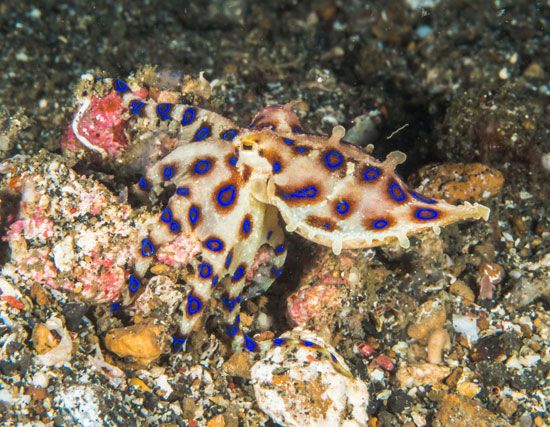
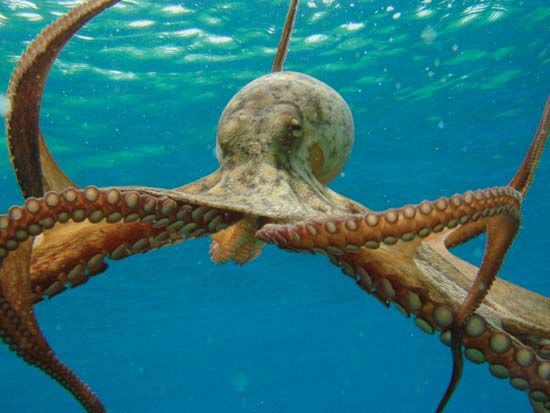
Octopuses are members of the order Octopoda, a group of cephalopod mollusks characterized by their eight contractile arms and lack of an internal shell. They are classified within the subclass Coleoidea, which also includes squids and cuttlefishes.
Classification
Within the order Octopoda, scientists categorize octopuses into three primary suborders based on physical characteristics and habitat:
- Suborder Palaeoctopoda: Includes fossilized finned octopods, with some living representatives.
- Suborder Cirrata (Cirromorpha): Primarily deep-sea species that are soft-bodied, possess a deep web between their arms, and feature small to large paddle-shaped fins and cirri (small filaments) on their arms.
- Suborder Incirrata: Includes the “true” octopuses. These are generally finless, compact, and saccular-bodied, ranging from shallow-water dwellers to deep-sea inhabitants.
Notable Species
While there are many species, some are particularly well-studied:
- Common Octopus (Octopus vulgaris): A medium-sized, highly intelligent species widely distributed in tropical and temperate seas. It is the most well-known member of the genus Octopus.
- Giant Pacific Octopus (Enteroctopus dofleini): The largest known species, capable of reaching lengths of 5.4 meters (18 feet).
- Veined Octopus (Amphioctopus marginatus): Notable for its complex behavior, including the documented use of coconut shells as portable tools.
Sources
- mollusk — Encyclopædia Britannica
- cephalopod - General features and importance to humans — Encyclopædia Britannica
- cephalopod - Annotated classification — Encyclopædia Britannica
- Reproductive behaviour - Mollusks — Encyclopædia Britannica
- cephalopod - Behaviour — Encyclopædia Britannica
- Which Animal Is the Smartest? — Encyclopædia Britannica
- octopus — Encyclopædia Britannica
- coloration - Background matching — Encyclopædia Britannica
- cephalopod - Form and function — Encyclopædia Britannica
- cephalopod - Reproduction and life cycles — Encyclopædia Britannica
- Blue-ringed octopus: Top Questions — Encyclopædia Britannica
Published on · 4 min read