Okra
Okra (Abelmoschus esculentus) is a herbaceous, hairy annual plant belonging to the mallow family (Malvaceae). It is primarily cultivated for its tender…
What is okra and where does it originate from?
Okra (Abelmoschus esculentus) is a herbaceous, hairy annual plant belonging to the mallow family (Malvaceae). It is primarily cultivated for its tender, unripe fruit, which is known for its high mucilage content—a gelatinous substance that makes the pods an excellent thickener for soups and stews, such as gumbos.1
Regarding its origins, okra is native to the tropics of the Eastern Hemisphere. The name itself is of African origin, specifically linked to the Ibo word ókùrù. Today, the plant is widely cultivated and naturalized throughout the tropics and subtropics of the Western Hemisphere. Beyond its culinary uses, the plant’s leaves and immature fruit have historically been used in the East for medicinal poultices, and its seeds have occasionally served as a substitute for coffee.12

What are the main characteristics of the okra plant, including its leaves, flowers, and fruit?
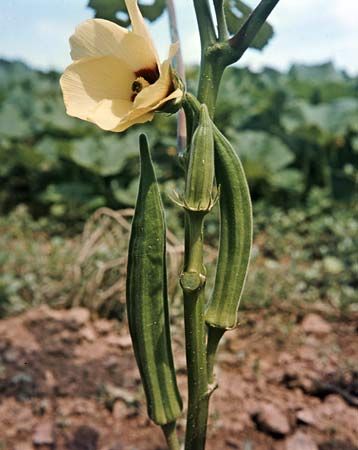
The okra plant (Abelmoschus esculentus) is a hairy, herbaceous annual plant characterized by several distinct features:
- Leaves: The leaves are heart-shaped and typically possess three to five lobes.1
- Flowers: The flowers are notable for their yellow petals, which feature a distinct crimson center.1
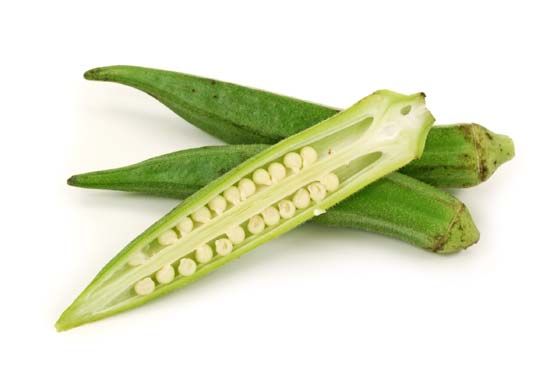
- Fruit: The fruit, or pod, is a tapering, 10-angled capsule. It is hairy at the base and generally measures between 10 and 25 cm (4 to 10 inches) in length, excluding dwarf varieties. Inside, the pod contains numerous dark-colored, oval seeds.1
The plant is highly valued for its tender, unripe fruit, which contains a significant amount of mucilage, a gelatinous substance that serves as a natural thickener for soups and gumbos.1
How is okra used in different cuisines around the world?
Okra is a versatile vegetable utilized in various culinary traditions, primarily valued for its high mucilage content, which acts as a natural thickener for broths and soups.1
In the United States, okra is a staple ingredient in the soul food tradition and is famously central to gumbos in the American South. Beyond its use in stews, okra can be prepared in several ways, including:13
- Sautéed: Cooked quickly over high heat to maintain texture.1
- Pickled: Preserved in brine for a tangy flavor profile.1
- Asparagus-style: Prepared similarly to asparagus, often steamed or roasted.1
Additionally, in some regions, the seeds of the plant are roasted and used as a substitute for coffee. While its culinary applications are widespread, the plant also has a history of medicinal use in the East, where its leaves and immature fruit have been used in poultices to help relieve pain.1
What is the role of mucilage in cooking?
In cooking, mucilage serves as a natural, gelatinous thickening agent. It is a sticky substance found in various plants, such as okra, legumes, and certain seaweeds.45
When used in culinary applications, particularly in dishes like gumbos or other stews, the mucilage released from the plant’s tissues helps to thicken broths and soups, providing them with a distinct texture. This property makes it a functional ingredient for chefs and home cooks looking to achieve a specific consistency in liquid-based dishes.514
Sources
- Okra — Encyclopædia Britannica
- okra — Merriam-Webster
- soul food — Encyclopædia Britannica
- mucilage — Merriam-Webster
- Did you know? — Merriam-Webster
Published on · 2 min read