Malvaceae
The Malvaceae family, often called the mallow or hibiscus family, includes numerous species prized in gardening and landscaping for their showy flowers.
What are some common ornamental plants from the Malvaceae family used in gardening and landscaping?
The Malvaceae family, often called the mallow or hibiscus family, includes numerous species prized in gardening and landscaping for their showy flowers.12
Common ornamental plants from this family include:
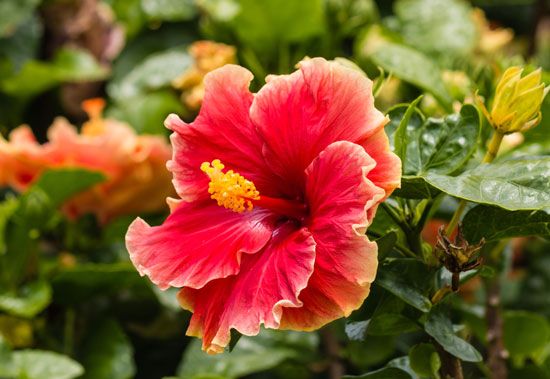
- Hibiscus: This genus features many popular ornamentals, such as the tropical Chinese hibiscus (H. rosa-sinensis), known for its large, bell-shaped blossoms, and the rose of Sharon (H. syriacus). The East African hibiscus (H. schizopetalus) is frequently grown in hanging baskets.2
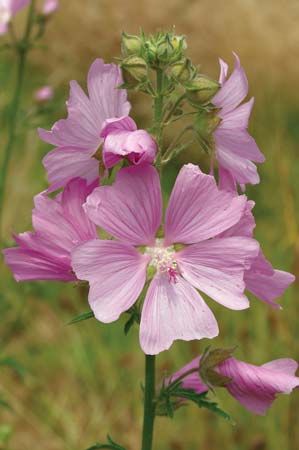
- Mallows: Several Malva species are garden staples, including the musk mallow (M. moschata) and high mallow (M. sylvestris).1
- Tree Mallow: (Lavatera arborea) is a tall, herbaceous plant often grown for its profuse, purplish-red flower clusters.3
- Wax Mallow: (Malvaviscus arboreus) is a reddish-flowering ornamental shrub.1
- Poppy Mallow: (Callirhoe involucrata) is a low-growing, hairy perennial with striking poppy-like flowers.1
- Globe Mallows: Species in the genus Sphaeralcea, such as the scarlet globe mallow (S. coccinea), are also utilized in landscapes.1
How do plants in the Malvaceae family reproduce and what pollinators do they attract?
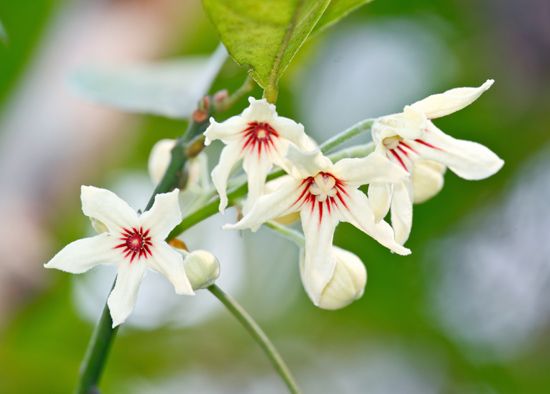
Plants in the Malvaceae family, also known as the mallow family, utilize specialized reproductive structures to facilitate pollination. A defining characteristic of these plants is that their stamens are often united to form a staminal tube that encloses the gynoecium. This structural arrangement helps protect the plant’s reproductive organs and can influence how pollinators interact with the flower.67
To prevent self-fertilization, many Malvaceae species employ mechanisms such as dichogamy, where the pollen is shed at a different time than when the stigmas are receptive.8
Regarding pollinators, the family attracts a variety of visitors depending on the species:
- Birds: Many hibiscus species are ornithophilous, meaning they are adapted for pollination by birds. These flowers are typically sturdy, brightly colored (often red), and produce copious amounts of nectar to meet the high metabolic needs of avian visitors.7
- Insects: As with many flowering plants, bees are significant pollinators for various members of the family. Depending on the flower’s morphology and color, they may also attract other insects, such as butterflies and moths, which are guided by color and fragrance.910
Which important crops or economically significant plants belong to the Malvaceae family?
The Malvaceae family, also known as the mallow or hibiscus family, includes several economically significant plants cultivated globally for food, fiber, and wood products.1516
Major Food Crops
- Cacao: The seeds of Theobroma cacao are the primary source of cocoa powder, cocoa butter, and chocolate.1517
- Okra: This herbaceous annual (Abelmoschus esculentus) is widely grown for its edible, tender unripe fruit pods, which are often used as a thickener in soups and stews.1518
- Durian: Obtained from Durio zibethinus, this fruit is prized by many for its creamy, fleshy aril.15
- Kola nut: Seeds from Cola species contain caffeine and are used in the production of cola drinks.1516
Fiber and Wood Products
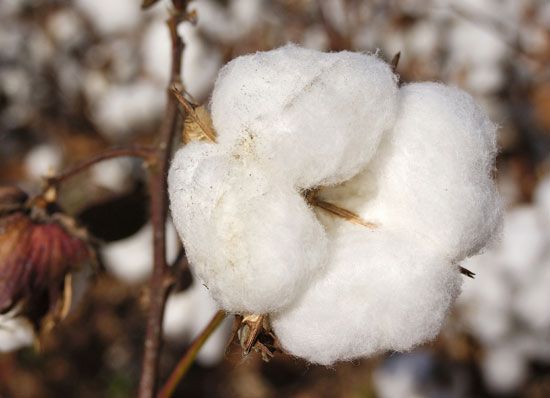
- Cotton: Various Gossypium species are among the world’s most important agricultural crops, cultivated for their seed-hair fibers used in textiles.1519
- Jute: Corchorus species provide fibers used for industrial and textile purposes.1516
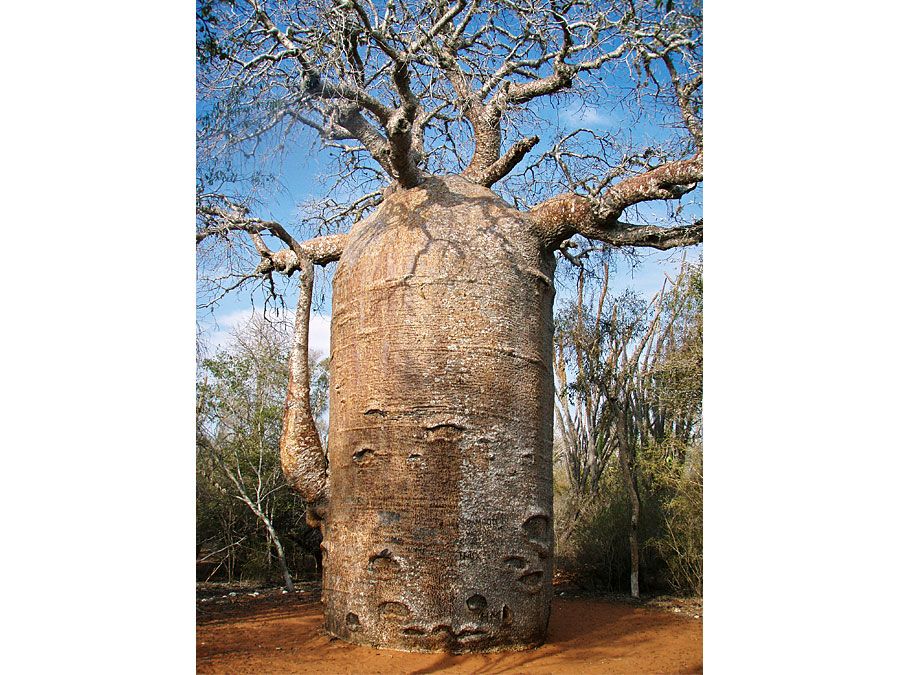
- Kapok: Derived from the hairs of the ovary wall in Ceiba and Bombax species, this fiber is used for insulation and stuffing.1516
- Balsa: The wood of Ochroma is valued for its lightweight properties.1516
- Linden: Tilia species are harvested for their valuable wood and are also popular as ornamental street trees.1516
How many genera and species are estimated to be part of the Malvaceae family?
The Malvaceae family, commonly known as the mallow family, is estimated to comprise approximately 240 to 250 genera and roughly 4,200 to 4,300 species.
It is important to note that the Malvales order, of which Malvaceae is a member, contains a total of 10 families, 338 genera, and about 6,000 species in its entirety. Because botanical classifications can evolve with new molecular data, these estimates for the Malvaceae family specifically reflect its status as the largest and most diverse family within the Malvales order.5
Sources
- tree mallow — Encyclopædia Britannica
- mallow — Encyclopædia Britannica
- Did you know? — Merriam-Webster
- hibiscus — Encyclopædia Britannica
- Malvales — Encyclopædia Britannica
- Malvales - Common characteristics — Encyclopædia Britannica
- angiosperm - The androecium — Encyclopædia Britannica
- pollination - Butterflies and moths — Encyclopædia Britannica
- major types of pollinators - Beetles and flies — Encyclopædia Britannica
- major types of pollinators - Bees — Encyclopædia Britannica
- pollination - Structural — Encyclopædia Britannica
- pollination - Mechanisms that permit self-pollination — Encyclopædia Britannica
- Botanical Sex: 9 Alluring Adaptations — Encyclopædia Britannica
- pollination - Birds — Encyclopædia Britannica
- Malvaceae — Encyclopædia Britannica
- list of economically important members of the family Malvaceae — Encyclopædia Britannica
- cotton — Encyclopædia Britannica
- Okra — Encyclopædia Britannica
- Malvales - Malvaceae , Cistaceae, and Muntingiaceae — Encyclopædia Britannica
- Cacao — Encyclopædia Britannica
- Malvaceae — Merriam-Webster
- cocoa - History of use — Encyclopædia Britannica
- Malpighiales — Encyclopædia Britannica
Published on · 3 min read