Marsh Mallow
The marsh mallow (Althaea officinalis) is a perennial herbaceous plant belonging to the mallow family (Malvaceae). Native to eastern Europe and northern…
What is marsh mallow?
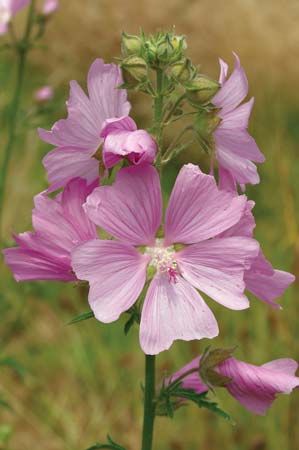
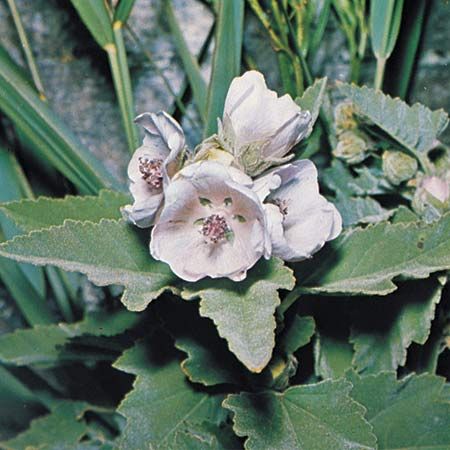
The marsh mallow (Althaea officinalis) is a perennial herbaceous plant belonging to the mallow family (Malvaceae). Native to eastern Europe and northern Africa, it has become naturalized in North America, where it typically thrives in marshy coastal environments. The plant is characterized by its heart-shaped or oval leaves and pinkish flowers, which grow on stalks reaching up to 1.8 metres (6 feet) in height.12
Historically, the root sap of the marsh mallow was used to create a medicinal syrup and a sweet confection known as marshmallow. While the plant’s roots, leaves, and flowers have been utilized in various herbal remedies, modern marshmallow candies are no longer made from the plant; instead, they are produced using a mixture of corn syrup, sugar, gelatin, and egg albumen.34
What other plants belong to the Malvaceae family?
The Malvaceae family, also known as the mallow or hibiscus family, is a diverse group comprising approximately 243 genera and over 4,225 species of herbs, shrubs, and trees. These plants are distributed globally, though they are most prevalent in tropical regions.56
Many members of this family are economically significant, serving as sources of food, natural fibers, and ornamental beauty. Notable plants within the Malvaceae family include:56
- Food Crops: Okra, cacao (the source of chocolate), and durian.56
- Fiber Sources: Cotton (genus Gossypium), kapok, and jute.56
- Trees and Shrubs: Balsa, baobab, linden (also known as basswood or lime trees), and the silk-floss tree.56
- Ornamentals and Flowers: Hibiscus, hollyhock, and the rose of Sharon.5
- Other Notable Genera: Cola (used in cola drinks), velvetleaf, and various species of mallow (Malva).536
How did the ingredients in marshmallows change over time?
The composition of marshmallows has evolved significantly from their origins as a medicinal preparation to the modern confection known today.
Originally, marshmallows were crafted as a versatile medicinal syrup and ointment. This early version relied on the root sap of the marsh mallow (Althaea officinalis), which was combined with sugar and egg white to create the base confection.21
In contrast, modern marshmallow candy no longer utilizes the plant’s root. Instead, it is produced using a mixture of corn syrup, dextrose, gelatin, and egg albumen. Gelatin, a protein substance derived from animal collagen, is essential in the contemporary process; it acts as a stabilizer and emulsifier, allowing the mixture to be whipped into a foam that holds its shape once cooled. This industrial shift replaced the traditional botanical ingredient with shelf-stable, mass-produced components.214
What are some other historical medicinal uses for plant roots?
Throughout history, various cultures have utilized plant roots for their medicinal properties. Beyond the marsh mallow root once used for syrups and ointments, several other roots have played significant roles in traditional medicine:
- Ginseng: Long regarded in China, Korea, and Japan as a panacea, the root of the Asian ginseng plant has been used as a stimulant and a prophylactic to improve mental performance, learning, and memory.11
- Licorice: Derived from the roots of Glycyrrhiza glabra, this “sweet root” has been used in folk medicine to treat peptic ulcers and other disorders. It is also frequently used to mask the unpleasant taste of other medicinal preparations in syrups and elixirs.12
- Jimsonweed: Indigenous peoples in the Virginia area historically ground the root of this plant to create a topical plaster for wounds, cuts, and bruises. It was also used as an anesthetic during the setting of broken bones.13
These examples highlight the long-standing reliance on botanical roots for both therapeutic and palliative care across diverse civilizations.1415
Sources
- marsh mallow — Encyclopædia Britannica
- marshmallow — Encyclopædia Britannica
- mallow — Encyclopædia Britannica
- marshmallow — Merriam-Webster
- list of plants in the family Malvaceae — Encyclopædia Britannica
- Malvaceae — Merriam-Webster
- Malvales - Malvaceae , Cistaceae, and Muntingiaceae — Encyclopædia Britannica
- Malvaceae — Encyclopædia Britannica
- Malvales — Encyclopædia Britannica
- gelatin — Encyclopædia Britannica
- ginseng — Encyclopædia Britannica
- pharmaceutical industry - Medicines of ancient civilizations — Encyclopædia Britannica
- licorice — Encyclopædia Britannica
- herbal — Encyclopædia Britannica
- 10 everyday items invented by Indigenous Americans - Pain relievers — Encyclopædia Britannica
Published on · 3 min read