Ouarzazat
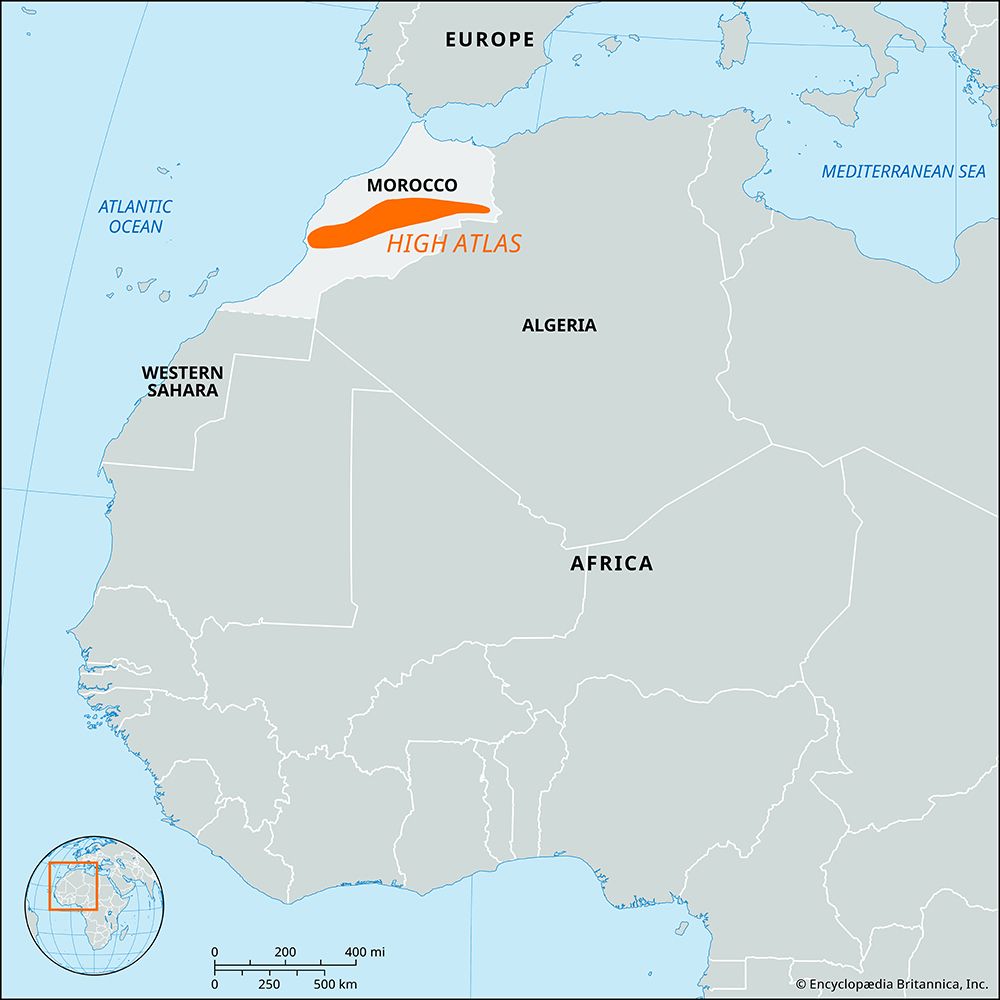
Ouarzazate is a town located in south-central Morocco. It is situated on the Saharan side of the High Atlas Mountains, positioned specifically in the valley…
Where is Ouarzazate located in Morocco, and what is its geographical significance?
Ouarzazate is a town located in south-central Morocco. It is situated on the Saharan side of the High Atlas Mountains, positioned specifically in the valley of the Ouarzazate River near its confluence with the Drâa River.1
Geographically, the town serves as a vital oasis and a strategic road junction, notably connecting to Marrakech via the n’Tichka Pass. The surrounding region is characterized by an arid landscape extending from the High Atlas crests to the Sahara border, where human habitation is largely restricted to river valleys. Beyond its role as a military center, the area is economically significant for its mineral resources, including manganese, cobalt, and copper, and its agricultural potential, which was bolstered by the construction of the Mansour ed-Dahabi dam.1
What is the history of Ouarzazate, and how has it evolved over time?
Ouarzazate, located in south-central Morocco, has a relatively modern origin compared to the ancient trade routes of the region. The town was established as a military post during the period of French occupation between 1932 and 1956.1
Since its founding, the town has evolved from a strictly military center into a vital regional hub. While it retains its military character and fortress, it has grown into an essential oasis and a strategic road junction connecting the High Atlas Mountains to Marrakech via the n’Tichka Pass.1
The economic evolution of the area has been driven by two primary factors:
- Mineral Wealth: The region became significant for its extraction of manganese at Imini, cobalt at Bou-Azzer, and copper deposits.1
- Agricultural Development: The completion of the Mansour ed-Dahabi dam in 1971 significantly enhanced the agricultural potential of the Drâa River valley, transforming the local economy.1
How has the Berber culture influenced Ouarzazate’s traditions and way of life?
Ouarzazate is situated in a region where Berber (Amazigh) populations have historically maintained communities in the Drâa River valley and the High Atlas mountains. While Ouarzazate itself originated as a 20th-century French military post, it is deeply embedded within a landscape defined by centuries of Berber social and cultural traditions.13
The influence of Berber culture on the broader region’s way of life is characterized by several enduring elements:
- Social Structure: Traditionally, Berber society was organized into patrilineal family units and tribal groups (Ait). Governance was often managed by a council of elders known as the jamāʿah, which handled adjudication and community peace-keeping.3
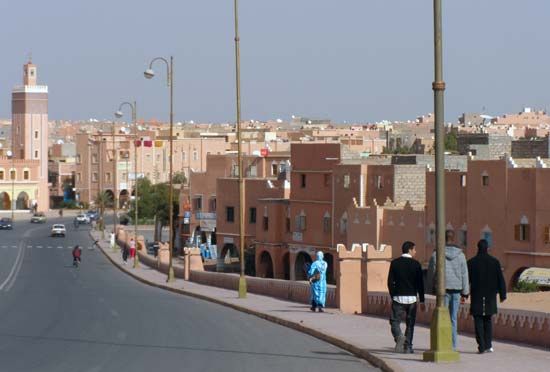
- Architecture and Craft: The region is noted for its distinctive architecture, including flat-roofed “castles” and fortified structures. Berber traditions in weaving, pottery, and metalwork remain central to the local identity.3
- Economic Heritage: Historically, Berber communities practiced subsistence agriculture and pastoralism in the oases. Today, this cultural heritage—including traditional costumes and crafts—is a vital component of the local tourism industry, which markets the area’s unique Moroccan character.13
How does Ouarzazate’s location near the Sahara Desert affect its ecosystem and biodiversity?
Ouarzazate is situated in an arid region on the Saharan side of the High Atlas Mountains, which significantly dictates its local ecosystem and biodiversity. Because the area is characterized by extreme aridity, natural vegetation is sparse and primarily restricted to river valleys, such as those of the Dadès and Drâa rivers.1
Ecosystem Characteristics
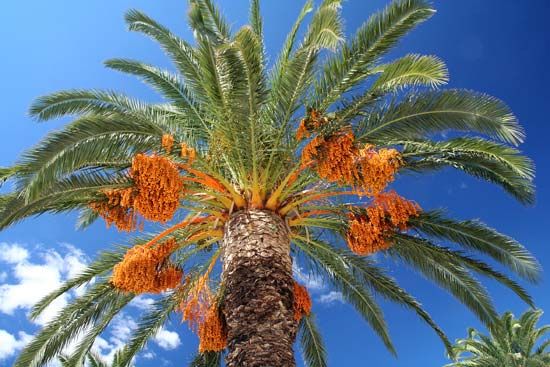
- Oasis Dependence: In this desert-adjacent environment, plant life is highly concentrated around oases. The date palm is a staple of these cultivated areas, providing essential shade and resources in an otherwise harsh landscape.14
- Drought Adaptation: Vegetation in the broader region is characteristically drought-resistant. In the surrounding arid plains, one may find hardy species such as the jujube tree, esparto grass, and various halophytes (salt-tolerant plants) in saline depressions.456
- Fauna: While large game has been largely eliminated from the region over centuries, the area still supports species adapted to desert conditions. Occasional sightings of gazelles occur in the south, and the region is home to fennecs (desert foxes) and various small mammals.45
The region is also susceptible to desertification, a process that threatens dryland ecosystems through soil erosion, overgrazing, and unsustainable irrigation practices.78
Sources
- Ouarzazat — Encyclopædia Britannica
- Atlas Mountains - Transportation — Encyclopædia Britannica
- Berber — Encyclopædia Britannica
- Morocco - Plant and animal life — Encyclopædia Britannica
- Algeria - Plant and animal life — Encyclopædia Britannica
- Sahara - Plant life — Encyclopædia Britannica
- Niger - Plant and animal life — Encyclopædia Britannica
- desertification — Encyclopædia Britannica
- desertification - Four areas affected by desertification — Encyclopædia Britannica
Published on · 3 min read