Palatine Hill
The Palatine Hill has been preserved through centuries of transformation, evolving from the site of Rome's legendary founding into an aristocratic quarter…
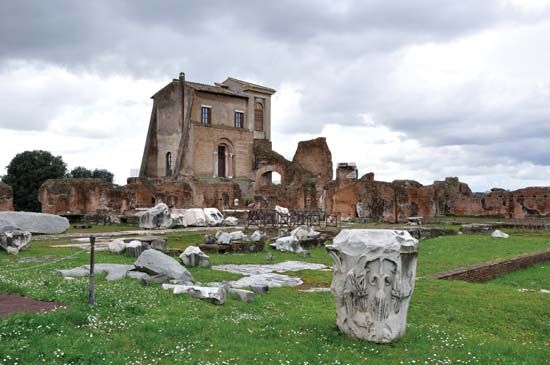
How has the Palatine Hill been preserved and what can visitors see there today?
The Palatine Hill has been preserved through centuries of transformation, evolving from the site of Rome’s legendary founding into an aristocratic quarter and later a medieval stronghold. While the site fell into disrepair following the fall of the Roman Empire, it saw a resurgence during the Italian Renaissance when noble families constructed residences there. Today, the hill is maintained as an archaeological site, characterized by its intricate topography and landscaped vegetation.1
Visitors to the Palatine Hill can explore a rich layering of history, including:
- Archaeological Ruins: The site features remains ranging from prehistoric structures to the expansive ruins of imperial palaces built by emperors such as Augustus and Domitian.1
- The Lupercal: Archaeologists have identified a vaulted sanctuary buried deep within the hill, which is believed to be the ancient site Romans revered as the cave where Romulus and Remus were nurtured.1
- Historical Topography: Guests can observe the three original summits—the Germalus, the Velia, and the Palatium—that formed the foundation of the city.1
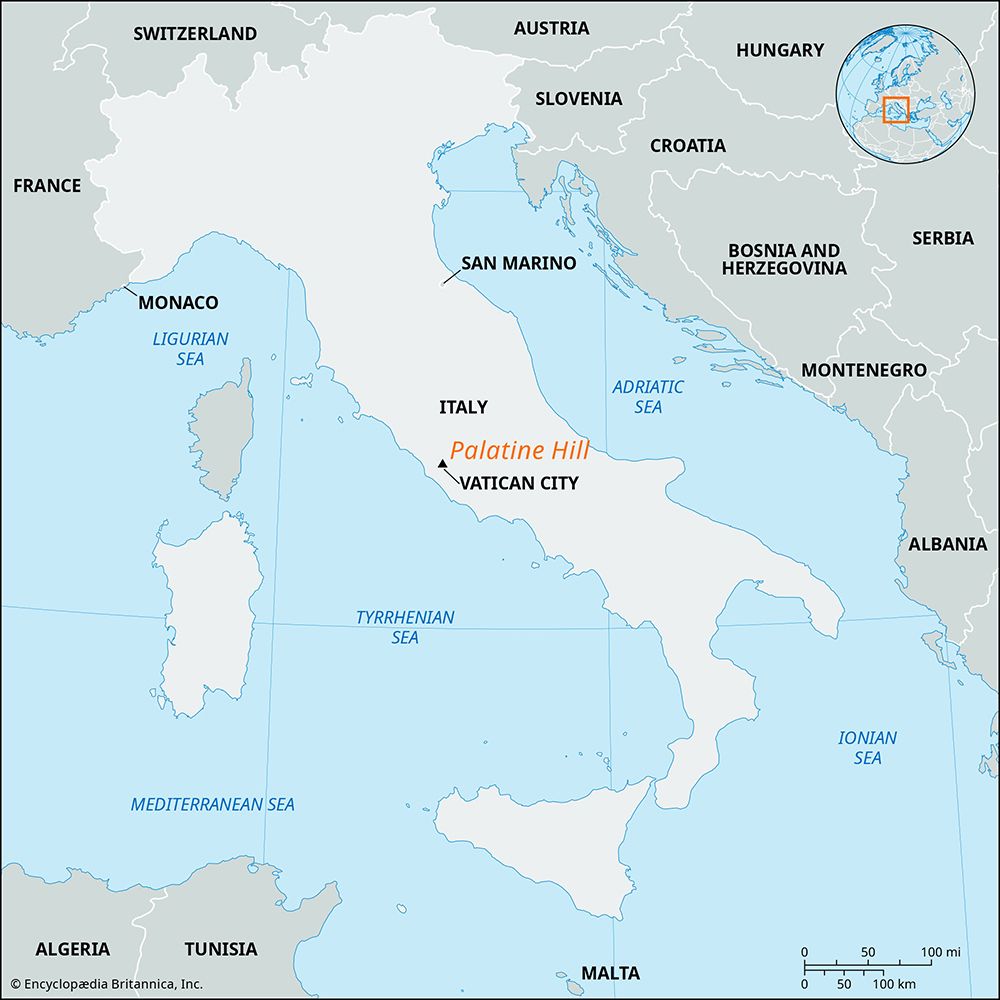
How tall is the Palatine Hill and how does its elevation compare to the other hills of Rome?
The Palatine Hill rises 131 feet (40 metres) above the area south of the Roman Forum and reaches an elevation of 168 feet (51 metres) above sea level.1
The hill is topographically complex, originally consisting of three distinct summits: the Germalus, the Velia, and the Palatium, the latter of which was the highest point and eventually gave its name to the entire hill. While the Palatine is famously identified as one of the Seven Hills of Rome—a group that also includes the Capitoline, Quirinal, Viminal, Esquiline, Caelian, and Aventine—the provided search results do not specify the precise comparative elevations of these other hills.123
Historically, the Palatine served as the defensible site where the city of Rome was founded, and its elevation contributed to its status as a premier residential district for the Roman aristocracy and, eventually, the site of vast imperial palaces.134
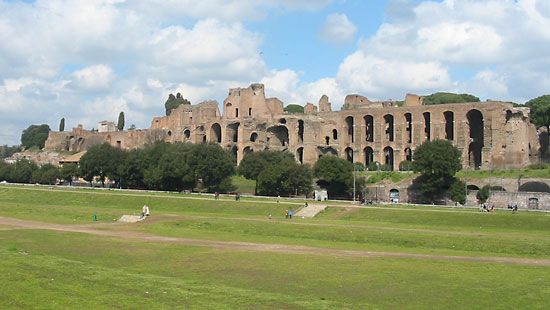
How did the Palatine Hill become associated with Roman emperors and nobility?
The Palatine Hill became the premier address for Roman nobility and emperors due to its historical significance as the site of Rome’s founding and its elevated, scenic location. By the 3rd century BCE, it had already established itself as a superior residential district for leading citizens, who built numerous houses and temples there.14
The hill’s imperial association was solidified by Augustus, who was born on the Palatine and chose to maintain his private residence there even after becoming Rome’s first emperor. Following his lead, subsequent emperors—including Tiberius, Nero, and Domitian—constructed increasingly vast and lavish palace complexes. These structures eventually expanded to cover virtually the entire hill, projecting toward the Roman Forum and the Circus Maximus.14
During the Renaissance, the hill’s prestige was reclaimed by noble Roman families, who built villas and pleasure gardens atop the ruins of these ancient imperial structures, further cementing the site’s legacy as a home for the elite.14
What is the geographical location of the Palatine Hill in relation to other famous Roman landmarks?
The Palatine Hill is a four-sided plateau situated in the heart of ancient Rome, positioned immediately south of the Roman Forum. Its location is central to the city’s topography, serving as the site where Rome was founded and later evolving into the primary residential district for the Roman aristocracy and emperors.14
The hill’s geographical relationship to other landmarks is defined by its proximity to key public spaces:
- Roman Forum: The imperial palaces built on the Palatine were designed to project downward toward the Forum, physically and symbolically linking the emperors’ private residences to the city’s political and social center.14
- Circus Maximus: The Palatine overlooks this massive hippodrome, which is located in the valley directly between the Palatine and the Aventine Hill.45
- Esquiline Hill: The Palatine was historically linked to the Esquiline by the Velia, a topographical isthmus that served as a natural bridge between the two elevations.1
- Tiber River: The slopes of the Palatine descend toward the Tiber River, where legend states the waters once deposited the founders of Rome.14
Sources
- Palatine Hill — Encyclopædia Britannica
- Seven Hills of Rome — Encyclopædia Britannica
- Rome - City site — Encyclopædia Britannica
- Rome - The Palatine — Encyclopædia Britannica
- Circus Maximus — Encyclopædia Britannica
Published on · 3 min read