Palghat Gap
The Palghat Gap is a significant break in the Western Ghats mountain range in southwestern India. Spanning approximately 20 miles (32 km) in width, this…
What is Palghat Gap?
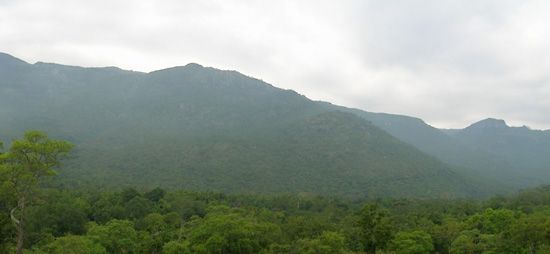
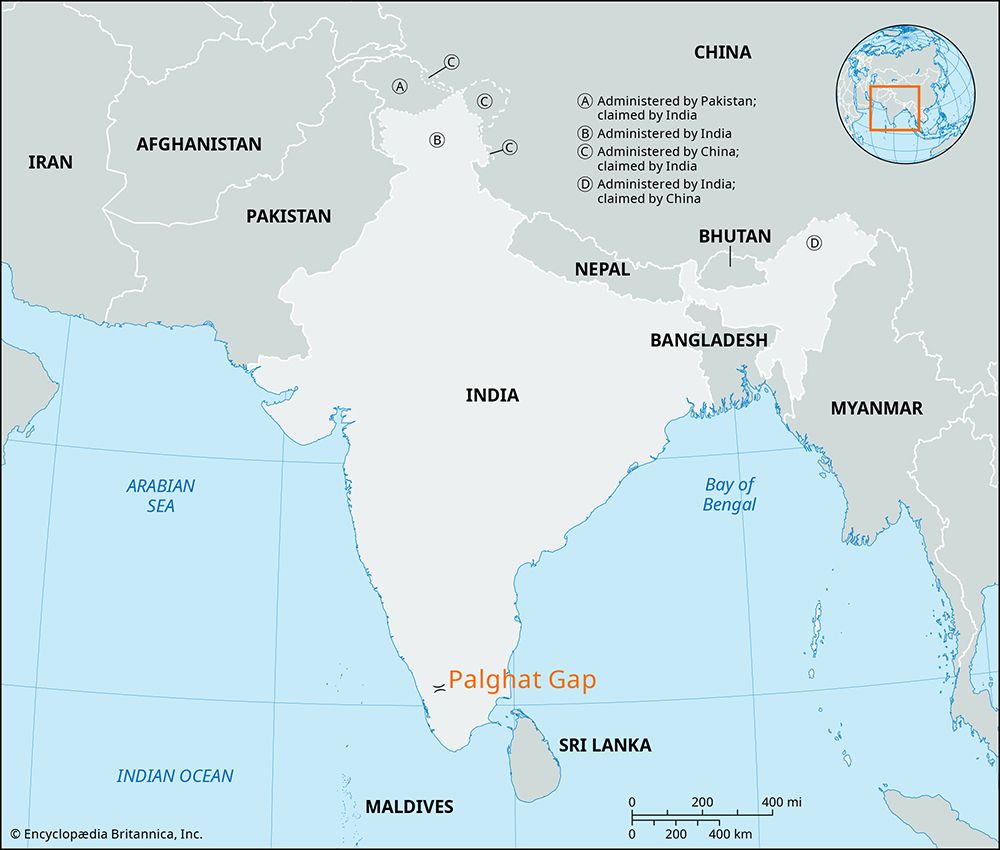
The Palghat Gap is a significant break in the Western Ghats mountain range in southwestern India. Spanning approximately 20 miles (32 km) in width, this opening is situated between the Nilgiri Hills to the north and the Anaimalai Hills to the south.1
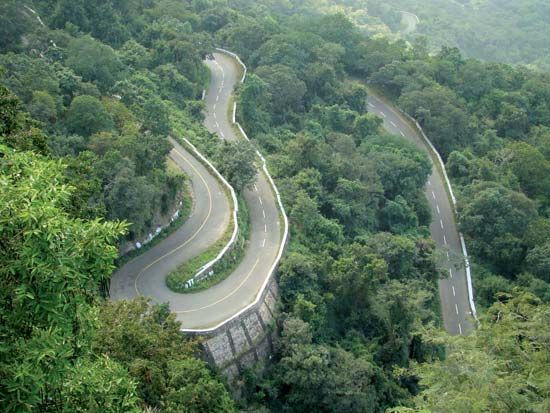
The gap straddles the border of Kerala and Tamil Nadu, functioning as a vital communication corridor. It facilitates transport via highways and rail lines that connect Palghat in Kerala with Coimbatore and Pollachi in Tamil Nadu. Beyond its role in transportation, the Palghat Gap significantly impacts the regional climate by allowing wet southwest monsoons and storms originating from the Bay of Bengal to pass through the mountain range.1
How do the Western Ghats affect India’s monsoon patterns?
The Western Ghats play a fundamental role in India’s monsoon system by acting as a major orographic barrier to moisture-laden winds originating from the Arabian Sea.21
As the southwest monsoon winds strike the steep seaward slopes of the range, they are forced to rise. This ascent causes the air to cool, leading to heavy condensation and copious rainfall on the windward side, making the Western Ghats a primary watershed for peninsular India. Some areas on the crest of the range receive extreme annual precipitation, such as Mahabaleshwar, which can record over 245 inches (6,250 mm) of rain.321
Conversely, as these winds descend on the leeward side of the mountains, the air warms and its moisture-bearing capacity increases. This creates a rain shadow effect, resulting in a belt of semiarid terrain across the Deccan plateau that receives significantly less precipitation. Additionally, the Palghat Gap serves as a critical break in this barrier, allowing monsoon winds and storms from the Bay of Bengal to pass through the mountain range and influence the climate of southern India.214
What unique wildlife is found in the Nilgiri Hills?
The Nilgiri Hills, a key part of the Western Ghats, support a diverse range of wildlife, particularly within protected areas like the Mudumalai National Park.
The region serves as a critical habitat for several notable species:
- Large Mammals: The area is home to elephants, tigers, gaurs (wild cattle), and sloth bears.67
- Predators and Primates: Predators such as leopards and black panthers roam the forests, alongside various primates including macaques, langurs, and lorises.67
- Specialized Fauna: The hills are also known for the Nilgiri tahr, a unique goatlike mammal, as well as hyenas, jackals, and wild boars./hyena), jackals, and wild boars.9
- Reptiles and Birds: The diverse ecosystem supports reptiles like pythons and venomous king cobras, as well as numerous bird species such as drongos, flycatchers, and golden orioles.67
How does the Palghat Gap influence trade between Kerala and Tamil Nadu?
The Palghat Gap serves as a vital geographic corridor that facilitates economic and logistical connectivity between Kerala and Tamil Nadu. By providing a low-elevation break in the Western Ghats, the gap acts as a primary communication route for the region.1
This natural opening allows for the development of essential infrastructure, including highways and rail lines, that link Palghat in Kerala with Coimbatore and Pollachi in Tamil Nadu. These transport networks are critical for the movement of goods and people, effectively bridging the two states across the otherwise formidable mountain barrier.1
We could dive deeper into the historical significance of this route or explore how the gap’s influence on regional climate impacts the agricultural trade between these states.
Sources
- Palghat Gap — Encyclopædia Britannica
- Ghats — Encyclopædia Britannica
- Western Ghats — Encyclopædia Britannica
- climate of India - Factors affecting climate in India — Encyclopædia Britannica
- India - The southwest monsoon — Encyclopædia Britannica
- Nilgiri Hills — Encyclopædia Britannica
- Mudumalai National Park — Encyclopædia Britannica
- Periyar Wildlife Sanctuary: Top Questions — Encyclopædia Britannica
- Tamil Nadu - Plant and animal life — Encyclopædia Britannica
Published on · 3 min read