Opium Poppy
The opium poppy (Papaver somniferum) is distinct from other poppy species primarily due to its pharmacological properties and specific physical…
How does the opium poppy differ from other poppy species in terms of appearance and properties?
The opium poppy (Papaver somniferum) is distinct from other poppy species primarily due to its pharmacological properties and specific physical characteristics.
Physical Appearance
The opium poppy is an annual plant that typically grows 1 to 1.5 meters (3 to 5 feet) tall, though it can reach up to 5 meters in some conditions. It is characterized by:12
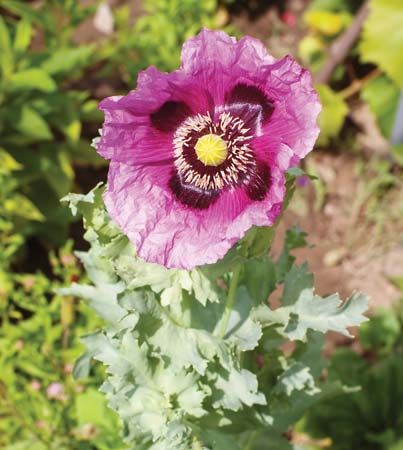
- Foliage: Silver-green leaves that are lobed or toothed.12
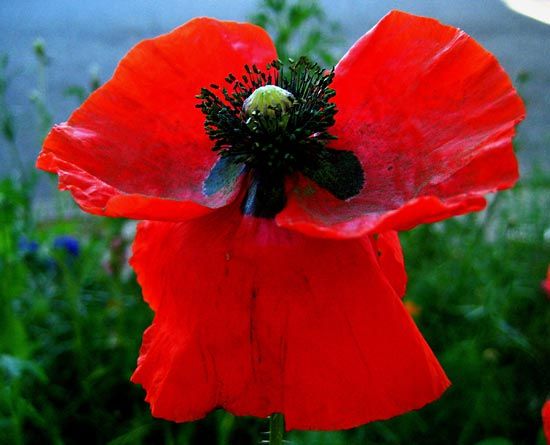
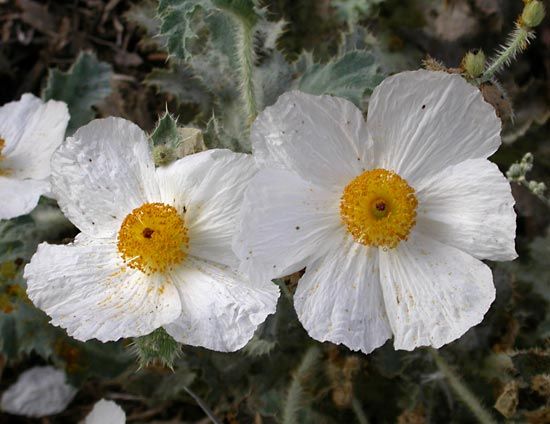
- Flowers: Large, 13-cm (5-inch) blooms that are naturally blue-purple or white, though red and double-flowered strains have been developed for ornamental use.12
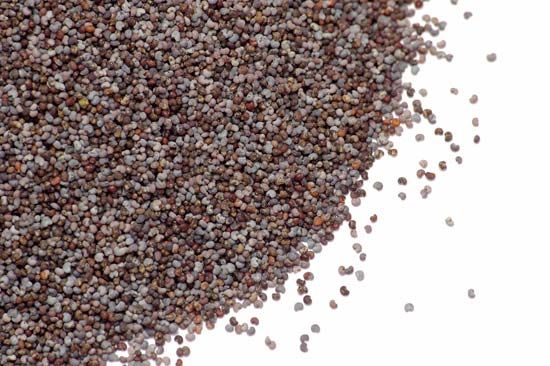
- Seeds: Numerous small, kidney-shaped seeds that range from grayish blue to dark blue.2
In contrast, other species like the Oriental poppy are long-lived perennials with scarlet or salmon blooms, while the Iceland poppy is a shorter perennial with fragrant, smaller flowers.1
Properties and Uses
The defining property of the opium poppy is the milky latex found in its unripe seed capsules. This latex contains potent alkaloids such as morphine, codeine, and thebaine, which are used medicinally as analgesics but are also highly addictive. While the plant is a source of these narcotics, its ripe seeds are nonnarcotic and widely used in baking and seasoning.12
Are there any non-narcotic uses of the opium poppy plant?
Beyond its well-known role in medicine and narcotics, the opium poppy (Papaver somniferum) has several significant non-narcotic uses:
- Culinary Applications: The plant is widely cultivated for its poppy seeds, which are non-narcotic and have been used as a spice and food flavoring since ancient times. These seeds are commonly used in breads, baked goods, and various culinary preparations for their mild, nutty taste.512
- Oil Production: The seeds contain a high percentage of fixed oil—ranging from 44 to 50 percent—which is extracted for use as poppy-seed oil.52
- Ornamental Gardening: Due to their attractive appearance, various strains of the opium poppy have been developed as garden ornamentals. These include varieties with white, pink, or red flowers, as well as those with double or semidouble blooms.126
- Animal Feed: The seeds are also utilized as a source of birdseed.2
How is opium extracted from the opium poppy plant?
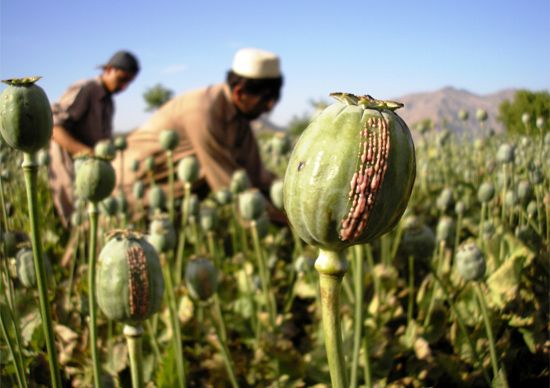
Opium is obtained from the opium poppy (Papaver somniferum) through a process involving the plant’s seed capsules. Once the flower petals have fallen, the unripe seedpods are slightly incised or slit.7
Upon being cut, the seedpods exude a milky latex. When this substance is exposed to air, it coagulates and changes color, eventually hardening into a gumlike brown mass known as raw opium. This raw material can then be processed into various forms, such as powder, lumps, or bricks, or further refined to extract medicinal alkaloids like morphine and codeine, as well as the illicit derivative heroin.7
What are the legal restrictions on cultivating opium poppies in different countries?
The cultivation of the opium poppy (Papaver somniferum) is subject to strict international and national legal frameworks due to its role as the source of narcotic alkaloids like morphine, codeine, and heroin.38
International Regulation
Global efforts to control the plant began in the early 20th century, leading to a series of treaties that eventually consolidated under the United Nations. The most significant of these is the Single Convention on Narcotic Drugs (1961), which established a comprehensive regime to limit the production and use of opium to strictly medical and scientific purposes. This framework is overseen by the International Narcotics Control Board, which monitors compliance to prevent illicit trafficking and drug abuse.29
National Restrictions
While the plant is legally grown in some regions for the production of essential medicinal alkaloids, its status varies significantly by jurisdiction:
- Regulated Cultivation: In countries where cultivation is permitted, it is typically restricted to licensed farmers and strictly monitored by government agencies to ensure the harvest is used only for pharmaceutical manufacturing.38
- Prohibited Cultivation: In many nations, including the United States, unlicensed cultivation of the opium poppy is a serious legal offense. Because the plant is the raw material for heroin, authorities maintain rigorous enforcement to prevent the diversion of crops into the illicit drug trade.38
Sources
- poppy — Encyclopædia Britannica
- opium poppy — Encyclopædia Britannica
- opium - History of opium — Encyclopædia Britannica
- Papaveraceae — Encyclopædia Britannica
- poppy seed — Encyclopædia Britannica
- opium poppy — Merriam-Webster
- opium — Encyclopædia Britannica
- drug use - International controls — Encyclopædia Britannica
- United Nations - Control of narcotics — Encyclopædia Britannica
Published on · 3 min read