Orchis
Orchis is a genus of terrestrial orchids native to Eurasia and northern Africa. Unlike many tropical orchids that are epiphytic, Orchis species are…
Where are Orchis plants typically found in nature?
Orchis is a genus of terrestrial orchids native to Eurasia and northern Africa. Unlike many tropical orchids that are epiphytic, Orchis species are terrestrial, meaning they grow in the soil.12
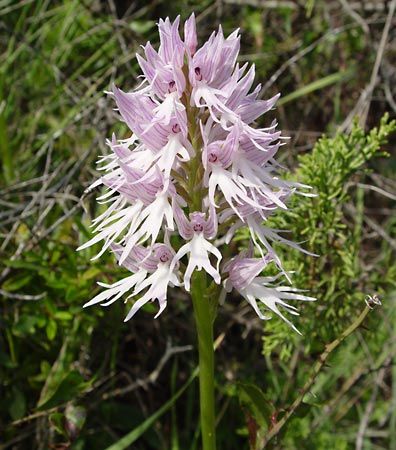
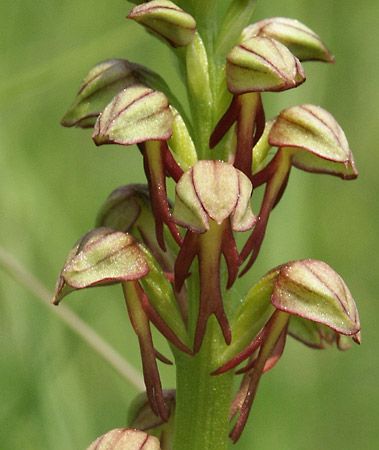
These plants are characterized by a pair of egg-shaped underground tubers and typically feature a single flower spike with multiple purple, pink, or white flowers. Specific species, such as the common man orchid, are found in grasslands across their native range, while others like the naked man orchid are native to the Mediterranean region. Some species are also known to inhabit marshy areas.13
What is the etymology of the name ‘Orchis’ and how does it relate to the plant’s appearance?
The name Orchis is derived from the Greek word órchis, which translates to “testicle”. This etymology is directly linked to the plant’s physical appearance: many species within the genus Orchis possess a pair of egg-shaped underground tubers that resemble the shape of testicles.541
This naming convention highlights the historical observation of the plant’s root system, which is a defining characteristic of the genus. While the term “orchid” is also derived from this same Greek root, the name Orchis specifically identifies this genus of terrestrial orchids known for these distinct, fleshy, paired tubers.541
What are the defining characteristics of the Orchis plant genus?
The Orchis genus consists of approximately 20 species of terrestrial orchids native to Eurasia and northern Africa. These plants are defined by several key morphological characteristics:
- Underground Tubers: A primary identifying feature is the presence of a pair of egg-shaped underground tubers. Historically, the resemblance of these tubers to testicles led to the genus name Orchis, derived from the Greek word for “testicle.”91
- Growth Habit: Unlike many other members of the Orchidaceae family that are epiphytic, Orchis species are terrestrial, meaning they grow rooted in the soil.91
- Floral Structure: Each plant typically produces a single flower spike featuring multiple purple, pink, or white flowers. The petals and sepals often form a helmetlike structure, and the flower lip (labellum) is usually lobed. In several species, the flowers are noted for resembling helmeted human figures.1
- Foliage: Most species possess several narrow leaves located at the base of the plant.1
How have Orchis plants been used historically in medicine or culture?
Historically, the most significant cultural and economic use of Orchis plants involves the production of a substance known as salep. To create this, the tuberous roots of several Orchis species—such as the early purple orchid (Orchis mascula)—are collected, boiled, dried, and ground into a fine powder.121
This powder is used as a flour substitute and is traditionally prepared as a nutritious drink by mixing it with sugar, flavorings, and a liquid such as water or milk. While the orchid family is generally noted for its lack of commercially important products outside of vanilla, the use of Orchis tubers for food and sustenance has been a long-standing practice in parts of southern Europe.121
It is important to clarify that while some other orchids are used in various folk medicines to treat ailments, the primary historical association for the Orchis genus is its role in food preparation rather than medicinal application.12
Sources
- Orchis — Encyclopædia Britannica
- orchid - Ecology — Encyclopædia Britannica
- man orchid — Encyclopædia Britannica
- orchid: Top Questions — Encyclopædia Britannica
- orchis — Merriam-Webster
- showy orchis — Merriam-Webster
- hand orchis — Merriam-Webster
- Orchidaceae — Merriam-Webster
- orchid — Encyclopædia Britannica
- orchid - Floral structure — Encyclopædia Britannica
- orchid - Structural diversity — Encyclopædia Britannica
- orchid - Economic importance — Encyclopædia Britannica
- orris oil — Encyclopædia Britannica
Published on · 3 min read