Heliconia
Heliconia is the sole genus of the family Heliconiaceae, comprising nearly 200 species of perennial herbs native to tropical America and parts of the western…
What is heliconia?
Heliconia is the sole genus of the family Heliconiaceae, comprising nearly 200 species of perennial herbs native to tropical America and parts of the western Pacific.12
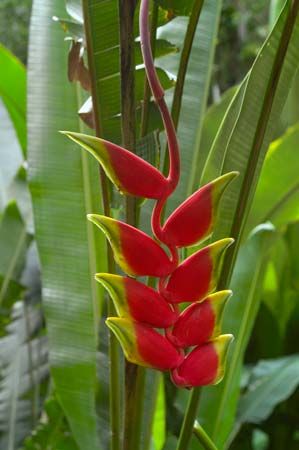
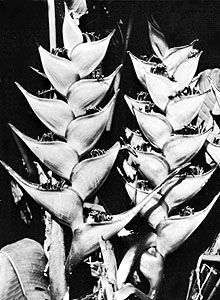
These plants are primarily cultivated for their striking, waxy bracts—leaf-like structures that form a colorful inflorescence in shades of red, orange, yellow, or green. Their leaves are typically large and banana-like, while their small flowers are commonly pollinated by hummingbirds. Notable species include the parrot heliconia (H. psittacorum) and the hanging lobster claw (H. rostrata), which serves as the national flower of Bolivia. When ripe, the plant produces blue to blue-purple fruits.1
How do hummingbirds help pollinate Heliconia flowers?
Hummingbirds are the primary pollinators for many species of Heliconia. This relationship is part of a broader “bird-pollination” syndrome, characterized by specific floral adaptations that cater to the biology of these birds.341
Because hummingbirds have a poor sense of smell but possess excellent color vision—particularly in the red part of the spectrum—Heliconia flowers and their associated bracts are often brightly colored in shades of red, orange, or yellow. These flowers are typically tubular in shape, which accommodates the hummingbird’s slender beak and tongue.435
To support the high metabolic needs of hummingbirds, Heliconia flowers produce copious amounts of nectar. The flowers are sturdily constructed to withstand the probing of the bird’s bill, and they often feature protruding stamens and stigmas. As a hummingbird feeds, these structures brush against the bird’s head or breast, effectively transferring pollen. Unlike many insect-pollinated flowers, Heliconia generally lacks a landing platform, as hummingbirds are capable of hovering while they feed.416
What is the difference between a flower and a bract?
The primary difference between a flower and a bract lies in their biological function and structure.
Flowers
Flowers are specialized reproductive shoots of angiosperms. They are complex structures designed to facilitate reproduction, typically consisting of four main whorls:
- Sepals: Often green, these protect the developing bud.
- Petals: Usually colorful, these serve to attract pollinators.
- Stamens: The male reproductive organs that produce pollen.
- Pistils: The female reproductive organs that contain the ovary and receive pollen.8
Bracts
Bracts are modified, often leaflike structures positioned beneath a flower or an inflorescence. Unlike flowers, they are not reproductive organs. Their primary roles include:
- Protection: Shielding the developing flower or flower cluster.78
- Attraction: In many species, such as poinsettias or dogwoods, bracts are brightly colored to mimic petals and attract pollinators to the actual, often smaller, flowers nearby.78
In short, while a flower is the site of sexual reproduction, a bract is a supportive, vegetative structure that assists the plant in its reproductive efforts.7910
Why are Heliconia plants often called lobster claws or bird-of-paradise?
Heliconia plants are often referred to by these common names due to the unique shape and appearance of their inflorescence, which consists of waxy, brightly colored bracts that support small flowers.1
- Lobster Claws: This name is derived from the physical resemblance of the plant’s hanging or erect flower clusters to the claws of a lobster. The bracts are often arranged in a way that mimics the segmented, gripping form of a crustacean’s claw, particularly in species like the hanging lobster claw (Heliconia rostrata).2121
- False Bird-of-Paradise: Heliconia is frequently called the “false bird-of-paradise” because its vibrant, exotic appearance is visually similar to the true bird-of-paradise (Strelitzia), which is a different genus of flowering plants. Both share striking, colorful bracts that attract pollinators, leading to the common association in horticultural contexts.12
Sources
- heliconia — Encyclopædia Britannica
- heliconia — Merriam-Webster
- pollination - Birds — Encyclopædia Britannica
- angiosperm - Pollination — Encyclopædia Britannica
- Asparagales - Pollination — Encyclopædia Britannica
- orchid - Bird pollination — Encyclopædia Britannica
- bract — Encyclopædia Britannica
- plant - Flowers — Encyclopædia Britannica
- bract — Merriam-Webster
- angiosperm - The receptacle — Encyclopædia Britannica
- palm - Inflorescences — Encyclopædia Britannica
- hanging lobster claw — Merriam-Webster
- lobster claw — Merriam-Webster
Published on · 3 min read