Ordovician-Silurian Extinction
The Ordovician-Silurian extinction event occurred during the Hirnantian Age of the Ordovician Period and the subsequent Rhuddanian Age of the Silurian Period.
What was the time period of the Ordovician-Silurian extinction event?
The Ordovician-Silurian extinction event occurred during the Hirnantian Age of the Ordovician Period and the subsequent Rhuddanian Age of the Silurian Period.12
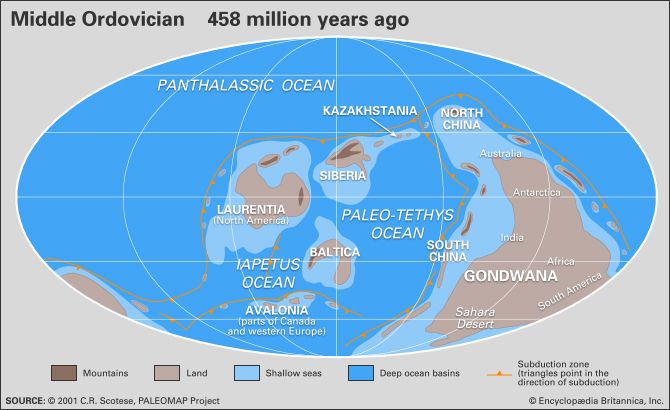
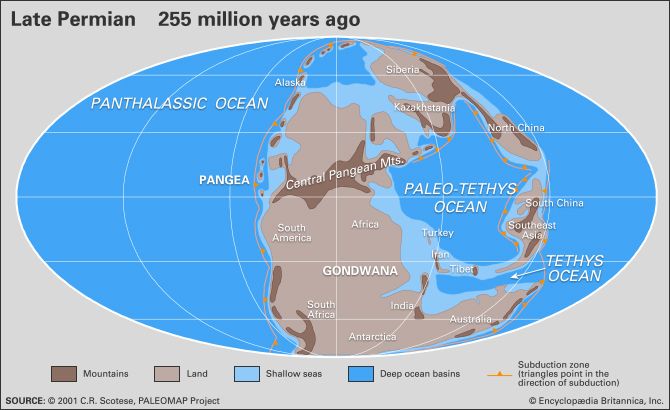
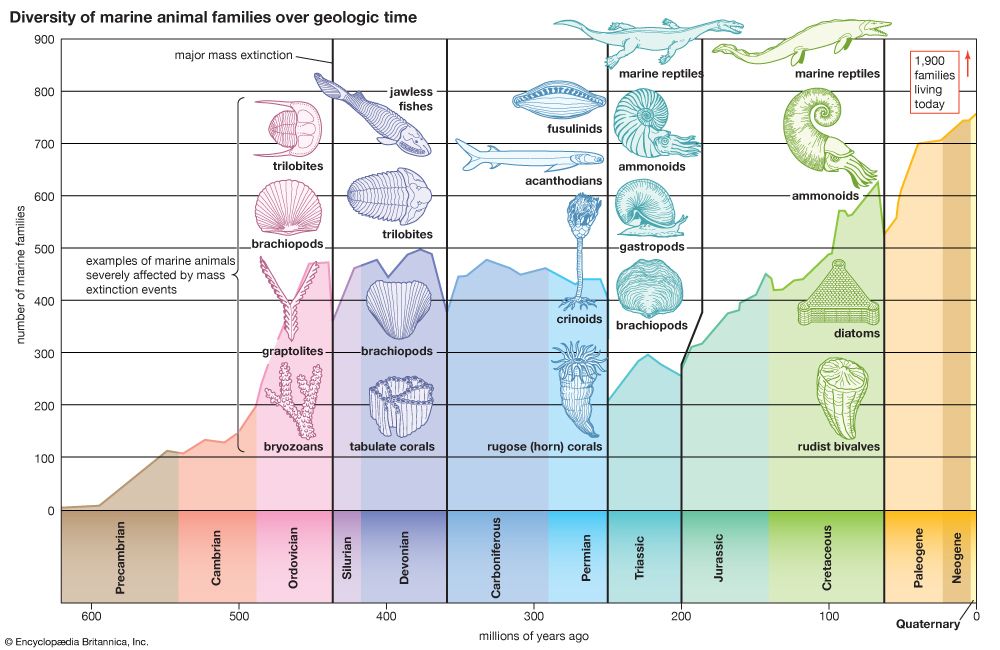
Specifically, this mass extinction took place approximately 445.2 million to 440.8 million years ago. It unfolded in several phases, driven largely by global cooling and significant fluctuations in sea level associated with glaciation over parts of the Gondwana supercontinent. This event resulted in the loss of an estimated 85 percent of all Ordovician species, ranking it as the second most severe mass extinction in Earth’s history.21
What role did changes in atmospheric carbon dioxide levels play in the mass extinction?
Changes in atmospheric carbon dioxide (CO2CO_2) levels are considered a primary driver of the Ordovician-Silurian extinction event, primarily through their influence on global climate.2
During the Ordovician Period, CO2CO_2 levels were significantly higher than today, which generally maintained a warm, greenhouse climate. However, some paleontologists suggest that an early phase of the extinction may have been triggered by a decline in these levels. This drawdown of CO2CO_2 is believed to have been caused by several factors:562
- Increased Weathering: The uplift of mountains (orogeny) accelerated the chemical weathering of silicate rocks, a process that removes CO2CO_2 from the atmosphere.25
- Reduced Volcanism: A decline in volcanic activity meant that less CO2CO_2 was being replenished in the atmosphere.5
- Biological Productivity: Cooling oceans may have enhanced the upwelling of nutrients, increasing the population of photosynthetic organisms, which further sequestered CO2CO_2.5
This reduction in CO2CO_2 led to a global cooling phase and the development of extensive glaciation over the Gondwana supercontinent. The resulting drop in sea level drained shallow epicontinental seas, destroying critical habitats and contributing to the mass extinction.25
How did life on Earth recover after the Ordovician-Silurian extinction?
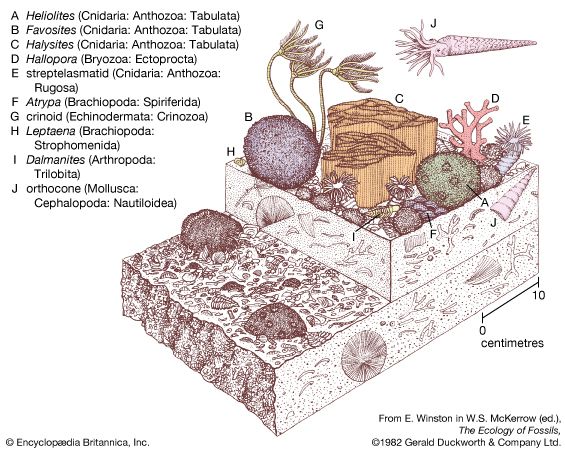
Following the Ordovician-Silurian extinction, marine life underwent a significant recovery process as ecosystems stabilized during the early Silurian Period.3
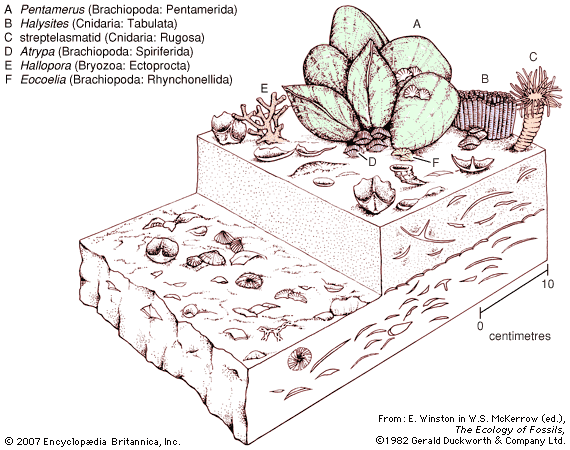
While the extinction eliminated approximately 85 percent of species, the surviving groups—such as brachiopods, trilobites, bryozoans, and conodonts—began to repopulate the oceans. A notable pattern during this recovery was the shift from regional to global distribution. Many organisms that were previously endemic to specific continents, such as Laurentia, were replaced by more cosmopolitan forms that had migrated from other regions. Consequently, while the taxonomic composition changed, the overall structure of Silurian ecosystems remained remarkably similar to those of the Ordovician.2
The recovery was facilitated by the stabilization of sea levels following the retreat of glaciers during the Rhuddanian Age. Despite this initial rebound, the Silurian Period continued to experience smaller, recurring extinction and radiation events linked to ongoing fluctuations in sea level and water temperature, which influenced the evolution of various nektonic and pelagic organisms.28
What were some of the key species that survived this mass extinction?
The Late Ordovician mass extinction was a severe event that significantly reduced marine biodiversity, yet several key groups successfully survived and transitioned into the Silurian Period. Survival rates varied across different taxa, with some groups demonstrating greater resilience than others.3
Key groups that survived the extinction include:
- Trilobites: These arthropods showed notable resilience, with 45 out of 71 genera (approximately 63 percent) successfully making the transition into the Silurian.3
- Corals: Tabulate and heliolitoid corals also persisted, with 20 out of 70 genera (29 percent) surviving the extinction event.3
- Brachiopods: While this group was hit particularly hard—with only 17 percent of late Ordovician genera surviving—they remained a significant component of marine ecosystems.31
- Other Groups: Various other organisms, including conodonts, bryozoans, gastropods, and crinoids, also survived and played a role in the subsequent repopulation of marine environments.19
Following the extinction, many of these surviving groups shifted from being regionally restricted to having a more global, cosmopolitan distribution as they repopulated shallow seas.1
Sources
- Ordovician Period - Mass extinction at the end of the Ordovician — Encyclopædia Britannica
- Ordovician-Silurian extinction — Encyclopædia Britannica
- Silurian Period - Late Ordovician mass extinction — Encyclopædia Britannica
- Ordovician Period — Encyclopædia Britannica
- Ordovician Period - Paleoclimate — Encyclopædia Britannica
- A Journey Through Time Since the Precambrian - Ordovician Period: 485.4 million to 443.4 million years ago — Encyclopædia Britannica
- Climate change - Cenozoic climates — Encyclopædia Britannica
- Silurian Period - Silurian extinctions — Encyclopædia Britannica
- Permian extinction - Marine invertebrates — Encyclopædia Britannica
- A Journey Through Time Since the Precambrian - Silurian Period: 443.4 million to 419.2 million years ago — Encyclopædia Britannica
- Ordovician Period - Regional extinctions within the Ordovician — Encyclopædia Britannica
- Ordovician Period - Invertebrates — Encyclopædia Britannica
- Silurian Period - Conodonts — Encyclopædia Britannica
Published on · 3 min read