Ornithomimus
Unlike many other theropod dinosaurs, which were typically characterized by sharp, bladelike teeth adapted for carnivory, Ornithomimus and other members of…
How did the diet and feeding habits of Ornithomimus differ from other dinosaurs?
Unlike many other theropod dinosaurs, which were typically characterized by sharp, bladelike teeth adapted for carnivory, Ornithomimus and other members of the Ornithomimidae family were largely toothless and possessed beaklike jaws.123
While most theropods were specialized predators—ranging from the massive, flesh-tearing tyrannosaurids to the agile, clawed dromaeosaurs—the physical characteristics of Ornithomimus, including its toothlessness and long, slender limbs, suggest a different lifestyle. Paleontologists believe these dinosaurs were likely omnivorous, potentially occupying a dietary niche similar to that of the modern ostrich.231
Because they lacked the specialized shearing or grinding dentition found in herbivorous groups like hadrosaurs or ceratopsians, their exact feeding habits remain somewhat unclear. However, their unique anatomy distinguishes them from the strictly carnivorous or strictly herbivorous trends seen in their contemporaries.432
What adaptations did Ornithomimus have that made it well-suited for running?
Ornithomimus possessed several anatomical adaptations that made it highly efficient for rapid movement, drawing a strong physical comparison to the modern ostrich.
Key features supporting its cursorial (running) lifestyle include:
- Elongated Hind Limbs: The dinosaur featured very long legs, which are essential for covering significant ground with each stride.1
- Specialized Foot Structure: Its feet were characterized by exceedingly long metatarsals (foot bones). Similar to modern birds, these bones did not touch the ground, a configuration that enhances speed and efficiency in bipedal locomotion.16
- Lightweight Build: The overall skeletal structure, including a small, thin-boned skull, contributed to a lightweight frame that reduced the energy required for high-speed movement.16
These adaptations allowed Ornithomimus to be a swift, agile runner, likely using its speed to navigate its environment during the Cretaceous Period.
In which geological period did Ornithomimus live, and where have their fossils been found?
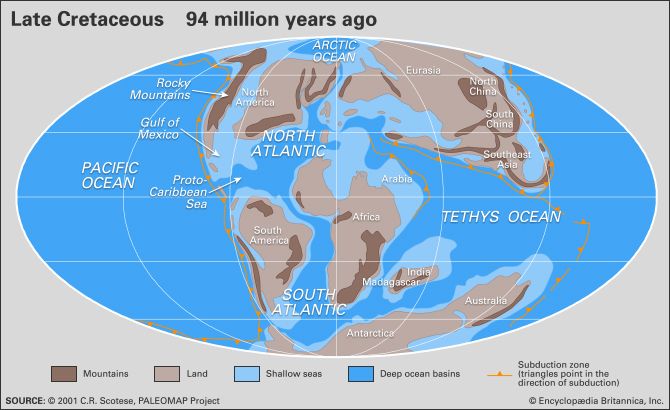
Ornithomimus lived during the Cretaceous Period, a span of time ranging from approximately 125 million to 66 million years ago.1
Fossils of this genus have been discovered in deposits across several regions, including:
What are the key physical characteristics of Ornithomimus dinosaurs?
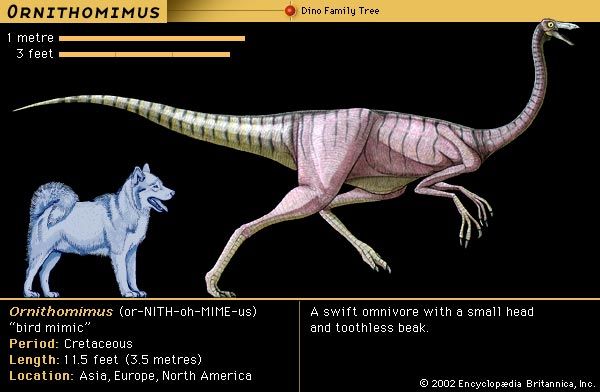
Ornithomimus, whose name means “bird mimic,” was a theropod dinosaur characterized by a striking resemblance to the modern ostrich. Key physical characteristics include:
- Skull and Jaws: It possessed a small, thin-boned skull with a large brain cavity. The jaws were toothless and covered by a beak, similar to those of modern birds.1
- Body Size and Build: The animal reached lengths of approximately 3.5 meters (11.5 feet) and featured a long, slender neck.1
- Limbs: Its legs were very long, particularly the metatarsals (foot bones), which facilitated efficient movement. Its forelimbs terminated in three-fingered hands, which were unusual because all three fingers were approximately the same length.16
- Plumage: Ornithomimus was a feathered dinosaur. Its plumage pattern was similar to that of an ostrich, suggesting that feathers played a role in thermoregulation.1
Sources
- Ornithomimus — Encyclopædia Britannica
- dinosaur - The plant eaters — Encyclopædia Britannica
- Beak — Encyclopædia Britannica
- dinosaur - Theropoda — Encyclopædia Britannica
- dinosaur - Tetanurae — Encyclopædia Britannica
- Struthiomimus — Encyclopædia Britannica
Published on · 2 min read