Struthiomimus
Struthiomimus (meaning "ostrich mimic") is a genus of ostrichlike dinosaurs that lived during the Late Cretaceous Period, approximately 99 million to 65…
What is Struthiomimus?
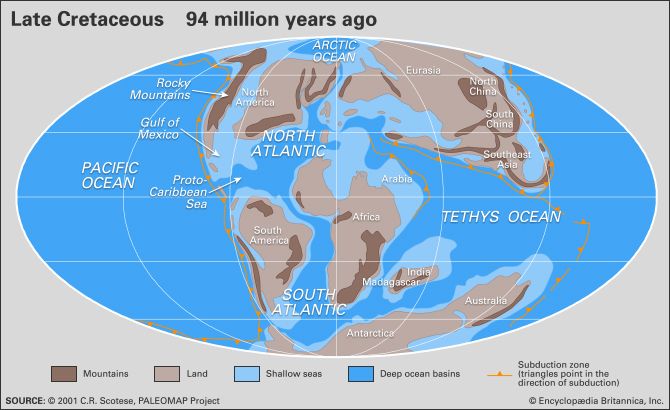
Struthiomimus (meaning “ostrich mimic”) is a genus of ostrichlike dinosaurs that lived during the Late Cretaceous Period, approximately 99 million to 65 million years ago, in North America.12
Measuring about 2.5 meters (8 feet) in length, this theropod was built for speed, featuring strong hind limbs and birdlike, three-toed feet with elongated metatarsals that did not touch the ground. Its anatomy included a small, toothless skull with a horny, birdlike beak, supported by a slender, flexible neck. Its forelimbs were long and thin, ending in three-fingered hands with sharp claws used for grasping. As a member of the family Ornithomimidae, it is distinguished by having three fingers of nearly equal length.1
How fast could Struthiomimus run?
While Struthiomimus was clearly adapted for rapid movement, the provided Britannica knowledge base does not contain specific data regarding its maximum running speed.
The dinosaur’s anatomy, including its strong, well-developed hind limbs and elongated metatarsals that did not touch the ground, confirms it was built for speed, similar to modern ostriches.1
What did Struthiomimus eat with its toothless beak?
Struthiomimus possessed a small, light, and toothless skull with jaws likely covered by a horny, birdlike beak. While the specific diet of Struthiomimus is not explicitly detailed in the provided records, it belongs to the family Ornithomimidae, a group of theropod dinosaurs that are generally considered to have been omnivorous. Its close relative, Ornithomimus, also featured a toothless, beaklike jaw and is similarly classified as an omnivore.17
It is important to distinguish Struthiomimus from ornithopods, such as the hadrosaurs (duck-billed dinosaurs). While hadrosaurs also possessed toothless beaks, they were specialized herbivores that utilized complex dental batteries to grind tough vegetation. Unlike those specialized plant-eaters, the anatomy of Struthiomimus—including its slender, grasping hands—suggests a more varied, opportunistic diet.481
What are other examples of theropod dinosaurs?
Theropods were a highly diverse group of saurischian dinosaurs that included everything from small, bird-like creatures to massive apex predators. Because birds are descendants of a specific lineage of small theropods, they are technically classified within this group as well.1011
Beyond Struthiomimus, other notable examples of theropod dinosaurs include:
- Tyrannosaurids: This group includes the famous Tyrannosaurus rex, as well as Albertosaurus, Daspletosaurus, and Tarbosaurus. They are known for their massive skulls, reduced two-fingered hands, and powerful bite.1112
- Carnosaurs: These were large predators, most notably Allosaurus, as well as Giganotosaurus and Acrocanthosaurus.1012
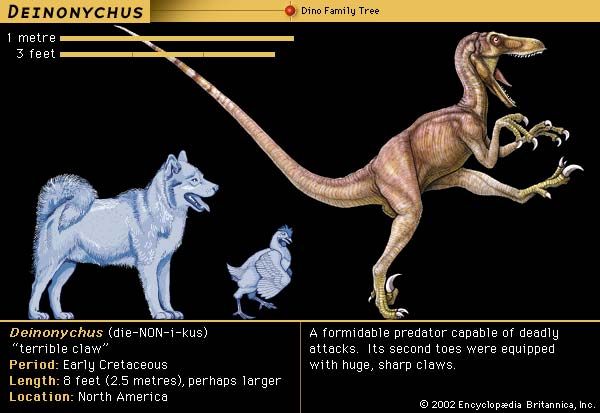
- Dromaeosaurs: Often called “raptors,” these include Velociraptor and Deinonychus. They were characterized by long, grasping arms and specialized, sickle-like talons on their feet.1112
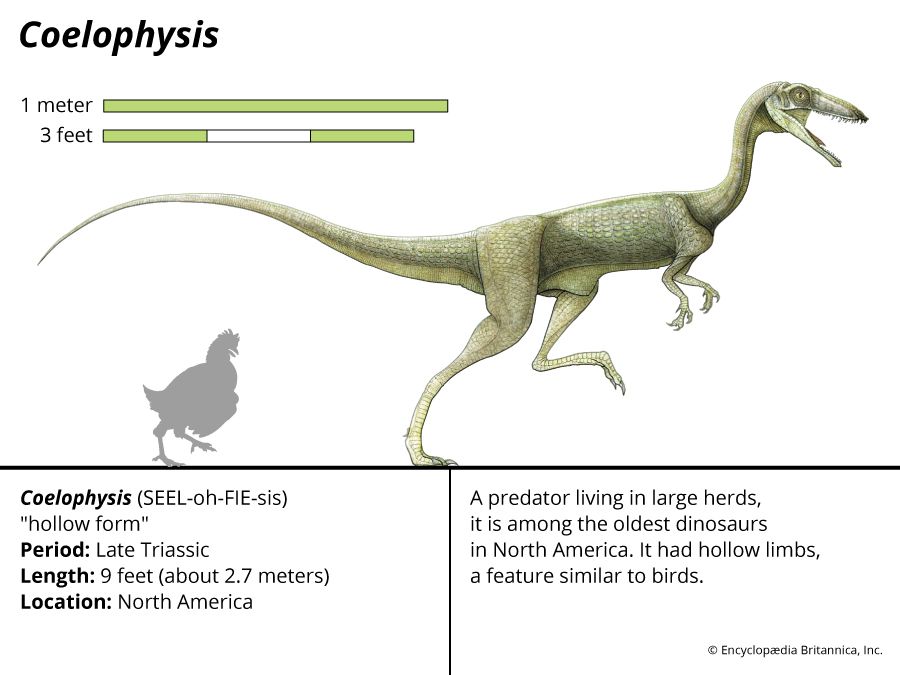
- Early Theropods: These include the small, slender Coelophysis and the early, primitive Eodromaeus.1011
- Small Coelurosaurs: This group features agile, hollow-boned dinosaurs such as Compsognathus and Ornitholestes.1112
Sources
- Struthiomimus — Encyclopædia Britannica
- Struthiomimus — Merriam-Webster
- Ornitholestes — Encyclopædia Britannica
- ornithopod — Encyclopædia Britannica
- Tyrannosaurus rex: Top Questions — Encyclopædia Britannica
- dromaeosaur — Encyclopædia Britannica
- Ornithomimus — Encyclopædia Britannica
- tetraodontiform - Feeding habits — Encyclopædia Britannica
- dinosaur - The plant eaters — Encyclopædia Britannica
- theropod — Encyclopædia Britannica
- dinosaur - Theropoda — Encyclopædia Britannica
- dinosaur - Tetanurae — Encyclopædia Britannica
Published on · 2 min read