Ossa
The term "Ossa" has two primary meanings depending on the context:

What is Ossa?
The term “Ossa” has two primary meanings depending on the context:
- Anatomical: Ossa is the plural form of the Latin word os, which means bone. In scientific and medical terminology, it refers to the individual components of the skeletal system.12
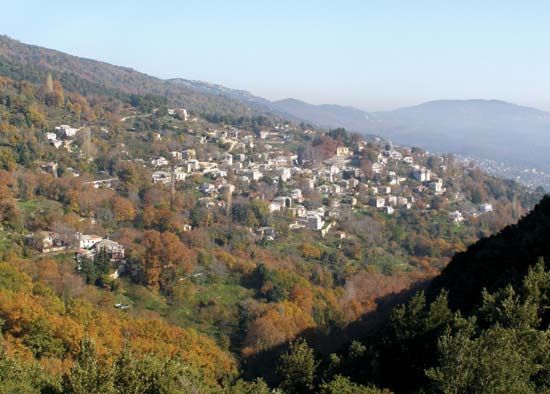
- Geographical: Mount Ossa is a mountain located in the Thessaly region of northeastern Greece. It reaches an elevation of 6,490 feet (1,967 meters).3
It is important to note that the term is distinct from ossification, which is the biological process by which cartilage transforms into hard bone.1
What is the process of ossification?
Ossification is the biological process of bone formation. It begins during the third month of fetal development and continues until late adolescence, involving the activity of specialized cells called osteoblasts. These cells secrete a matrix known as osteoid, which subsequently mineralizes to form hard bone.4
There are two primary methods of ossification:
- Endochondral Ossification: Most bones begin as a cartilage model. Osteoblasts replace this cartilage with bone, proceeding outward from ossification centers. In long bones, this process persists at the epiphyseal plate until the bone reaches its full adult length.45
- Intermembranous Ossification: Certain bones, such as those of the skull, develop directly within fibrous membranes without a cartilage intermediate. Osteoblasts secrete osteoid into these membranes, forming a network of bony processes that radiate from ossification centers.45
Following these processes, the resulting immature bone undergoes bone remodeling to achieve its mature structure.4
What are the main functions of the human skeletal system?
The human skeletal system serves several vital roles that are essential for maintaining the body’s structure and physiological health. Its primary functions include:
- Support: The skeleton acts as the fundamental framework for the body, providing the necessary structure to maintain posture and support the trunk and limbs.78
- Protection: The bones form protective enclosures for delicate internal structures. For example, the cranium shields the brain, the vertebral column protects the spinal cord, and the rib cage safeguards the heart and lungs.78
- Motion: By serving as anchor points for skeletal muscles, bones act as levers that enable movement, ranging from simple actions to complex physical tasks.78
- Blood Cell Production: The bone marrow found within bone cavities is the primary site for hematopoiesis, the process of producing blood cells, including red blood cells, white blood cells, and platelets.9
Additionally, bones play a critical role in mineral homeostasis, acting as a reservoir for minerals like calcium and phosphate, which are essential for various bodily functions.10
What is the significance of Mount Ossa in Greek mythology?
In Greek mythology, Mount Ossa is primarily significant as the site of a legendary attempt by the Aloads—the giant sons of the sea god Poseidon—to reach the heavens.
According to the myth, the giants sought to scale Mount Olympus by stacking other mountains upon one another. They placed Mount Ossa atop Olympus and then piled Mount Pelion on top of Ossa. However, the god Apollo intervened and killed the giants before they could complete their ascent to the home of the gods.1112
Located in eastern Thessaly, Greece, the mountain is a steep-sided massif that rises to a peak of 6,489 feet (1,978 m) and is separated from the Olympus massif by the Vale of Tempe.11
Sources
- Did you know? — Merriam-Webster
- ossa — Merriam-Webster
- Ossa, Mount — Merriam-Webster
- bone formation — Encyclopædia Britannica
- cartilage — Encyclopædia Britannica
- bone - Types of bone formation — Encyclopædia Britannica
- human skeleton: Top Questions — Encyclopædia Britannica
- bone mineralization — Encyclopædia Britannica
- human skeleton — Encyclopædia Britannica
- bone marrow — Encyclopædia Britannica
- Ossa — Encyclopædia Britannica
- Mount Pelion — Encyclopædia Britannica
Published on · 2 min read