Pindus Mountains
The Pindus Mountains are the principal mountain range and geographical backbone of mainland Greece. The range trends in a north-northwest to south-southeast…
Where are the Pindus Mountains located, and what countries do they span?
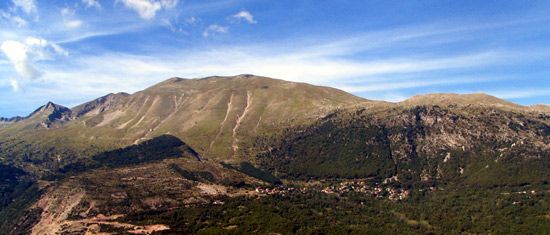
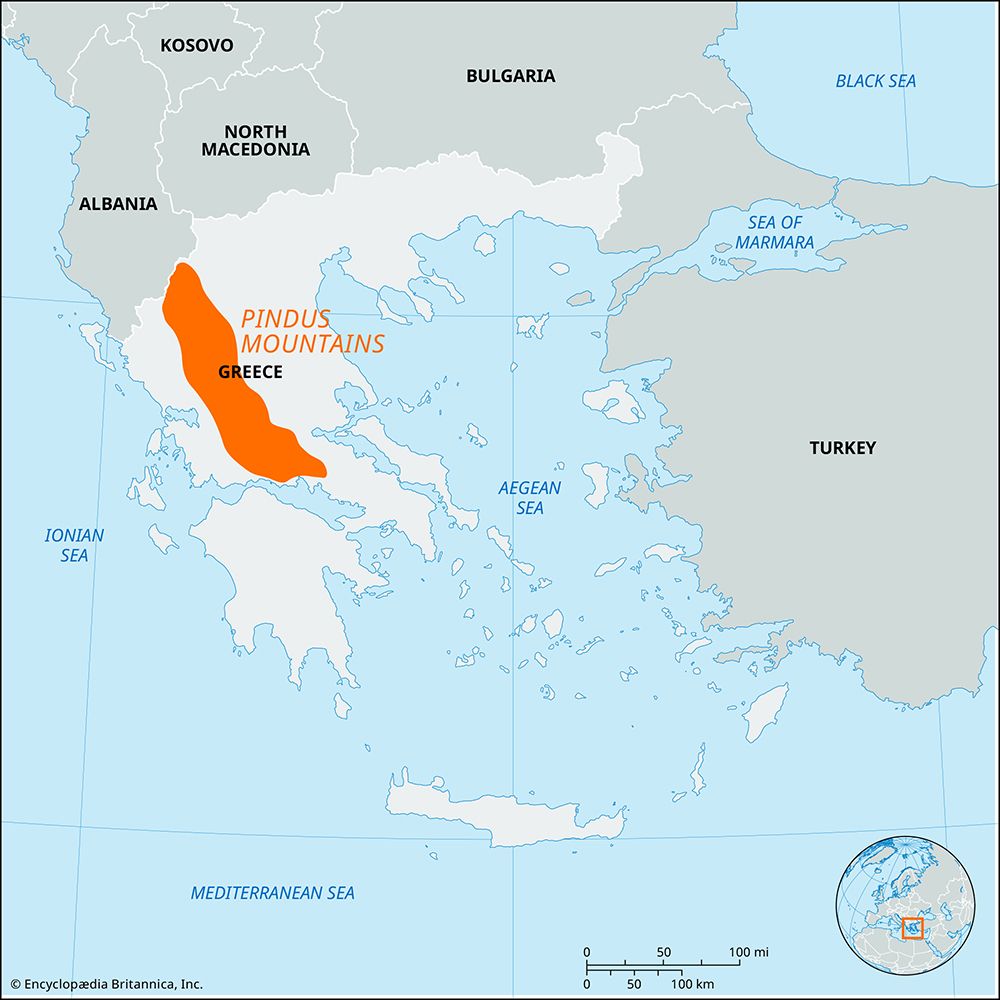
The Pindus Mountains are the principal mountain range and geographical backbone of mainland Greece. The range trends in a north-northwest to south-southeast direction, extending from the border of Albania down to central Greece, just north of the Peloponnese.1
While the range is primarily associated with Greece, it is considered an extension of the calcareous Dinaric range of the Balkans, and its northern reaches extend into Albania. The highest point of the range is the Smólikas massif, which reaches an elevation of 8,651 feet (2,637 metres) near the Albanian border.1
What are some of the major rivers that originate in the Pindus Mountains?
The Pindus Mountains serve as a vital watershed for mainland Greece, with heavy rainfall and snowmelt feeding several significant rivers. These rivers originate from the range’s slopes and flow toward different seas:
- Western Slopes: The Achelous River, one of the longest in Greece, rises in the central Epirus region of the Pindus and flows into the Ionian Sea. The Mégdhova River also originates on the western slopes.12
- Eastern Slopes: The Pineiós River (also known as the Peneus) rises in the Lákmos mountains of the Pindus range. It flows through the plains of Thessaly before emptying into the Aegean Sea. The Aliákmon River also draws its headwaters from the eastern side of the range.134
What are some of the notable peaks and their heights in the Pindus mountain range?
The Pindus Mountains feature a rugged, non-uniform landscape characterized by several distinct massifs. Below are some of the notable peaks and their respective elevations:
Peak / Massif
Elevation (feet)
Elevation (metres)
Smólikas
8,651
2,637
Tzoumérka
(Athamánon)
8,100
2,469
Peristéri
(Lákmos)
7,529
2,295
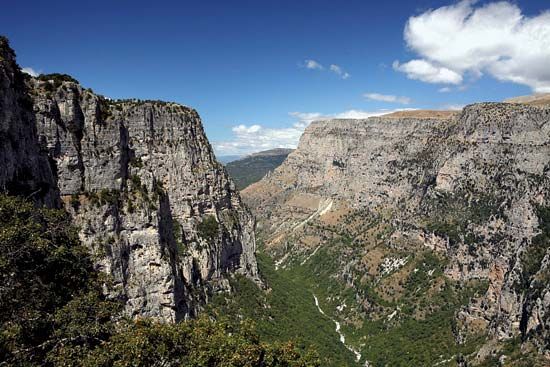
The Smólikas massif serves as the highest point of the entire range and is located near the border with Albania. Other significant massifs within the range include the Grámmos, Vóïon, Tímfi, Lingos, and the Tymphrestos Mountains, which mark the southern limits of the range. These mountains are primarily composed of metamorphic and volcanic rocks, including granite, schist, and serpentine, and are known for their precipitous slopes and limited natural passes.1
What role did the Pindus Mountains play during World War II and the Greek Civil War?
Sorry, the Britannica knowledge base does not contain this information.
Sources
- Pindus Mountains — Encyclopædia Britannica
- Pineiós River — Encyclopædia Britannica
- Olt River — Encyclopædia Britannica
- Achelous River — Encyclopædia Britannica
- Achelous — Merriam-Webster
- Peneus — Merriam-Webster
Published on · 2 min read