Oxalis
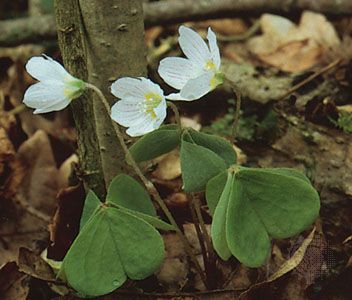
The genus Oxalis, belonging to the family Oxalidaceae, consists of approximately 850 species of small herbaceous plants. These plants are primarily native to…
What are the main characteristics of plants in the Oxalis genus?
The genus Oxalis, belonging to the family Oxalidaceae, consists of approximately 850 species of small herbaceous plants. These plants are primarily native to southern Africa and tropical and South America.1
Key characteristics include:
- Taste and Chemistry: The name Oxalis is derived from the Greek word for “acid,” reflecting the plants’ distinct sour taste caused by the accumulation of oxalic acid.12
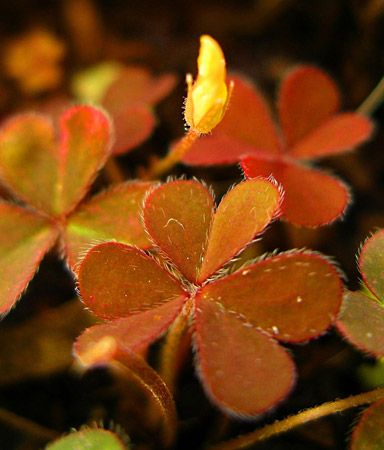
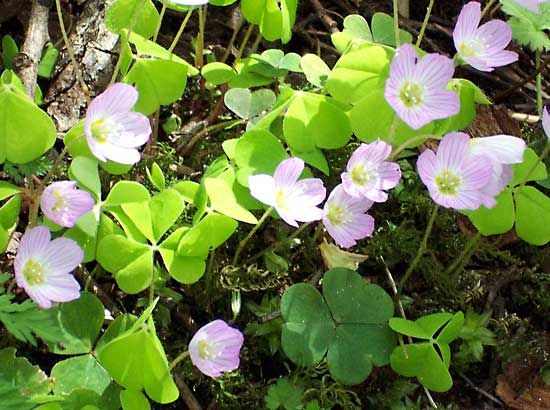
- Foliage: They typically feature cloverlike, three-parted compound leaves. A notable trait is the ability of these leaflets to fold back and droop at night or during inclement weather, a movement facilitated by thickened leaf bases known as pulvini.12
- Flowers and Fruit: Flowers are often borne singly on stalks and typically possess five petals. The fruit is a capsule that splits open via valves; the seeds often feature a fleshy coat that curls back elastically to eject the seed.1
- Growth Habits: While many are grown as garden ornamentals, some species produce edible tubers or roots, such as the South American oca (O. tuberosa).12
What is the significance of the name ‘Oxalis’ and how does it relate to the plant’s characteristics?
The name Oxalis is derived from the Greek word for “acid,” which directly reflects the plant’s most defining chemical characteristic: its distinctively sour taste. This acidity is caused by the presence of oxalic acid, a compound that has been associated with the plant—often referred to as wood sorrel—since at least the 17th century.31
Etymologically, the term traces back through Latin and Greek roots to the word oxys, meaning “sharp,” which is the same root associated with the word oxygen. This chemical profile is so central to the genus that the acid itself was named after the plant. While this acidity is a notable trait of the genus, it is important to note that oxalic acid is a toxic organic compound, and its presence serves as a reminder of the complex chemical makeup found within these small herbaceous plants.451
Are there any Oxalis species that are considered invasive, and if so, where?
Several Oxalis species have become naturalized or invasive in regions outside their native ranges due to their ability to spread effectively.
- Bermuda Buttercups (O. cernua): Native to southern Africa, this species has become naturalized in Florida and the Bermudas, where it is often recognized for its showy yellow flowers.1
- Yellow Wood Sorrel (O. stricta): Originally from North America, this species is now widely naturalized in the Old World.1
- Creeping Oxalis (O. corniculata): This weedy, yellow-flowered species is also widely naturalized throughout the Old World.1
These species are often considered weedy because they can easily establish themselves in new environments, sometimes outcompeting native flora in garden or disturbed settings. Their success is partly due to their resilient growth habits and efficient seed dispersal mechanisms, such as the elastic ejection of seeds from their capsules.1
What are the traditional medicinal uses of Oxalis plants?
The provided search results do not contain information regarding the traditional medicinal uses of Oxalis plants. While the literature confirms that these plants are characterized by their acidic sap due to the presence of oxalic acid, the available data focuses on their botanical classification, edibility of certain tubers, and status as garden ornamentals or weeds.165
Sorry, the Britannica knowledge base does not contain this information.
Sources
- Oxalis — Encyclopædia Britannica
- Oxalidales — Encyclopædia Britannica
- oxalis — Merriam-Webster
- oxalic acid — Merriam-Webster
- oxalic acid — Encyclopædia Britannica
- wood sorrel — Merriam-Webster
- sorrel — Merriam-Webster
Published on · 3 min read