Pennisetum
Pennisetum is a genus of the grass family (Poaceae) that includes approximately 80 species of annual and perennial plants native to tropical and subtropical…
What is Pennisetum?
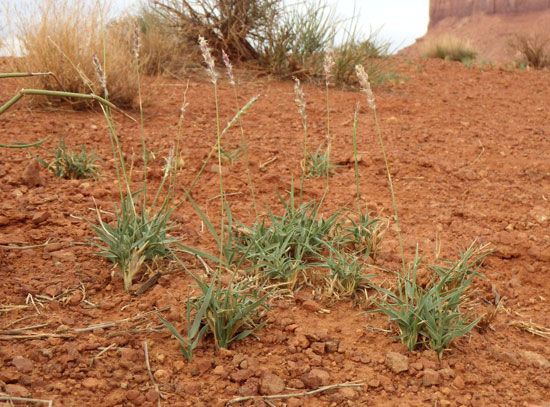
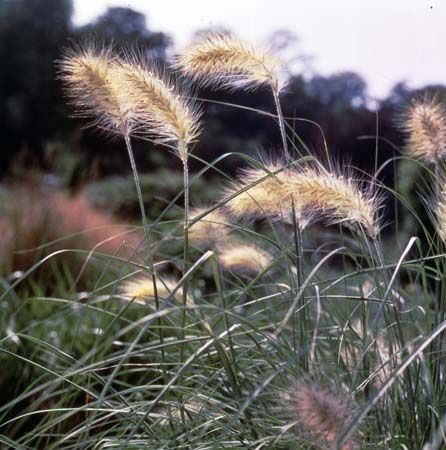
Pennisetum is a genus of the grass family (Poaceae) that includes approximately 80 species of annual and perennial plants native to tropical and subtropical regions. These grasses are characterized by their upright, sturdy stems and flowers borne in dense or feathery spikes.1
The genus is notable for both agricultural and ornamental uses:
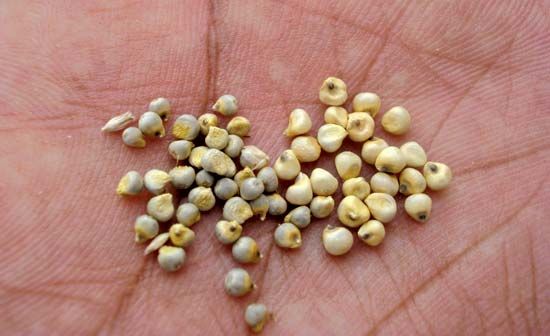
- Pearl millet (Pennisetum glaucum): An annual species cultivated in tropical areas as a source of edible grain tropical areas as a source of edible grain.1
- Ornamental varieties: Several species, often referred to as fountain grass, are grown for their aesthetic appeal, including the feathertop (P. villosum), which is prized for its arching form and feathery flower clusters.12
Botanically, the name is derived from the Latin words for “feather” and “bristle,” reflecting the bristly structures found on the spikelets of these plants. Some species are capable of spreading vegetatively through rhizomes or stolonsome) or stolons.31
What is the difference between annual and perennial grasses?
The primary difference between annual and perennial grasses lies in their life cycle and growth patterns.
- Annual grasses complete their entire life cycle—from germination to seed production and death—within a single growing season. Because they die after one year, they must be replanted if you wish to maintain them in a garden or field.45
- Perennial grasses are capable of living for more than two years. They regrow and rebloom year after year, typically renewing their top growth from established root systems or perennating parts.54
Beyond their lifespan, these plants differ significantly in their agricultural and environmental impact:
Feature
Annual Grasses
Perennial Grasses
Lifespan
One growing season
Multiple years
Energy Allocation
Primarily toward seed production
Divided between roots and reproduction
Root Systems
Generally less extensive
Extensive, aiding soil stability
Maintenance
Requires annual replanting
Requires less labor and tilling
Perennial grasses are often favored in sustainable agriculture because their deep root systems help prevent soil erosion, improve soil health, and sequester carbon more efficiently than annual varieties.5
How is pearl millet used as a food source?
Pearl millet (Pennisetum glaucum) is a vital cereal grain that serves as a primary food staple for millions of people, particularly in India and sub-Saharan Africa. Known as bajra in India, it is highly valued for its ability to thrive in poor soils and regions with limited moisture, making it a critical crop for combating food insecurity.8
As a food source, pearl millet is nutritionally significant, containing carbohydrates, protein (ranging from 6 to 11 percent), and fat. Because of its somewhat strong flavor, it is typically prepared in the following ways:8
- Flatbreads: It is frequently ground into flour to make traditional breads.8
- Porridges: It is commonly boiled into a porridge, a staple preparation method in many regions.8
- Rice-like dishes: The grain can be prepared and consumed similarly to rice.8
Due to its hardiness and resilience in harsh climates, the United Nations recognized the importance of millets in the global food supply by designating 2023 as the “year of the millets”.8
What are rhizomes and stolons in plant growth?
Rhizomes and stolons are specialized plant structures that facilitate vegetative reproduction, allowing plants to spread and survive adverse environmental conditions. While both are modified stems, they differ primarily in their growth location and orientation.101112
Rhizomes
A rhizome is a horizontal, typically subterranean stem. Key characteristics include:1312
- Function: They serve as storage organs for starches and proteins, helping plants survive droughts or cold winters.1312
- Growth: They feature nodes with reduced leaves and adventitious roots on the underside. New shoots often emerge from these nodes, allowing the plant to expand its colony.12
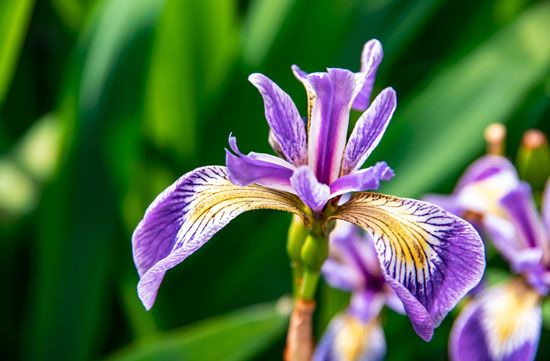
- Examples: Many grasses, bamboo, ginger, and iris species rely on rhizomes for growth and propagation.131211
Stolons
A stolon—often called a runner—is a slender, horizontal stem that grows above the soil surface. Key characteristics include:1412
Sources
- Pennisetum — Encyclopædia Britannica
- Pennisetum — Merriam-Webster
- fountain grass — Merriam-Webster
- Is That Plant 'Perennial' or 'Annual'? — Merriam-Webster
- Perennial agriculture — Encyclopædia Britannica
- Paspalum — Encyclopædia Britannica
- perennial ryegrass — Merriam-Webster
- pearl millet — Merriam-Webster
- Millet — Encyclopædia Britannica
- stolon — Encyclopædia Britannica
- rhizome — Encyclopædia Britannica
- vegetative reproduction — Encyclopædia Britannica
- angiosperm - Shoot system modifications — Encyclopædia Britannica
- horticulture - Vegetative structures — Encyclopædia Britannica
Published on · 3 min read