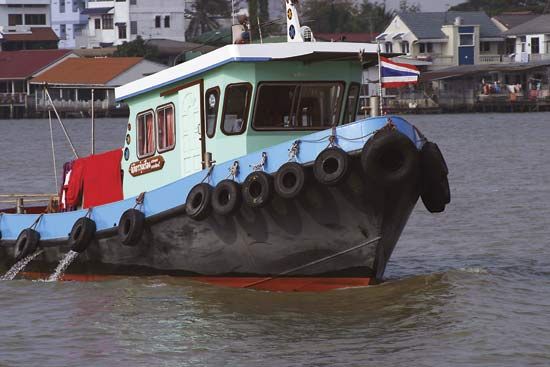
Pa Sak River
The Pa Sak River is a river located in central Thailand. It originates in the northern Phetchabun Range and travels south through a narrow valley for 319…
What is Pa Sak River?
The Pa Sak River is a river located in central Thailand. It originates in the northern Phetchabun Range and travels south through a narrow valley for 319 miles (513 km).1
The river flows past several major towns, including Lomsak, Phetchabun, and Sara Buri. It eventually empties into the Lop Buri River near the city of Ayutthaya, situated north of Bangkok. In the region below Sara Buri, the river is dammed to support local irrigation efforts.1
What is the purpose of the Pa Sak Jolasid Dam?
The Pa Sak Jolasid Dam is primarily utilized for irrigation purposes to support agriculture in the region below Sara Buri. By regulating the flow of the Pa Sak River, the dam helps manage water resources for the surrounding areas, which are part of the broader Chao Phraya River basin—a vital system for rice cultivation and water management in central Thailand.12
How does the Phetchabun Range influence the river’s flow?
The Phetchabun Range serves as the geographic origin for the Pa Sak River, which rises in the northern portion of these mountains. The range acts as a topographical constraint, forcing the river to flow southward through a narrow valley for its 319-mile (513-km) course toward the Lop Buri River and the city of Ayutthaya.1
By channeling the water through this narrow valley, the mountains dictate the river’s path through central Thailand before it eventually joins the broader Chao Phraya River system.13
Why is the city of Ayutthaya historically significant?
The city of Ayutthaya holds immense historical significance as the former capital of the Tai state (Siam), serving as the center of power for over 400 years from its founding in 1350 until its destruction in 1767. Its legacy is defined by several key factors:67
- Political Consolidation: Ayutthaya was the birthplace of the modern Thai state. Its kings expanded their influence across much of present-day Thailand, centralizing political power through a sophisticated bureaucratic system and the adoption of the devaraja (god-king) concept, which integrated Khmer-Hindu ideological practices.678
- Cosmopolitan Trade Hub: By the 17th century, Ayutthaya was one of the world’s wealthiest and most cosmopolitan cities. Despite its inland location, it served as a thriving international trade emporium, welcoming merchants and missionaries from China, India, Persia, and Europe.78
- Cultural and Religious Center: The city became a stronghold for Theravada Buddhism, which deeply influenced social life and provided a path for upward mobility through the monastic sangha for upward mobility through the monastic sangha.78
- Architectural Heritage: Known for its immense temples and palaces, the site was designated a UNESCO World Heritage site in 1991, preserving the ruins of a once-magnificent capital.6
Sources
- Pa Sak River — Encyclopædia Britannica
- Chao Phraya River — Encyclopædia Britannica
- Thailand - Drainage of Thailand — Encyclopædia Britannica
- Phetchabun Range — Encyclopædia Britannica
- Mekong River - Physiography — Encyclopædia Britannica
- Ayutthaya — Encyclopædia Britannica
- Thailand - The Ayutthayan period, 1351–1767 — Encyclopædia Britannica
- history of Thailand - The Ayutthayan period, 1351–1767 — Encyclopædia Britannica
Published on · 2 min read