Mekong River
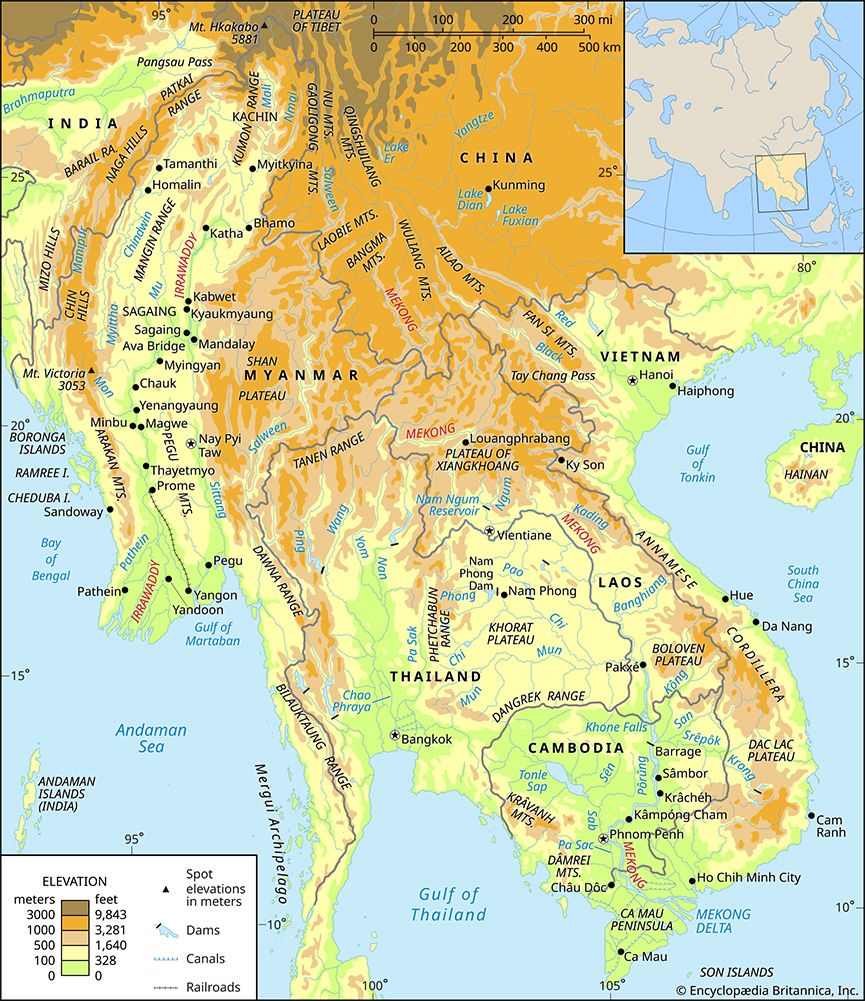
The Mekong River originates in the Plateau of Tibet within the southeastern Qinghai province of China.
Where does the Mekong River originate, and which countries does it flow through?
The Mekong River originates in the Plateau of Tibet within the southeastern Qinghai province of China.12
As the longest river in Southeast Asia, it flows through or along the borders of six countries:
- China: It traverses the Tibet Autonomous Region and Yunnan province.1
- Myanmar: The river forms part of the international border between Myanmar and Laos.1
- Laos: It flows through the country and serves as a border with Thailand.1
- Thailand: The river forms a significant boundary with Laos.1
- Cambodia: The river flows through the country, passing its capital, Phnom Penh.1
- Vietnam: The river reaches the South China Sea through a delta in southern Vietnam.12
What is the significance of the Mekong River for the ecosystems and biodiversity in Southeast Asia?
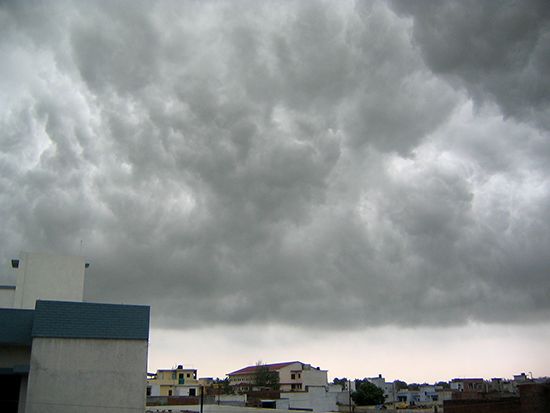
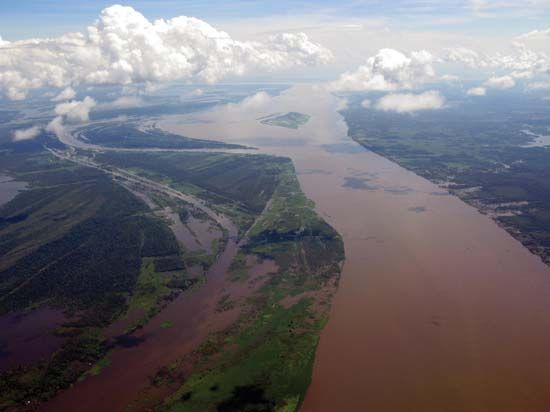
The Mekong River is a vital artery for the ecosystems and biodiversity of Southeast Asia, primarily through its complex hydrological cycles and diverse landscape features. The river’s seasonal fluctuations, driven by monsoon winds, create a dynamic environment that supports a wide array of habitats, ranging from tropical broad-leaved forests in the highlands to expansive floodplains and swampy regions in the delta.34
A critical component of this biodiversity is the Tonle Sap, or Great Lake, in Cambodia. During the peak flood season, the Mekong’s high water levels cause the Sab River to reverse its flow, expanding the lake significantly and creating a highly productive fishing ground. This seasonal pulse is essential for the region’s aquatic life and supports the livelihoods of millions who depend on the river’s resources.34
While the basin hosts diverse vegetation, it faces ongoing ecological challenges. Widespread forest degradation has occurred due to lumbering, grazing, and shifting cultivation, which have replaced original forests with grasslands in some areas. Efforts to manage these resources are coordinated through international cooperation to balance economic development, such as hydroelectric power, with the preservation of the river’s natural systems.31
How long is the Mekong River, and how does its length compare to other major rivers in the world?
The Mekong River has a total length of approximately 2,700 miles (4,350 km).1
In terms of global and regional rankings, it holds the following positions:
- World: It is the 12th longest river in the world.17
- Asia: It is the 7th longest river on the continent.1
- Southeast Asia: It is the longest river in the region.1
Its length is divided into two primary sections: the upper Mekong, which flows 1,215 miles (1,955 km) through China, and the lower Mekong, which spans 1,485 miles (2,390 km) as it flows through or along the borders of Myanmar, Laos, Thailand, Cambodia, and Vietnam. While it is a major global waterway, it is shorter than the world’s longest rivers, such as the Nile (4,132 miles) and the Amazon–Ucayali–Apurímac system (4,000 miles).27
What is the Mekong River?
The Mekong River is the longest river in Southeast Asia, the 7th longest in Asia, and the 12th longest in the world, spanning approximately 2,700 miles (4,350 km).1
Rising in the Plateau of Tibet in China, the river flows through or along the borders of Myanmar, Laos, Thailand, Cambodia, and Vietnam before draining into the South China Sea. It is geographically divided into two sections: the upper Mekong, which cuts through rugged mountains in China, and the lower Mekong, which flows through more gentle terrain, including the Khorat Plateau and a vast delta in southern Vietnam.12
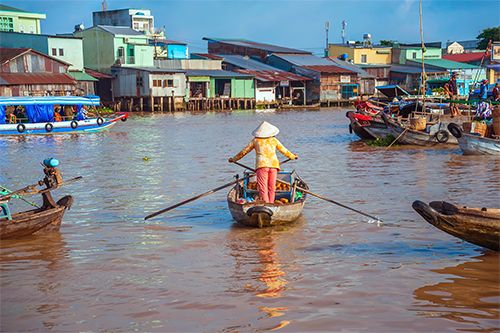
The river is a critical economic and social resource, supporting agriculture through irrigation and flood control projects, as well as hydroelectric power development. While navigation is limited by features like the Khone Falls, the river remains a vital waterway for the region.56
Sources
- Mekong River — Encyclopædia Britannica
- Mekong River - Physical features — Encyclopædia Britannica
- Mekong River - Physiography — Encyclopædia Britannica
- Mekong River - Climate and hydrology — Encyclopædia Britannica
- Mekong River - Irrigation and flood control — Encyclopædia Britannica
- Mekong River - Navigation — Encyclopædia Britannica
- world’s longest rivers — Encyclopædia Britannica
Published on · 3 min read