Palar River
The Palar River is a river located in southern India. It originates near the Ponnaiyar River, southwest of Chintamani in the state of Karnataka. From there…
What is Palar River?
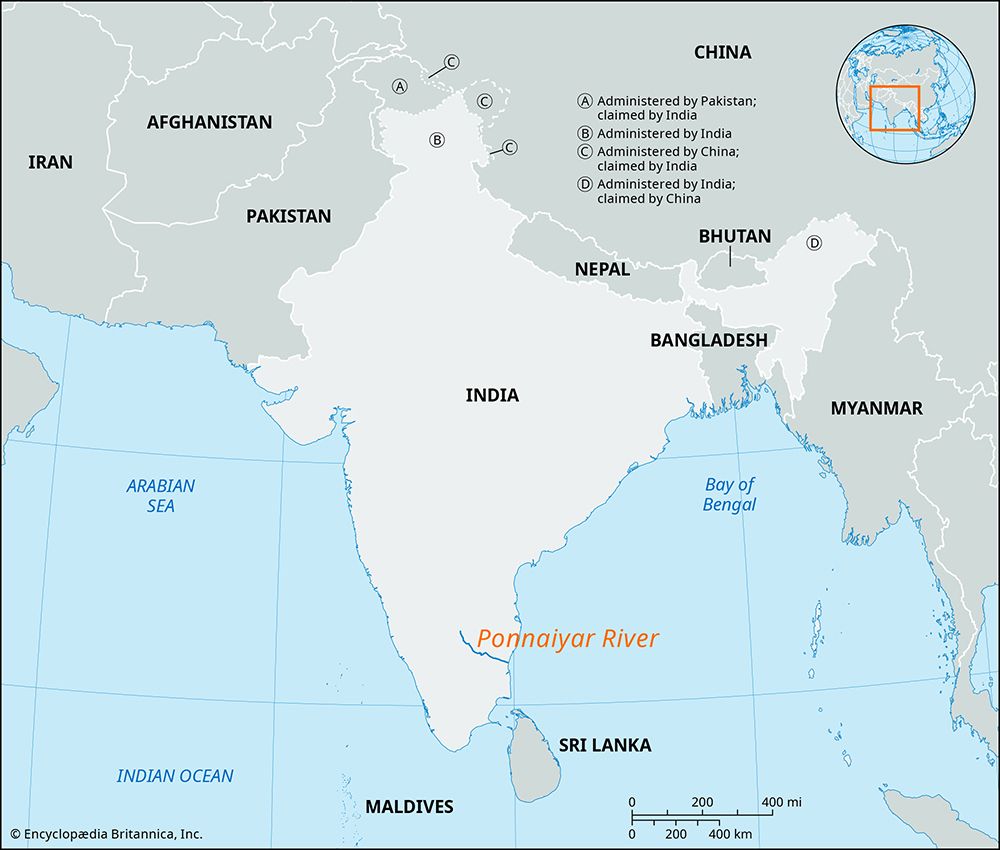
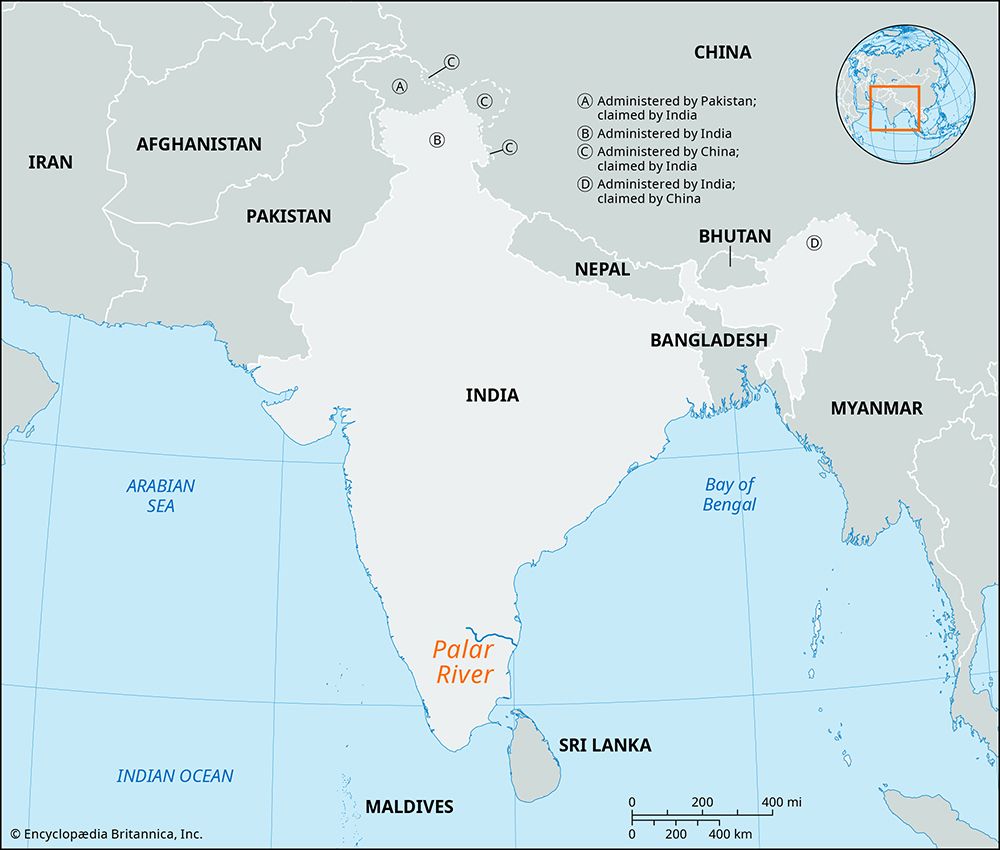
The Palar River is a river located in southern India. It originates near the Ponnaiyar River, southwest of Chintamani in the state of Karnataka. From there, it travels 183 miles (295 km) in a southeasterly direction through Tamil Nadu before emptying into the Bay of Bengal, south of Chennai.1
The river’s flow is characterized by significant annual irregularity. While it typically does not flood, extreme rainfall can cause it to remain in flood for up to six months. To support agriculture, the river has been dammed for irrigation purposes, particularly within Tamil Nadu. Notable urban centers situated along its banks include Vellore, Arcot, and Chengalpattu.1
How is the Palar River used for irrigation in Tamil Nadu?
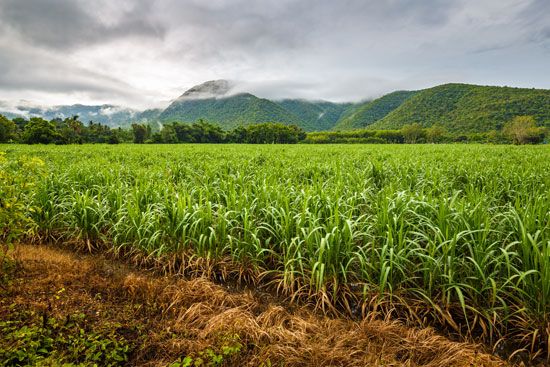
The Palar River is utilized for irrigation primarily through the construction of dams along its course in Tamil Nadu. Because the river’s flow is highly irregular and dependent on erratic rainfall, these dams help manage water availability for agricultural development.12
In the broader context of Tamil Nadu’s agricultural economy, irrigation systems are vital for supporting the state’s staple crops, such as rice, millet, and cereals, as well as cash crops like sugarcane and cotton. Beyond river-based projects, the state’s irrigation infrastructure relies on a combination of:3
- Tanks: Traditional reservoirs used to conserve rainwater.3
- Wells: Including both ordinary and tube wells that tap into subsoil water sources.3
- Government Canals: Managed distribution networks that help offset the challenges of the northeast monsoon.3
These combined efforts ensure more consistent water access, which has been essential for the state’s self-sufficiency in food grain production since the late 1960s.3
What are the major differences between the Ponnai and Cheyyar rivers?
The provided search results identify the Ponnai and Cheyyar as major tributaries of the Palar River, but they do not contain specific information regarding the individual characteristics or differences between these two rivers.
Because the available knowledge base lacks data on the comparative features of the Ponnai and Cheyyar rivers, I cannot provide a detailed analysis of their differences at this time.
Why does the flow of the Palar River vary so much from year to year?
The flow of the Palar River varies significantly from year to year primarily due to its dependence on erratic rainfall patterns. Like many rivers in the region, the Palar is not fed by perennial sources, leaving it dry for much of the year.14
Its water levels are dictated by the Indian monsoon, which creates distinct climatic periods—hot wet weather, cool dry weather, and hot dry weather—that influence rainfall distribution. While the river generally does not flood, its flow is highly sensitive to heavy, unpredictable rains, which can occasionally cause it to remain in flood for several months. Because the region’s water supplies rely entirely on these monsoonal rains, the river’s discharge fluctuates in direct response to the intensity and timing of these seasonal weather events.516
Sources
- Palar River — Encyclopædia Britannica
- water infrastructure in India - Irrigation systems — Encyclopædia Britannica
- Tamil Nadu - Agriculture, fishing, and forestry — Encyclopædia Britannica
- Indian monsoon - Monsoon withdrawal — Encyclopædia Britannica
- climate of India: Top Questions — Encyclopædia Britannica
- Pachaimalai Hills — Encyclopædia Britannica
Published on · 2 min read