Jawadhu Hills
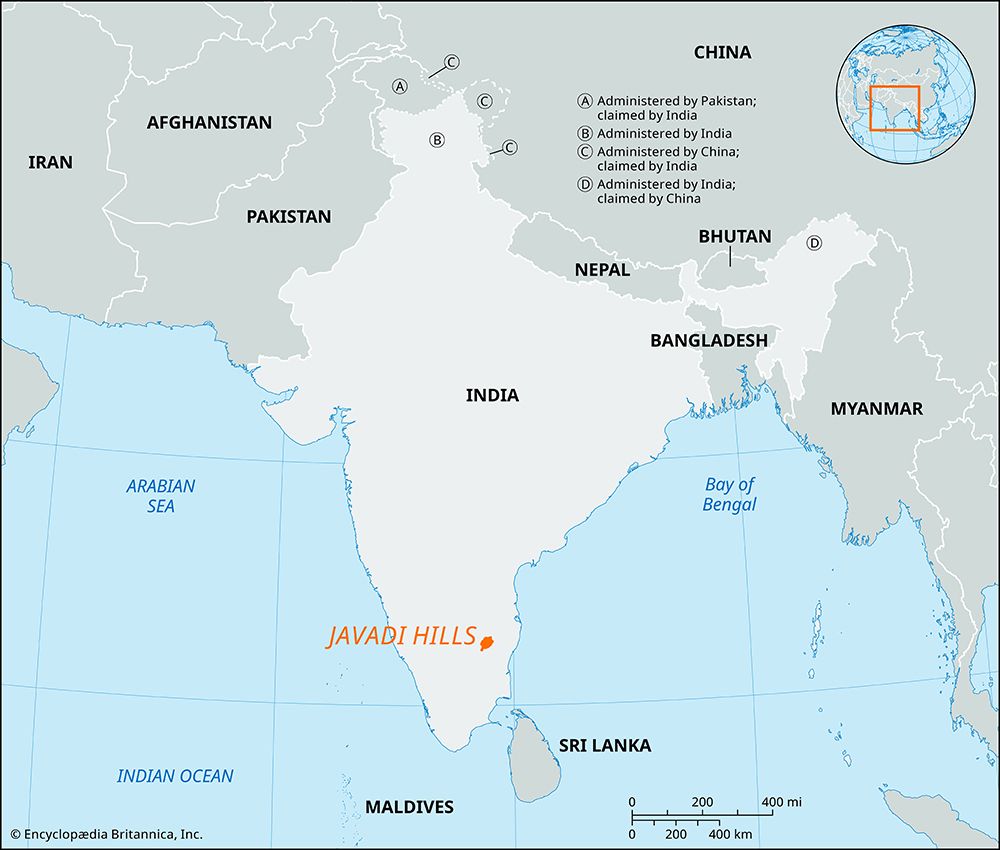
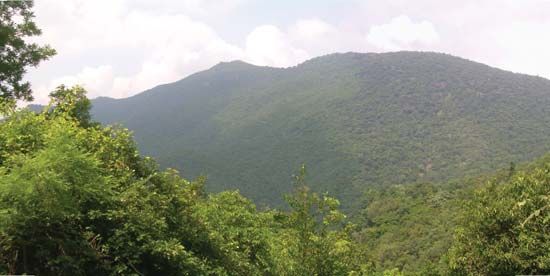
The Jawadhu Hills are a significant range within the Eastern Ghats located in the northern region of Tamil Nadu state, India.
What is Jawadhu Hills?
The Jawadhu Hills are a significant range within the Eastern Ghats located in the northern region of Tamil Nadu state, India.1
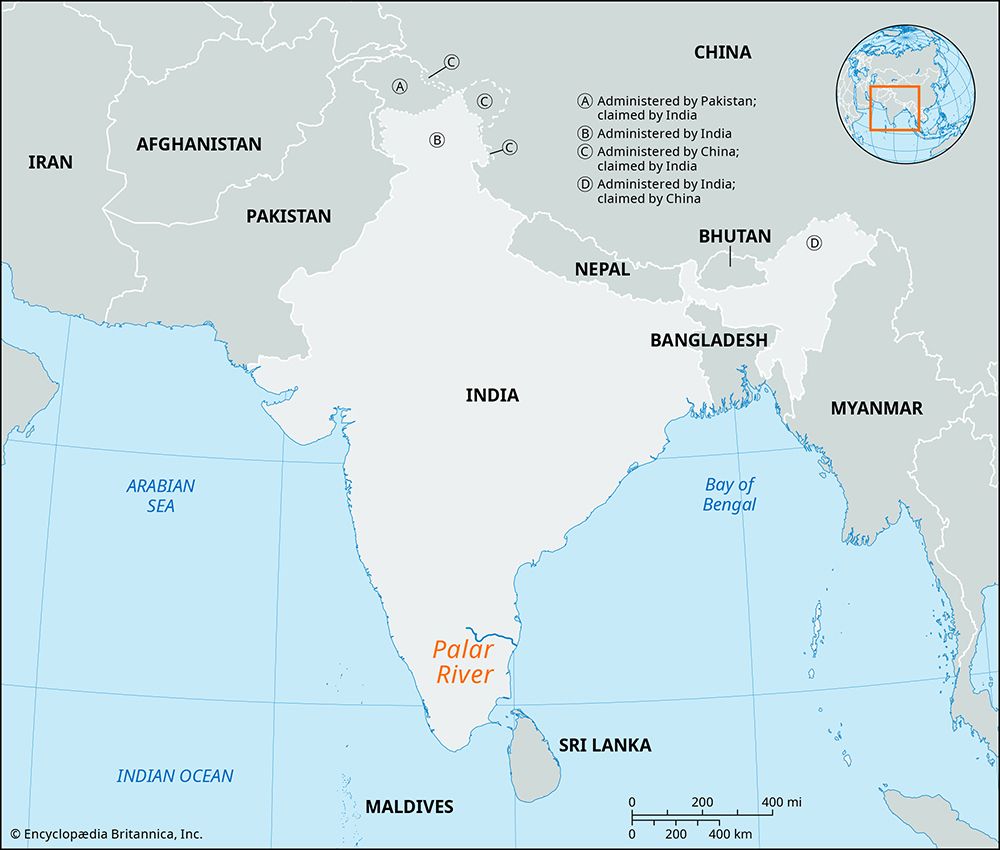
Spanning approximately 50 miles in width and 20 miles in length, the range is divided into eastern and western sections by the Cheyyar and Agaram rivers, which are tributaries of the Palar River. The hills are composed primarily of bluish-gray granite, with peaks reaching elevations between 3,600 and 3,800 feet.1
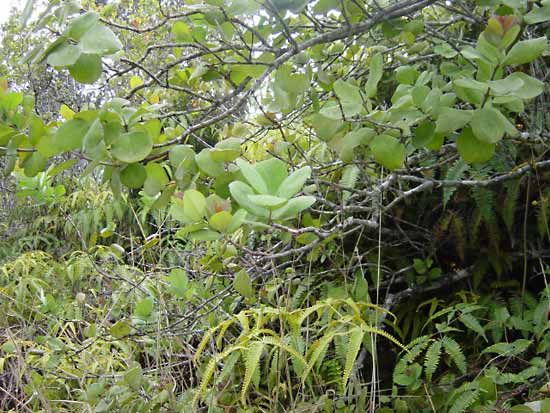
The landscape is sparsely populated, with the steep southeastern slopes characterized by sandalwood forests. Agriculture in the region is focused on the cultivation of grains, legumes, and oilseeds.1
What are the Eastern Ghats?
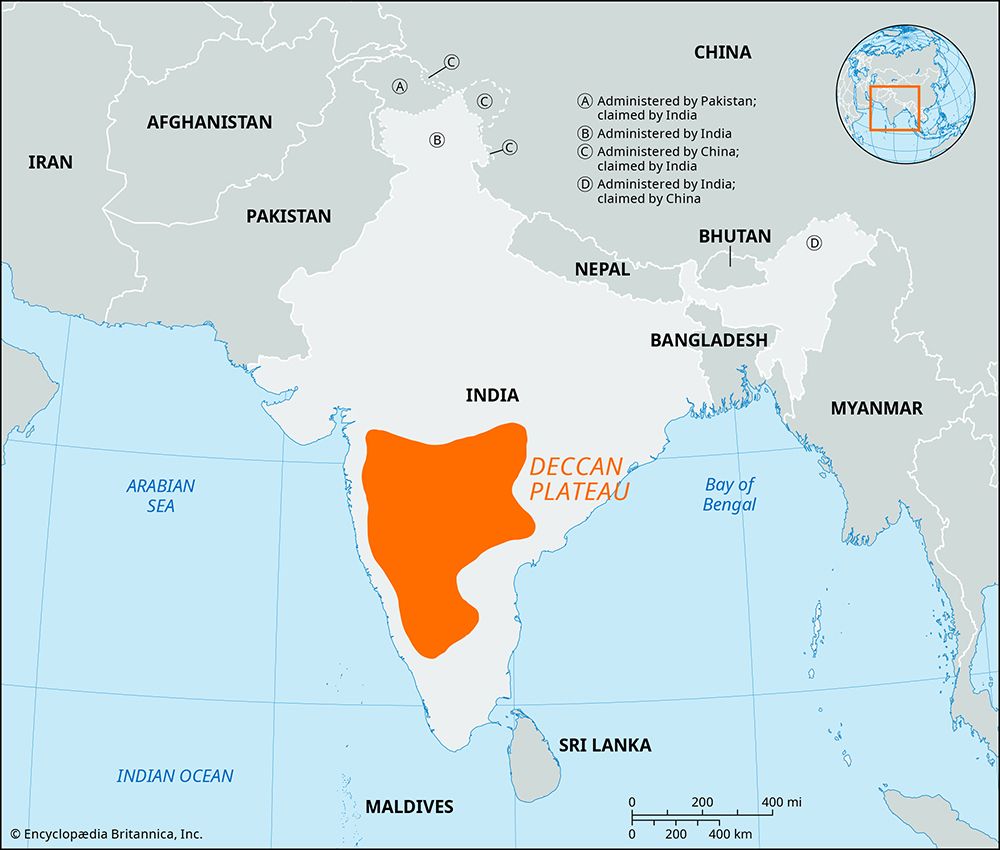
The Eastern Ghats are a series of discontinuous and dissimilar hill masses that form the eastern edge of the Deccan plateau in peninsular India. Running roughly parallel to the Bay of Bengal, these mountains trend in a northeast-southwest direction.2
Key characteristics of the range include:
- Topography: The range is relatively narrow with an average elevation of approximately 2,000 feet (600 meters), though some peaks reach 4,000 feet (1,200 meters) or higher. The highest point is Arma Konda, which stands at 5,512 feet (1,680 meters).2
- Discontinuity: The chain is interrupted by a 100-mile-wide gap where the Krishna and Godavari rivers flow toward the coast.2
- Southern Extension: Southwest of Chennai, the range continues as the Javadi and Shevaroy hills before eventually merging with the Western Ghats.2
- Vegetation: The mountain slopes feature sparse forests that contain valuable timber.2
Why is sandalwood important in this region?
Sandalwood is highly valued in the region of the Jawadhu Hills and beyond for its aromatic properties and cultural significance. The tree, specifically Santalum album, contains a fragrant yellow oil in both its wood and roots that retains its scent for years, making it a prized material for ornamental carvings, furniture, and fans.56
The importance of sandalwood extends into several key areas:
- Religious and Ceremonial Use: The heartwood has been used since antiquity in various funeral ceremonies and religious rites. Additionally, powdered sandalwood is used to create paste for Brahman caste marks.5
- Commercial Applications: Through steam distillation, the wood yields an aromatic oil used extensively in the production of perfumes, soaps, candles, and incense.5
- Medicinal Use: The oil is also utilized in various folk medicines.5
Because these trees are slow-growing—often requiring 30 years to reach an economically useful thickness—and face threats from habitat loss and overharvesting, many species in the genus are now considered endangered.5
What other mountain ranges are found in India?
India is home to several significant mountain ranges that define its diverse geography, ranging from the massive peaks of the north to the ancient hills of the peninsula.
Major Mountain Ranges in India
- Himalayas: The world’s highest mountain system, forming India’s northern border. It includes the Great Himalaya, the Lesser Himalayas, and the Siwalik Range (Outer Himalayas). Associated ranges in the northwest include the Karakoram, Ladakh, and Zanskar ranges.28
- Aravalli Range: Located in northern India, this is the oldest mountain range in the country, estimated to be over 2 billion years old. It acts as a barrier against the expansion of the Thar Desert.9
- Western Ghats: A steep escarpment forming the western edge of the Deccan plateau, serving as a primary watershed for peninsular India.10
- Eastern Ghats: A series of discontinuous hill masses running along India’s eastern coast, separated by major river systems like the Godavari and Krishna.10
- Satpura Range: Stretching across central India, this range forms the watershed between the Narmada and Tapti rivers.11
- Northeastern Ranges: These include the Patkai Bum, Naga Hills, Mizo Hills, and the Garo, Khasi, and Jaintia hills.128
Sources
- Jawadhu Hills — Encyclopædia Britannica
- Ghats — Encyclopædia Britannica
- Eastern Ghats — Merriam-Webster
- Western Ghats — Encyclopædia Britannica
- Sandalwood — Encyclopædia Britannica
- Indian sandalwood — Merriam-Webster
- sandalwood — Merriam-Webster
- India - History of India — Encyclopædia Britannica
- Himalayas - Physiography of the Himalayas — Encyclopædia Britannica
- India - Associated ranges and hills — Encyclopædia Britannica
- Aravalli Range — Encyclopædia Britannica
- Satpura Range — Encyclopædia Britannica
- Aravalli Range: Top Questions — Encyclopædia Britannica
Published on · 3 min read