Palynology
Palynology is the scientific study of pollen and spores, both in living and fossilized forms. Because these particles are produced in vast quantities, widely…
How are pollen and spores used in palynological research?
Palynology is the scientific study of pollen and spores, both in living and fossilized forms. Because these particles are produced in vast quantities, widely dispersed by wind and water, and possess a highly durable outer layer called the exine, they are frequently preserved in sedimentary rocks and peat deposits.123
In research, these microfossils serve several critical functions:
- Geologic Dating: Because their evolutionary sequence mirrors that of larger plants, they are used to determine the age of sediments, particularly where larger fossils are absent.1
- Climate Reconstruction: By analyzing the relative abundance of pollen types in stratigraphic layers, researchers can track shifts in regional vegetation, which reveal historical climatic changes.13
- Taxonomy and Evolution: Their distinct shapes and structures allow scientists to identify plant families and genera, helping to delineate phylogenetic relationships.12
- Applied Sciences: Palynology aids petroleum exploration, archaeology, and forensic science by providing data on past environments, agricultural practices, or the location and timing of crime scenes.1
How has palynology contributed to forensic investigations and archaeological studies?
Palynology serves as a vital analytical tool in both archaeology and forensic science by leveraging the durability and widespread dispersal of pollen and spores.1
Archaeological Applications
In archaeological research, palynology allows scientists to reconstruct past environments and human activity. By analyzing the pollen content within stratigraphic layers, researchers can determine the historical composition of local vegetation. This data provides insights into:1
- Agricultural Practices: Identifying specific plant-related activities and crop cultivation at ancient sites.1
- Environmental Context: Establishing the climatic conditions and forest makeup present during human occupation.1
Forensic Investigations
In forensic science, the study of non-fossilized or fresh pollen samples is used to provide critical evidence in crime scene investigations. Because pollen grains are unique to specific plant groups and dispersed by wind and water, they act as biological markers that can:1
- Establish Location: Linking a suspect or object to a specific geographic area based on the unique pollen “fingerprint” found on clothing or equipment.1
- Determine Timing: Helping to establish a seasonal time frame for when an event occurred based on the presence of pollen from plants that bloom at specific times of the year.1
What role does palynology play in understanding plant evolution?
Palynology plays a fundamental role in understanding plant evolution by providing a detailed record of plant life through time, often in environments where larger plant fossils are absent. Because pollen and spores are produced in vast quantities and possess a highly durable outer layer called the exine, they are frequently preserved in sedimentary rocks.15
Key contributions to evolutionary research include:
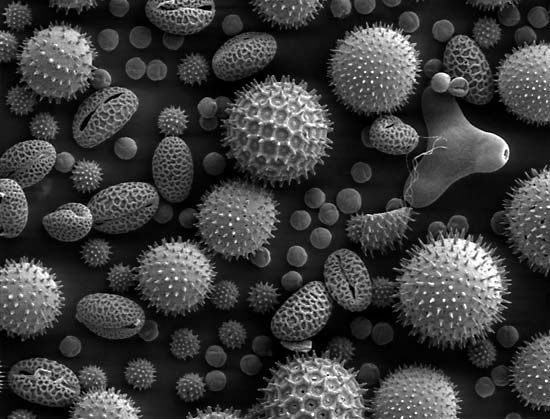
- Phylogenetic Delineation: The distinct morphology of pollen grains—such as their size, aperture number, and surface sculpturing—allows scientists to identify plant families and genera, helping to establish phylogenetic relationships between fossilized and extant plants.152
- Tracking Evolutionary Sequences: The sequence of plant microfossils in stratigraphic layers mirrors the evolutionary history of larger plant remains, allowing researchers to document the geographical distribution and diversification of plant groups from the early Cambrian to the present.1
- Evidence of Early Angiosperms: Palynological analysis has been crucial in identifying the origins of flowering plants, with fossil pollen evidence suggesting that angiosperms may have evolved much earlier than previously indicated by macrofossils.6
How is palynology used in allergy research and treatment?
Palynology contributes to allergy research and treatment primarily by identifying the specific plant sources of airborne allergens and monitoring their concentrations in the environment. Because pollen grains possess distinctive morphological features—such as size, aperture number, and surface sculpturing—palynologists can identify the specific angiosperm or gymnosperm families and genera responsible for releasing allergenic particles into the atmosphere.123
The role of palynology in this field includes:
- Pollen Monitoring: Local authorities and researchers use palynological techniques to calculate “pollen counts,” which are estimates of the concentration of specific pollen grains in the air. These data are essential for informing the public about potential health risks and helping individuals manage hay fever and other allergies.2
- Identifying Allergenic Proteins: Research focuses on the proteinaceous substances found within or on the walls of pollen grains, such as those from ragweed and various grasses, which trigger immune responses in sensitive individuals.23
- Clinical Guidance: By identifying the specific plants blooming in a region, palynology helps clinicians correlate patient symptoms with seasonal pollen cycles, facilitating more accurate diagnoses and targeted treatment plans.12
Sources
- palynology — Encyclopædia Britannica
- pollen — Encyclopædia Britannica
- geology - Palynology — Encyclopædia Britannica
- pollen analysis — Merriam-Webster
- angiosperm - Paleobotany and evolution — Encyclopædia Britannica
- angiosperm - Anthers — Encyclopædia Britannica
- spore — Encyclopædia Britannica
Published on · 3 min read