Paleontology
Paleontology is essential for reconstructing Earth's history, as it provides critical "proxy" evidence used to understand past climates and environments.…
What role does paleontology play in understanding past climates and environments?
Paleontology is essential for reconstructing Earth’s history, as it provides critical “proxy” evidence used to understand past climates and environments. Because instrumental records only span the last few centuries, scientists rely on biological and geological traces—natural archives—to infer conditions from the distant past.123
Fossils serve as key indicators of ancient environments. For example, the presence of specific coral species suggests the existence of warm, shallow waters, while certain plant fossils indicate swampy conditions. By analyzing these distributions, researchers can identify shifts in Earth’s crust or changes in global climate patterns.45
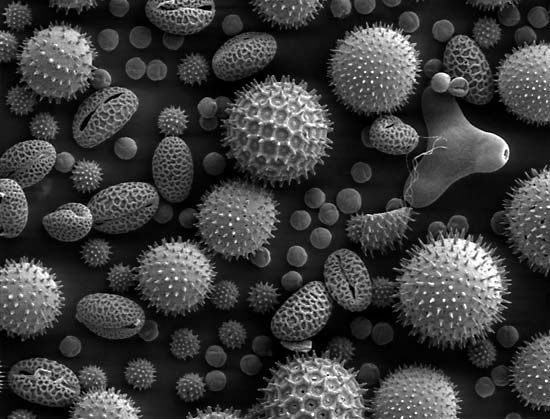
Palynology, the study of fossilized pollen and spores, is particularly valuable. Because these microfossils are abundant, wind-dispersed, and decay-resistant, they allow scientists to track regional changes in vegetation over thousands of years, which directly reflects fluctuations in climatic change. Similarly, micropaleontology uses microscopic organisms to determine the depositional environments of sedimentary rocks.6789
How does paleontology intersect with other scientific fields like geology and biology?
Paleontology serves as a vital bridge between the biological and geological sciences, functioning as the study of ancient life preserved within the Earth’s crust.910
Intersection with Biology
As a branch of biology, paleontology examines the structure, evolutionary patterns, and taxonomic relationships of ancient organisms. Through paleobiology, scientists apply statistical methods like biometry to quantify these relationships and describe the forms of extinct life. By comparing fossil remains with modern species, researchers gain insights into the history of evolution and the biological constraints of past ecosystems.911
Intersection with Geology
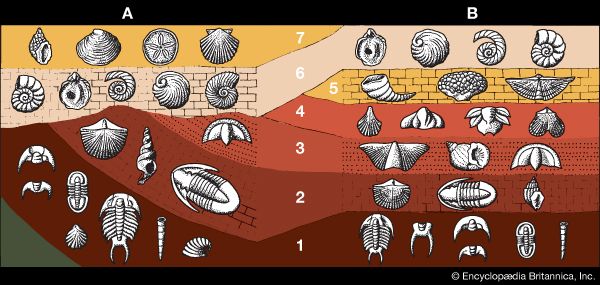
Paleontology is mutually interdependent with stratigraphy and historical geology. Because fossils are typically found in sedimentary strata, they act as essential tools for:911
- Correlation: Index fossils allow geologists to identify and match rock layers across different regions and continents.91110
- Environmental Reconstruction: By analyzing the types of organisms present, paleoecologists determine the physical conditions of ancient environments, such as water depth or temperature.1110
- Resource Exploration: The identification of specific fossil assemblages helps geologists locate fossil fuel deposits, including oil and natural gas.91110
How do paleontologists reconstruct the appearance and behavior of extinct animals?
Paleontologists reconstruct the appearance and behavior of extinct animals by synthesizing fossil evidence with comparative biological and mechanical models. Because the fossil record is often limited to hard parts like bones or shells, researchers use several specialized methods to fill in the gaps.
Reconstructing Appearance
- Comparative Anatomy: Scientists apply the principle of “correlation of parts,” which suggests that specific anatomical structures are linked to others. By comparing fossil remains with living relatives, researchers can infer the likely form of missing soft tissues.14
- Phylogenetic Analysis: Using cladistics, paleontologists build phylogenetic trees to understand evolutionary relationships. This helps determine how specific features, such as horns or frills, evolved and functioned within a group.15
- Direct Evidence: While rare, the preservation of skin textures, feathers, or filaments—such as those found on Kulindadromeus zabaikalicus—provides direct insight into the external appearance of extinct species.15
Reconstructing Behavior
- Functional Anatomy and Biomechanics: By analyzing joints, limb musculature, and tooth wear patterns, scientists use biomechanical models to estimate movement capabilities, such as walking or running speeds, and dietary habits.15
- Trace Fossils: Trace fossils, such as footprints, trackways, and preserved waste, offer direct evidence of an animal’s activity rather than its physical body.1512
- Inference from Context: Occasionally, fossils capture rare behavioral snapshots, such as a dinosaur nest with an adult, which suggests parental care.16
What is paleontology and what are its main areas of study?
Paleontology is the scientific study of ancient life through the analysis of fossils preserved in rocks. It examines the biology of past organisms, including their structure, evolutionary patterns, taxonomic relationships, and their interactions with ancient environments. Because fossils are primarily found in sedimentary strata, the field is mutually interdependent with stratigraphy and historical geology.
Main Areas of Study
Paleontology is divided into several specialized branches based on the type of organism or the scale of the study:
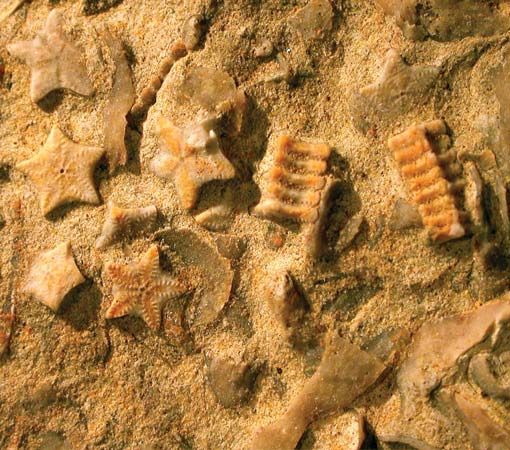
- Invertebrate Paleontology: Focuses on fossil marine invertebrates, such as trilobites, cephalopods, and corals. These are frequently used as index fossils for dating rock layers.
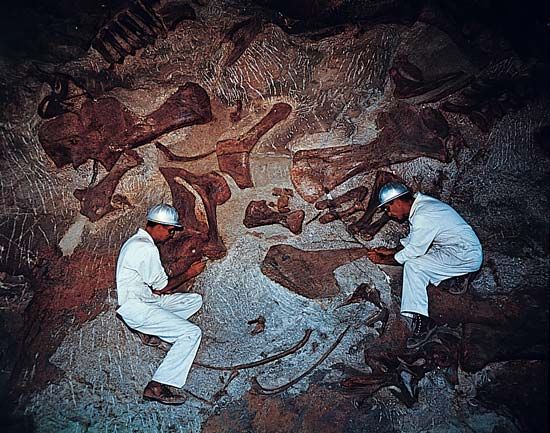
- Vertebrate Paleontology: Deals with the fossils of vertebrates, including fish, reptiles, birds, and mammals.
- Micropaleontology: Involves the study of microscopic fossils, such as foraminifera, which are essential for evaluating the age and potential of oil and natural gas reservoirs.
- Paleobotany: A branch of botany dedicated to the study of fossil plants.
Sources
- fossil record — Encyclopædia Britannica
- Climate change - Evidence for climate change — Encyclopædia Britannica
- palynology — Encyclopædia Britannica
- Paleoclimatology — Encyclopædia Britannica
- geology - Micropaleontology — Encyclopædia Britannica
- Earth sciences - Micropaleontology — Encyclopædia Britannica
- geology - Palynology — Encyclopædia Britannica
- Global warming - Prehistorical climate records — Encyclopædia Britannica
- paleontology — Encyclopædia Britannica
- geology - Paleontology — Encyclopædia Britannica
- Tertiary Period - Correlation of Tertiary strata — Encyclopædia Britannica
- fossil — Encyclopædia Britannica
- paleobiology — Merriam-Webster
- dinosaur - Modern studies — Encyclopædia Britannica
- Biology - The development of comparative biological studies — Encyclopædia Britannica
- trace fossil — Merriam-Webster
- Animal behaviour - Evolutionary history of behaviour — Encyclopædia Britannica
- Animal - Evolution and paleontology — Encyclopædia Britannica
- Did you know? — Merriam-Webster
- paleobotany — Merriam-Webster
- micropaleontology — Merriam-Webster
- geology - Vertebrate paleontology — Encyclopædia Britannica
- geology - Invertebrate paleontology — Encyclopædia Britannica
Published on · 4 min read