Papaya
Papain is a proteolytic enzyme derived from the papaya plant (Carica papaya). It functions by catalyzing the breakdown of proteins through hydrolysis, a…
How does papain, the enzyme found in papayas, function and what are its applications?
Papain is a proteolytic enzyme derived from the papaya plant (Carica papaya). It functions by catalyzing the breakdown of proteins through hydrolysis, a process that cleaves long protein chains into smaller peptides and amino acids1.
Because of this ability to digest proteins, papain has diverse industrial and medical applications:
- Food Industry: It is widely used as a meat tenderizer and to clarify beer.12
- Medicine: It is utilized in treatments for indigestion, ulcers, and swelling, as well as for the topical debridement of necrotic tissue.12
- Manufacturing & Research: It is employed in tanning to remove hair from hides, in cosmetics and toothpastes, in contact lens cleaning agents, and in biochemical protein research.1
While effective, papain can trigger allergic reactions, particularly in individuals with latex hypersensitivity with latex hypersensitivity.1
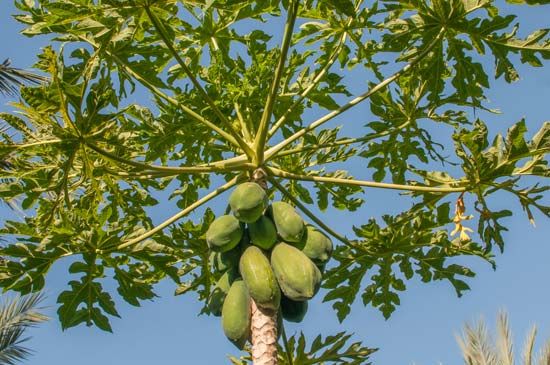
How does the papaya tree grow, and what are its distinctive features?
The papaya (Carica papaya) is a fast-growing, succulent plant native to Mexico and Central America, now cultivated throughout tropical and warm subtropical regions. While often called a tree, its trunk is not truly woody and can reach heights of up to 8 meters (26 feet).3
Distinctive Features
- Foliage: The plant is topped with large, deeply lobed leaves that can span 60 cm (2 feet), supported by long, hollow stalks.3
- Reproduction: The species is typically dioecious, meaning male and female flowers grow on separate plants, though hermaphroditic varieties exist. Male flowers are small and funnel-shaped, while female flowers are larger and solitary.3
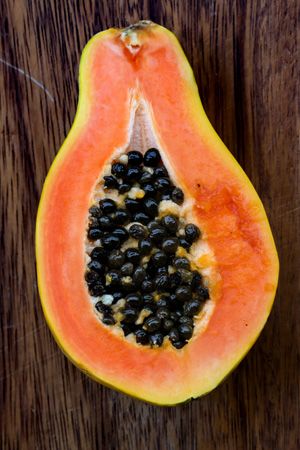
- Fruit: The fruit varies from spherical to cylindrical and can weigh up to 11.5 kg (25.5 pounds). It features juicy, orange-to-salmon-colored flesh and a central cavity filled with numerous black seeds.3
Growth and Cultivation
Papayas are grown from seed and develop rapidly, often producing fruit within their first year. Under ideal conditions, a plant may live for five years or more. Due to the devastating impact of the papaya ringspot virus, many commercial crops are now genetically modified (GMO) to ensure resistance.3
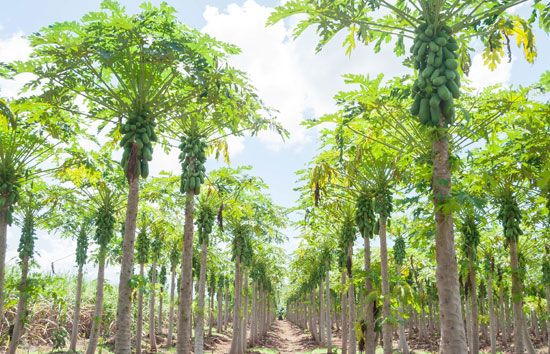
What are the origins and native regions of the papaya plant?
The papaya (Carica papaya) is native to Mexico and Central America, though its precise origins remain somewhat obscure. It is believed that the plant may represent the natural fusion of two or more species of Carica native to that region.3
While the exact history of its domestication is unresolved, there is clear evidence that the fruit was cultivated and further developed by the Maya at least 4,000 years ago. Today, the plant has been introduced to and is cultivated throughout the tropical and warm subtropical regions of the world.43
What are some popular culinary uses of papaya in different cuisines around the world?
Papaya is a versatile ingredient enjoyed globally, valued for both its sweet, musky flavor and its functional properties in food preparation.
Culinary Uses of Papaya
- Fresh Consumption: The ripe fruit is a popular breakfast staple in many countries, often served on its own or incorporated into fruit salads.1
- Sweet Preparations: Its slightly sweet profile makes it an excellent addition to pies, sherbets, juices, and various confections.1
- Savory Cooking: Unripe papaya is frequently treated as a vegetable and can be cooked similarly to squash, providing a different texture and flavor profile compared to the ripe fruit.1
- Meat Tenderization: A significant culinary application involves the use of papain, a protein-digesting enzyme found in the milky juice of the unripe fruit. This enzyme is widely used in the manufacture of commercial meat tenderizers, as it breaks down long protein chains into shorter fragments, effectively softening the meat.312
Beyond these direct culinary uses, the enzyme papain is also utilized in the food industry to clarify beer.3
Sources
- Papain — Encyclopædia Britannica
- papain — Merriam-Webster
- Papaya — Encyclopædia Britannica
- 18 Food Crops Developed in the Americas — Encyclopædia Britannica
Published on · 3 min read