Paracel Islands
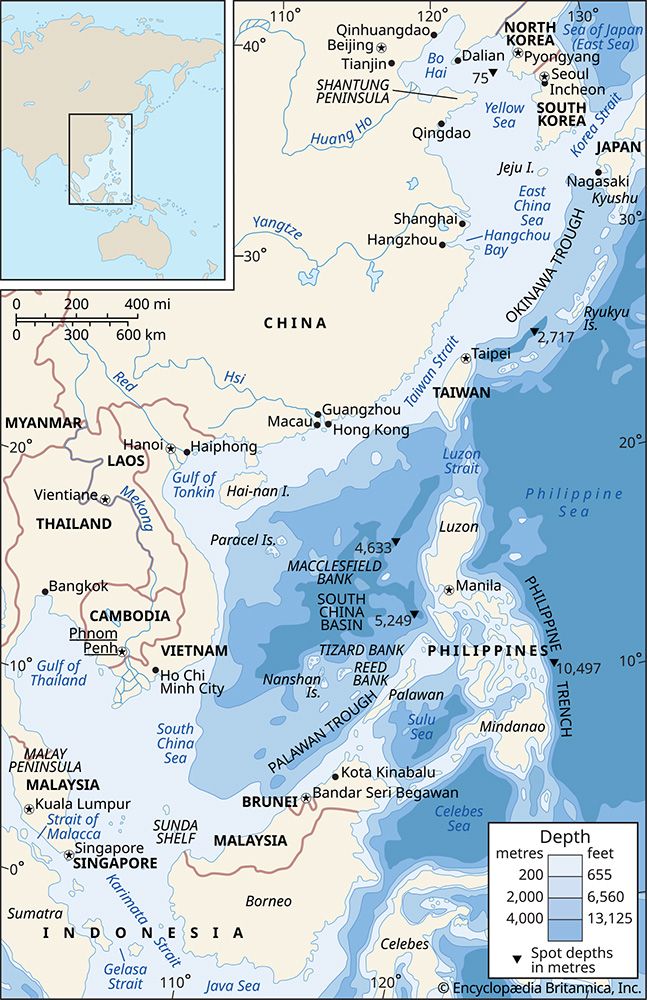
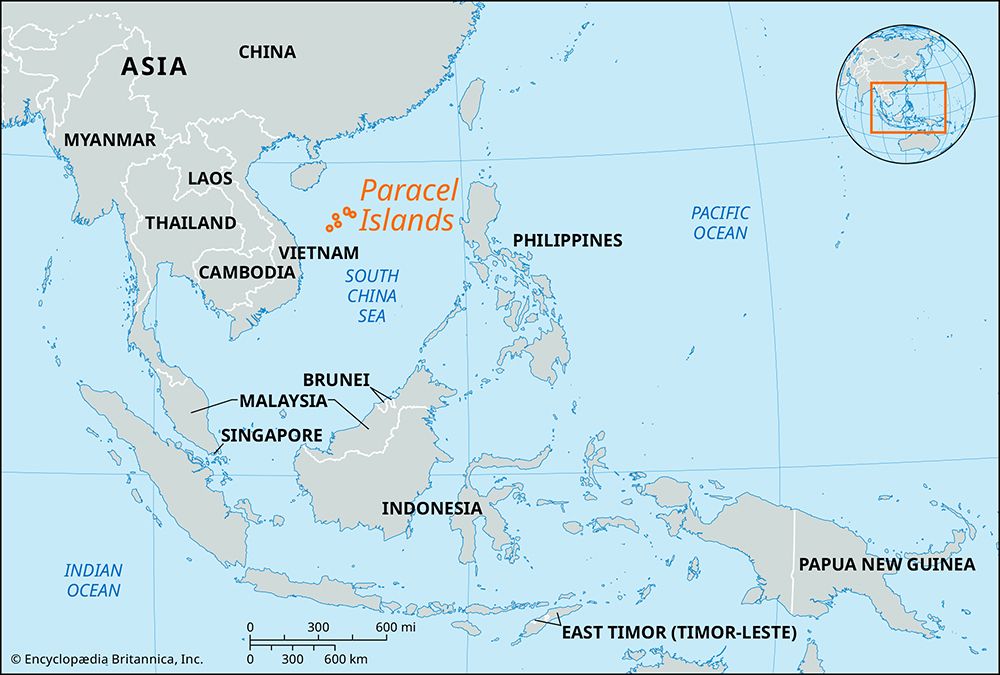
The Paracel Islands are central to the broader South China Sea conflicts due to their strategic location and the potential for natural resources in the…
How do the Paracel Islands factor into the broader South China Sea conflicts?
The Paracel Islands are central to the broader South China Sea conflicts due to their strategic location and the potential for natural resources in the surrounding waters.12
Historically, the archipelago has been a point of contention among China, Taiwan, and Vietnam. Tensions escalated significantly in 1974 when China seized the islands from South Vietnam following the discovery of potential oil and gas reserves in the region. This military action resulted in casualties and established China’s current full control over the archipelago.12
These disputes are part of a larger geopolitical struggle involving the “nine-dash line,” a demarcation used by China to assert sovereignty over much of the South China Sea. While China maintains control of the Paracels, other nations, including the Philippines, Malaysia, and Brunei, remain involved in overlapping territorial and exclusive economic zone claims throughout the wider region, particularly regarding the Spratly Islands.2
What impact do the disputes over the Paracel Islands have on international relations in Southeast Asia?
The disputes over the Paracel Islands significantly strain international relations in Southeast Asia by fueling regional instability and challenging established legal frameworks. China’s 1974 seizure of the islands from South Vietnam remains a foundational point of tension, illustrating the shift from dormant historical claims to active military assertion following the discovery of potential oil and gas reserves in the South China Sea.21
These conflicts impact regional diplomacy in several ways:
- Erosion of Regional Unity: The disputes have divided ASEAN members, preventing a unified stance against aggressive land reclamation and military infrastructure development by China.3
- Legal and Normative Challenges: China’s reliance on the “nine-dash line” to assert sovereignty conflicts with the United Nations Convention on the Law of the Sea (UNCLOS). While a 2016 arbitral tribunal ruled these historical claims invalid, China’s rejection of the ruling undermines international legal norms.43
- Geopolitical Involvement: The strategic importance of these waters—which carry roughly one-fifth of global trade—has drawn in external powers like the United States, further complicating the regional security architecture.54
How have different countries attempted to assert control over the Paracel Islands?
Various nations have employed military, administrative, and legal strategies to assert control over the Paracel Islands.
- Administrative Presence: In 1932, French Indochina formally annexed the islands and established a weather station. Following World War II, Chinese troops occupied Woody Island in 1947, while Vietnam continued to operate the weather station on Pattle Island.1
- Military Force: The most decisive shift occurred in 1974. Following the discovery of potential oil and gas reserves in the South China Sea, China launched a sea and air assault against South Vietnamese forces. This conflict resulted in casualties and allowed China to seize the entire archipelago, which it continues to control today.12
- Historical and Political Claims: China, Taiwan, and Vietnam all maintain sovereignty claims. China’s assertion is largely rooted in the “nine-dash line,” a maritime boundary derived from earlier nationalist maps, which it uses to justify its presence in the region.12
What is the historical background of the territorial disputes over the Paracel Islands?
The territorial disputes over the Paracel Islands are rooted in shifting geopolitical control following World War II. While France annexed the islands in 1932, Japan occupied them during the war before renouncing its claims in 1951. By 1947, Chinese troops occupied Woody Island, while French Indochina—and later Vietnam—maintained a weather station on Pattle Island.1
The conflict intensified as the political landscape of the region fractured, with China, Taiwan, and Vietnam all asserting sovereignty. China’s claims are largely based on the “nine-dash line,” a maritime boundary derived from a 1947 map created by the Nationalists during the Chinese Civil War.2
The dispute transitioned from a dormant issue to an active crisis in 1974, following the discovery of potential oil and gas reserves in the South China Sea. In response to Vietnamese contracts with foreign firms, China launched a military assault, seizing the entire archipelago from South Vietnam.12
Sources
- Paracel Islands — Encyclopædia Britannica
- territorial disputes in the South China Sea - 20th-century history — Encyclopædia Britannica
- territorial disputes in the South China Sea - Physiography and economic factors — Encyclopædia Britannica
- territorial disputes in the South China Sea — Encyclopædia Britannica
- territorial disputes in the South China Sea - Early 21st-century developments — Encyclopædia Britannica
Published on · 3 min read