Saône River
The Saône River flows through eastern France, passing several notable cities and towns along its 300-mile course toward its confluence with the Rhône River…
What are some of the main cities and towns located along the Saône River?
The Saône River flows through eastern France, passing several notable cities and towns along its 300-mile course toward its confluence with the Rhône River at Lyon.
Key settlements along the river include:
- Corre: Located near the river’s source, where it meets the Canal de l’Est.1
- Gray: A town situated along the river’s path in the Haute-Saône department.1
- Pontailler-sur-Saône: A stop along the river’s route through the Côte d’Or department.1
- Chalon-sur-Saône: A significant city located downstream.1
- Tournus: A town positioned along the river’s course.1
- Mâcon: A notable city situated on the Saône.1
- Villefranche-sur-Saône: Located just west of the river, this town serves as the capital of the Beaujolais district.12
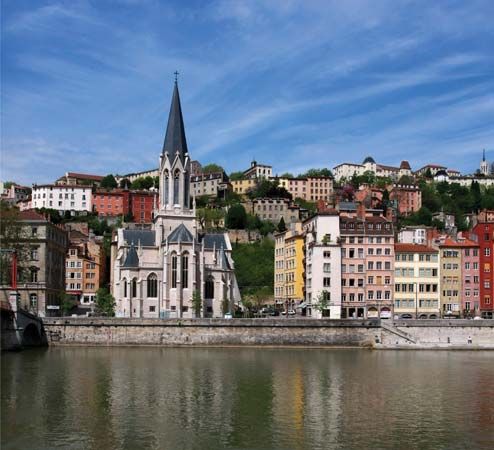
- Lyon: The final major city on the river, where it joins the Rhône.13
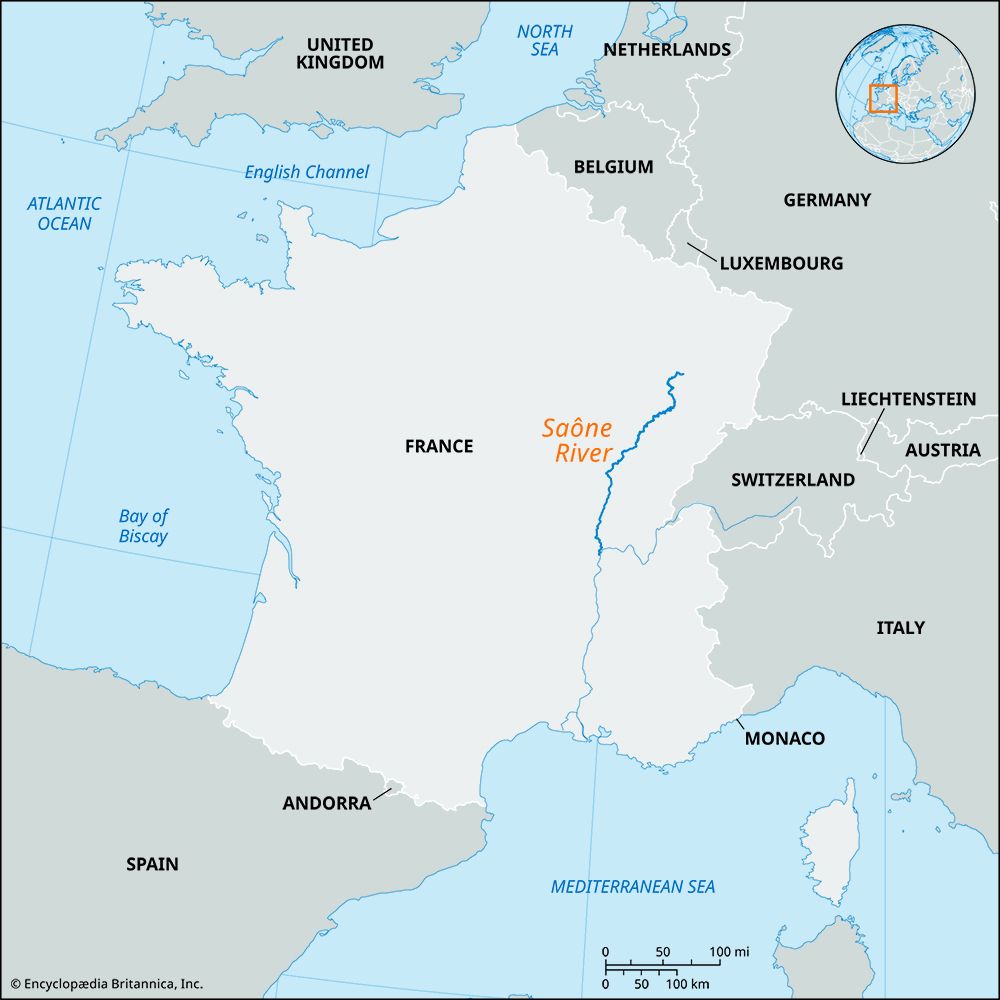
Where is the Saône River located in France, and what are its major geographical features?
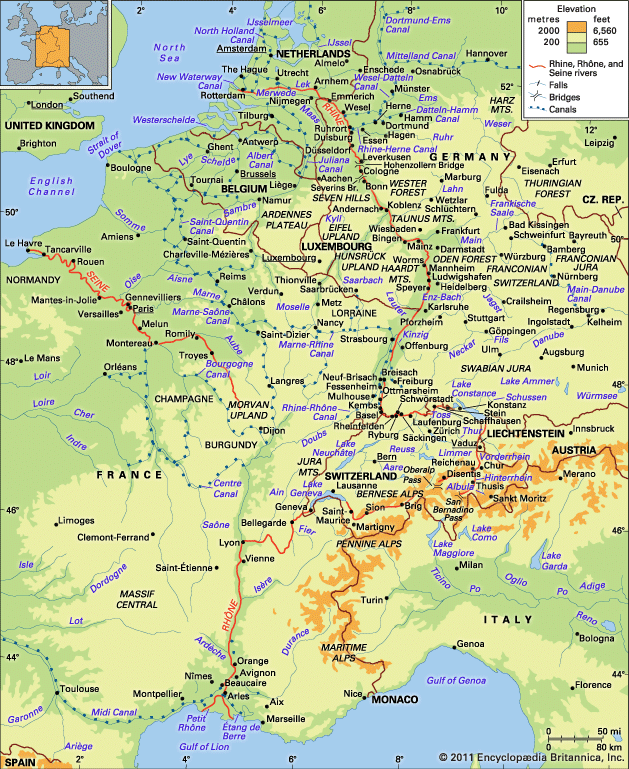
The Saône River is located in eastern France, rising near Vioménil in the Vosges département of the Lorraine region. It flows southward for approximately 300 miles (480 km) before merging with the Rhône River at Lyon.1
Key geographical and hydrological features include:
- Course and Tributaries: The river flows southwest toward Corre, then continues through several departments, including Haute-Saône and Côte d’Or. Its primary tributary is the Doubs River, which joins it in the Saône-et-Loire département.1
- Navigability: The river is almost entirely canalized, featuring 30 locks and remaining navigable for 233 miles (375 km) upstream from Lyon.1
- Connectivity: It serves as a vital waterway, connected by canals to both the Rhine and Seine rivers.1
- Hydrology: The Saône contributes significantly to the flow of the Rhône, reaching its maximum discharge in January, which contrasts with the spring-melt-driven peaks of the Alpine-fed Rhône.5
How does the Saône River contribute to France’s transportation and economic systems?
The Saône River serves as a vital component of France’s transportation and economic infrastructure, primarily by functioning as a key inland waterway and a commercial corridor.
Transportation and Navigation
The Saône is almost entirely canalized, featuring 30 locks along its course, which makes it navigable for large-capacity barges for 233 miles (375 km) upstream from Lyon. It acts as a critical link in the French inland waterway network, connecting the Paris Basin to the Rhône corridor. Furthermore, the river is connected by canal to both the Rhine and Seine rivers, facilitating broader trade routes across Europe.16
Economic Significance
- Industrial Support: The river corridor is home to significant industrial activity, particularly in the département of Saône-et-Loire, where metallurgy has long been a foundational industry.6
- Regional Development: The Saône-Rhône corridor is a major commercial artery that supports the industrialized regions of eastern France. Its navigability allows for the efficient transport of goods, complementing the high-speed rail (TGV) networks that serve cities like Mâcon and Chalon-sur-Saône.76
- Hydrological Contribution: The river is a major tributary of the Rhône River, contributing a significant volume of water—approximately 14,100 cubic feet per second at Lyon—which supports the Rhône’s capacity for hydroelectric power generation and navigation.89
What historical significance does the Saône River hold in French culture and development?
The Saône River has played a significant role in the historical and economic development of eastern France, serving as a vital commercial artery that links the Paris Basin to the Rhône River corridor.
Historical and Cultural Significance
- Strategic Settlements: The river has long supported human activity, with towns like Chalon-sur-Saône serving as important centers since antiquity. Known as Cabillonum to the Romans, the town was a key site for the Gallic tribe of the Aedui and later served as the capital of Burgundy under King Guntram in the 6th century.
- Engineering and Connectivity: The Saône has been a focal point for French civil engineering efforts for centuries. Historical proposals to link the Loire River to the Saône were explored as early as the 16th century, reflecting the river’s importance in creating a unified inland waterway network.
- Regional Identity: The river valley is central to the identity of the Burgundy region, supporting its famous vineyards and historic pilgrimage sites, such as those near Cluny.
Sources
- Saône River — Encyclopædia Britannica
- Lyon — Encyclopædia Britannica
- Villefranche-sur-Saône — Encyclopædia Britannica
- Saône — Merriam-Webster
- Rhône River - Hydrology of the Rhône River — Encyclopædia Britannica
- canals and inland waterways - Major inland waterways of Europe — Encyclopædia Britannica
- Burgundy - Geography — Encyclopædia Britannica
- Seine River — Encyclopædia Britannica
- Rhône River - Physiography — Encyclopædia Britannica
- France - The Rhône system — Encyclopædia Britannica
- Canal du Midi — Encyclopædia Britannica
- Chalon-sur-Saône — Encyclopædia Britannica
Published on · 3 min read