Parsnip
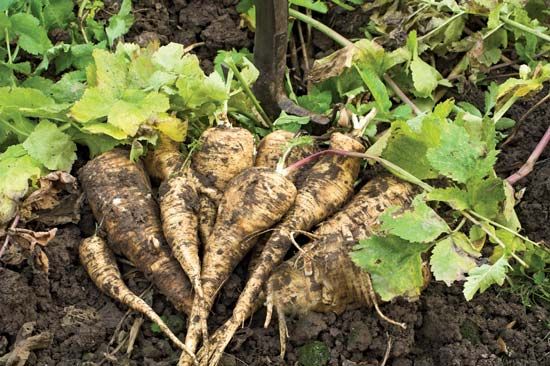
The parsnip (Pastinaca sativa) is a member of the parsley family cultivated for its edible, fleshy root.
How is parsnip cultivated and where does it grow best?
The parsnip (Pastinaca sativa) is a member of the parsley family cultivated for its edible, fleshy root.
Cultivation
To grow parsnips, seeds are sown in the spring in rows spaced approximately half a meter apart. Once the seedlings emerge, they should be thinned to stand 5 to 7 cm (2 to 3 inches) apart. While the root contains significant starch by the end of summer, exposure to low temperatures is essential for quality, as it converts much of that starch into sugar. The plant is notably hardy and can withstand hard freezing of the soil without damage.1
Growing Conditions
Parsnips grow best in temperate climates. They are native to and commonly found in open places and along roadsides throughout Europe, Great Britain, and temperate Asia. Since their introduction to the Americas in the 17th century, they have also become extensively naturalized across North America.1
What is the history and origin of parsnips as a cultivated vegetable?
The parsnip (Pastinaca sativa) has been cultivated since ancient times for its edible, fleshy white root. Native to Europe and temperate Asia, the plant is frequently found in the wild along roadsides and in open areas.1
The name “parsnip” reflects its long history of human interaction. It entered Middle English in the 14th century, evolving from the Old French pasnaie, which was derived from the Latin pastinaca—a term used for both parsnips and carrots. This Latin name is believed to originate from pastinum, a two-pronged gardening tool used for planting, suggesting a deep-rooted connection to early agricultural practices.2
In the 17th century, the vegetable was introduced to the Americas, where it has since become extensively naturalized. While it was once a staple, its linguistic evolution was also influenced by the word “turnip,” as the Middle English spelling passenep was likely altered to resemble nepe, the older term for a turnip.12
How do parsnips compare to other root vegetables like carrots or turnips?
Parsnips, carrots, and turnips are all categorized as root vegetables, a culinary group defined by edible underground plant structures rather than strict botanical classification. While they share this category, they differ in their physical characteristics and development:
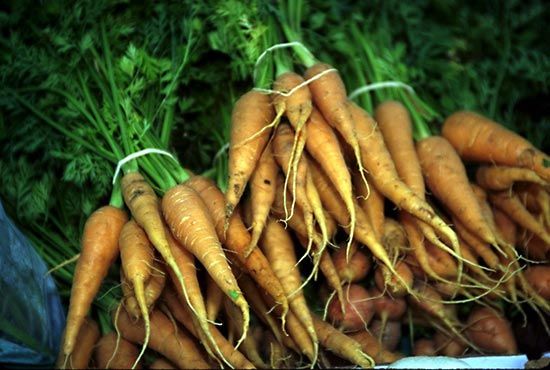
- Shape and Structure: Parsnips and carrots are both true taproots characterized by a tapering, elongated shape. In contrast, turnips are typically more bulbous in form.1
- Botanical Family: Parsnips belong to the parsley family (Apiaceae), which also includes carrots. Turnips, however, belong to a different botanical group.23
- Flavor and Composition: While all three are used as staple foods, parsnips have a distinctive sweet flavor that intensifies after exposure to cold temperatures, which triggers the conversion of stored starch into sugar.2
- Hardiness: Like many root vegetables, parsnips are notably hardy and can survive hard freezing in the soil, a trait that makes them and other root crops historically vital for regions with cold winters.21
What is the botanical classification of parsnips?
The parsnip (Pastinaca sativa) is a member of the parsley family, scientifically known as Apiaceae.15
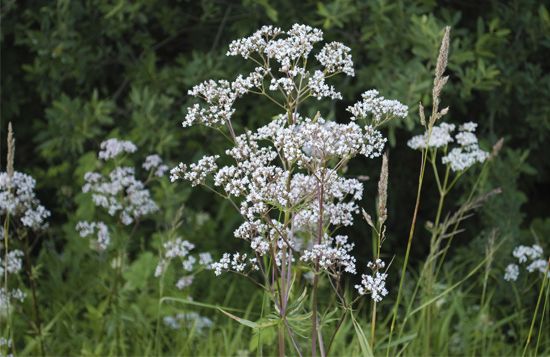
This family is a significant group of flowering plants that comprises approximately 3,820 species across 466 genera. Members of the Apiaceae family are typically aromatic and are characterized by their hollow stems, taproots, and distinct flat-topped flower clusters referred to as umbels.5
Sources
- Parsnip — Encyclopædia Britannica
- Did you know? — Merriam-Webster
- Root vegetable — Encyclopædia Britannica
- parsley — Encyclopædia Britannica
- list of plants in the family Apiaceae — Encyclopædia Britannica
Published on · 2 min read