Passifloraceae
The most well-known genus in the Passifloraceae family is Passiflora, commonly known as the passion-flower genus. It is the largest genus in the family…
What is the most well-known genus in the Passifloraceae family, and why is it significant?
The most well-known genus in the Passifloraceae family is Passiflora, commonly known as the passion-flower genus. It is the largest genus in the family, comprising 525 species.12
Passiflora is significant for several reasons:
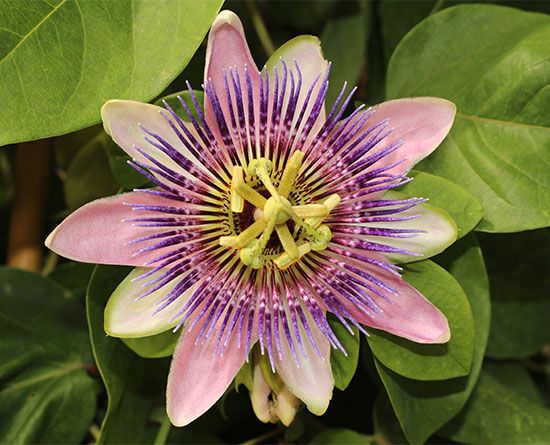
- Ornamental and Cultural Value: Gardeners prize the genus for its large, showy, and unusual flowers. The name “passion-flower” originated with early Roman Catholic missionaries in South America, who interpreted the flower’s unique anatomy as symbols of the Passion of Christ—such as the corona representing the crown of thorns and the stigmas representing the nails of the Crucifixion.12
- Economic Importance: Many species are cultivated for their edible fruits, such as the purple granadilla (P. edulis) and the giant granadilla (P. quadrangularis). Additionally, some species have medicinal applications, including the use of P. incarnata in sedatives.12
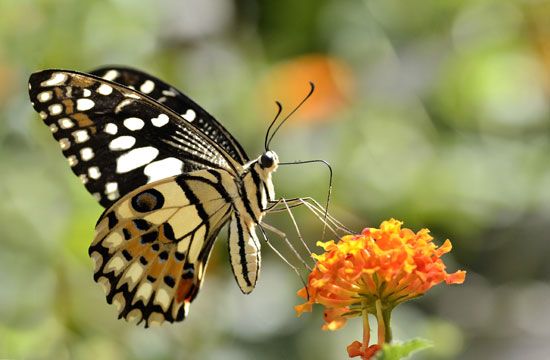
- Ecological Relationships: The leaves of these plants serve as a primary food source for heliconiid butterflies, representing a close ecological bond.2
How have Passifloraceae plants been used traditionally by humans for medicinal or cultural purposes?
Plants in the Passifloraceae family have been utilized by humans for centuries, primarily for their medicinal properties and their profound symbolic significance in religious history.
Medicinal Uses
Various species within the family are valued for their therapeutic applications:
- Sedatives: The wild passion flower (Passiflora incarnata) contains ingredients used in the production of sedatives.1
- Pain Relief: In parts of Africa, traditional practices include using distillations of the root of Paropsia and the twig bark of Smeathmannia to help relieve toothaches.1
- Other Applications: While some species, such as Adenia volkensii, are known to be poisonous to humans, other members of the Adenia genus are utilized for various medicinal purposes.1
Cultural and Symbolic Significance
The most notable cultural association involves the Passiflora genus, which earned the name “passion-flower” from early Roman Catholic missionaries in South America. These missionaries interpreted the complex anatomy of the flower as a representation of the Passion of Christ:3124
- Crown of Thorns: Represented by the corona, the ring of threadlike filaments.214
- Crucifixion Nails: Symbolized by the three stigmas.214
- Five Wounds: Represented by the five stamens.214
- The Apostles: The five sepals and five petals were seen to represent 10 of the Apostles, excluding Judas and St. Peter.24
Additionally, the flowers of Passiflora x belotii are used in the creation of scents, and many species are widely cultivated for their edible fruits, which hold cultural importance as food sources in tropical regions.14
What are the main characteristics of plants in the Passifloraceae family?
The Passifloraceae family, commonly known as the passion-flower family, consists of 16 genera and over 700 species of herbaceous or woody vines, shrubs, and trees, primarily found in tropical and subtropical regions, particularly in the Neotropics and Africa.13
Physical Characteristics
- Growth Habit: Many members are climbing vines that utilize tendrils for support, though some species grow as erect shrubs or trees.12
- Leaves: The leaves are typically stipulate and often arranged in a spiral pattern along the stem.1
- Flowers: The flowers are often showy and radially symmetrical. A defining feature is the corona, a series of threadlike or membranous outgrowths located inside the petals. The reproductive structures—the stamens and the ovary—are frequently borne on a stalk known as an androgynophore or gynophore.1263
- Fruit and Seeds: The fruit is typically a berry or a capsule, and the seeds are characterized by a fleshy appendage called an aril.136
Ecological and Economic Significance
The family is best known for the genus Passiflora, which is highly valued for its ornamental flowers and edible fruits, such as the purple granadilla. Additionally, these plants maintain a close ecological relationship with heliconiid butterflies, which often use the leaves as a primary food source.123
Are there any endangered species within the Passifloraceae family?
Sorry, the Britannica knowledge base does not contain this information.
Sources
- Passifloraceae — Encyclopædia Britannica
- Malpighiales - Passifloraceae — Encyclopædia Britannica
- passion flower — Encyclopædia Britannica
- Purple passion fruit — Encyclopædia Britannica
- Passiflorales — Merriam-Webster
- Passifloraceae — Merriam-Webster
Published on · 3 min read