Peony
Peonies, belonging to the genus Paeonia and the family Paeoniaceae, are categorized into three distinct groups based on their growth habits and native…
What are the different types of peonies, and how do they differ from each other?
Peonies, belonging to the genus Paeonia and the family Paeoniaceae, are categorized into three distinct groups based on their growth habits and native regions.12
Herbaceous Peonies
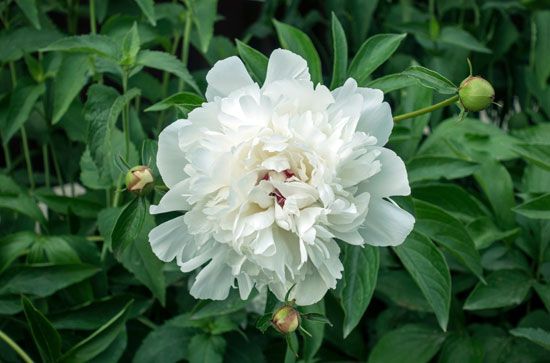
These are perennials that grow from fleshy rootstocks, reaching heights of nearly 1 meter (3 feet). They produce annual stems that die back each year. Their large, glossy leaves support single or double flowers in shades of white, pink, rose, and crimson. Most garden varieties originate from the Chinese peony and the European common peony.1
Tree Peonies
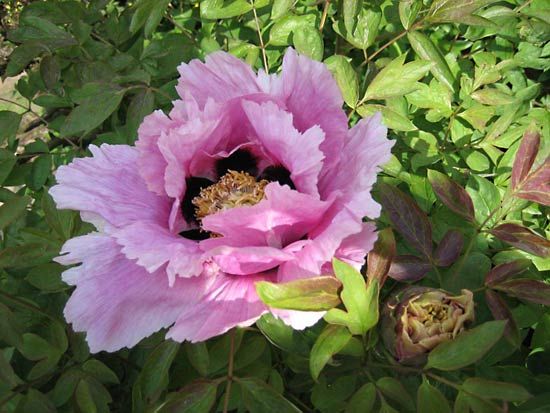
Unlike herbaceous types, tree peonies are shrubby plants with permanent, woody stems that can reach 1.2 to 1.8 meters (4 to 6 feet) in height. They bloom in late spring with colors ranging from white to lilac, violet, and red. These plants often require hot, dry summers and are frequently grafted onto herbaceous rootstock.1
North American Peonies
Two species are native to North America: Brown’s (or western) peony and the California peony, which are found in western regions of the continent.1
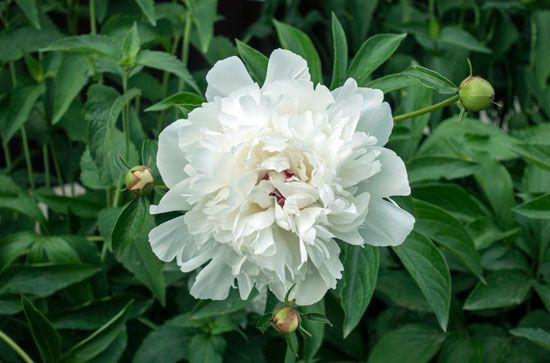
How are peonies cultivated, and what are the ideal growing conditions for these plants?
Peonies are primarily cultivated as ornamental plants, though their propagation methods vary by type. Because seeds can take approximately two years to germinate, they are rarely used for general cultivation and are typically reserved for breeding programs.1
Cultivation Methods
- Herbaceous Peonies: These are generally propagated through the division of their fleshy rootstocks.1
- Tree Peonies: Due to their woody nature, many horticultural varieties are grafted onto the roots of herbaceous peonies in late summer or autumn. Because of this grafting process, many tree peonies cannot be easily propagated by simple division.1
Ideal Growing Conditions
While specific requirements can vary by species, general environmental preferences include:
- Climate: Tree peonies, in particular, thrive in regions that experience hot, dry summer seasons.1
- Support: Many tree peony varieties are grafted onto supportive rootstock to ensure healthy development.1
Peonies are valued for their large, showy blossoms, which appear in late spring and early summer for herbaceous varieties and late spring for tree peonies.1
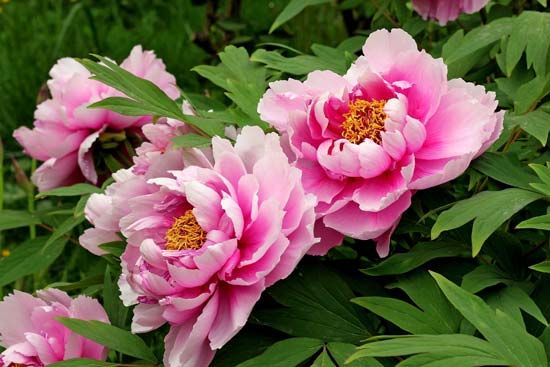
What are the most popular peony varieties for garden cultivation?
Most popular garden peonies are derived from two primary species: the Chinese peony (P. lactiflora) and the European common peony (P. officinalis).1
Herbaceous Varieties
P. lactiflora is particularly significant, having produced hundreds of cultivated varieties. Among these are the popular Japanese types, which are characterized by one or two rows of petals surrounding a center cluster of petaloid stamens.1
Tree Peony Varieties
The Asian tree peony, or moutan (P. suffruticosa), serves as the foundation for many horticultural varieties. Additionally, a notable race of hybrids has been developed by crossing P. suffruticosa with the yellow Chinese species P. delavayi. These hybrids are prized for their diverse flower forms, which can be single or double and are sometimes tinged with red.13
While these species dominate the garden landscape, North American native species like Brown’s peony and the California peony are generally not the primary focus of ornamental cultivation.1
What are intersectional or Itoh peonies?
Intersectional peonies, commonly referred to as Itoh peonies, are a unique group of hybrids created by crossing herbaceous peonies with tree peonies. This hybridization, first successfully achieved by Japanese breeder Toichi Itoh, combines the desirable traits of both parent groups.1
These plants are highly valued in gardens because they possess the sturdy, shrub-like habit and large, impressive flowers of tree peonies, while maintaining the herbaceous trait of dying back to the ground each winter. This allows them to be more resilient and easier to manage than traditional tree peonies, which require permanent woody stems to survive. Because they are hybrids, they often exhibit a wider range of colors and improved bloom longevity compared to standard herbaceous varieties.1
Sources
- Peony — Encyclopædia Britannica
- Paeoniaceae — Encyclopædia Britannica
- tree peony — Merriam-Webster
Published on · 3 min read