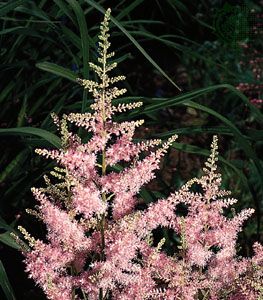
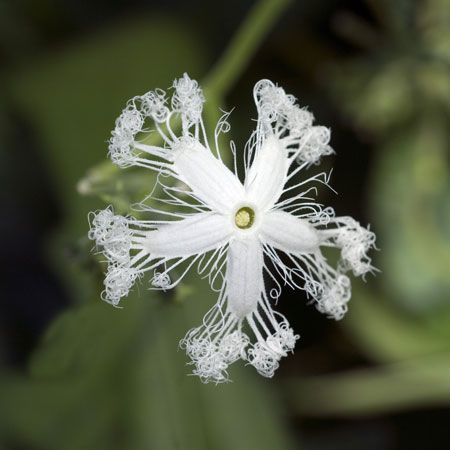
Saxifragales
The order Saxifragales exhibits significant structural diversity, yet its members are united by several consistent characteristics regarding their…
What are some unique features of Saxifragales flowers and fruits?
The order Saxifragales exhibits significant structural diversity, yet its members are united by several consistent characteristics regarding their reproductive anatomy.
Flower Characteristics
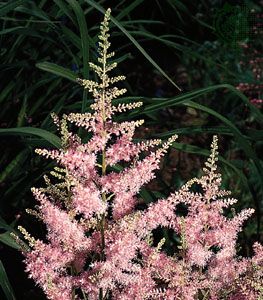
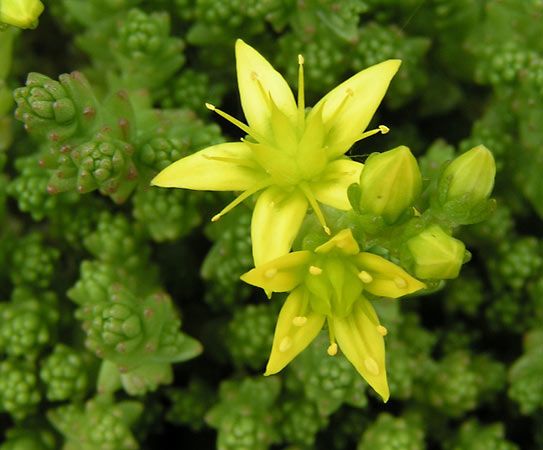
Flowers within the Saxifragales order are almost exclusively radially symmetric. A defining feature is the presence of free petals, meaning they are not fused together. Additionally, the seeds of these plants typically contain abundant endosperm, which serves as vital nutrient tissue for the developing embryo. Within the specific family Saxifragaceae, flowers are generally bisexual and typically feature four or five sepals and petals. These are often arranged in branched clusters and display a wide color spectrum, ranging from greenish, white, and yellow to pink, red, or purple.12
Fruit Characteristics
A common structural trait across the order is the presence of separate, unfused carpels, at least toward the apex of the structure. In the Saxifragaceae family, the fruit is characteristically a capsule that contains numerous seeds.12
How have Saxifragales plants adapted to different environments?
Plants in the order Saxifragales, particularly within the Saxifragaceae family, demonstrate a remarkable range of adaptations to diverse moisture and environmental conditions.
Moisture Adaptations
Saxifragaceae species occupy habitats ranging from aquatic environments to arid regions:
- Aquatic and Wetland Species: Some, such as Saxifraga nutans, are true aquatic plants, while others like marsh saxifrage (Micranthes pensylvanica) thrive in bogs or cold mountain streams.
- Arid Adaptations: Species adapted to dry conditions utilize various strategies to conserve moisture:
- Storage Structures: Some plants store moisture in small stem bulbils or fleshy, heavily cuticularized leaves.
- Protective Features: Others possess a strongly cuticularized epidermis, hairy stipules, or membranous bud scales.
- Dew Absorption: In some rosette-forming species, the bases of lower leaves are weakly cuticularized, allowing them to absorb dew to support the development of flowering shoots.
High-Altitude and Rocky Environments
Known as “rock breakers,” many saxifrage species thrive on exposed rocky crags and fissures, even in harsh Alpine regions. They utilize tough, wiry root systems and deep taproots to anchor themselves. In extreme environments, some develop as cushion plants, which reduce leaf surface area and shorten shoots to survive.
What is the evolutionary history and relationships of Saxifragales within the plant kingdom?
The order Saxifragales represents a diverse group of dicotyledonous flowering plants, comprising 15 families, 112 genera, and nearly 2,500 species. Within the modern Angiosperm Phylogeny Group (APG) classification system, Saxifragales is categorized as part of the core eudicots.14
Evolutionary Relationships
Historically, the families now included in Saxifragales were considered unrelated and were scattered across different subclasses in older systems, such as those by Arthur Cronquist and Armen Takhtajan. However, contemporary molecular studies—specifically those sequencing DNA from chloroplasts and nuclei—have confirmed that Saxifragales is a monophyletic group. While its exact phylogenetic position remains somewhat unresolved, it is widely suggested to be a sister group to the Rosids.541
Ancient Radiation Hypothesis
The internal relationships among the families within Saxifragales are not fully understood. Botanists hypothesize that this ambiguity stems from a rapid ancient radiation, a period of quick evolutionary diversification. This theory is supported by the fact that many families in the order are geographically restricted and small in size, yet several of the woody families possess an extensive fossil record.5
Which important plant families are included in the Saxifragales order?
The order Saxifragales is a diverse group of dicotyledonous flowering plants comprising 15 families and nearly 2,500 species. These plants exhibit wide structural variations, ranging from small herbs to shrubs and trees.15
Key families within the order include:
- Crassulaceae: The largest family in the order, known for its succulent, water-storing leaves and stems, and the use of Crassulacean Acid Metabolism (CAM) for photosynthesis.4
- Saxifragaceae: Primarily herbaceous plants that often thrive in cold, rocky, or moist environments.4
- Hamamelidaceae: Known as the witch hazel family, these plants are often recognized by their star-shaped hairs and two-ranked leaves.4
- Grossulariaceae: Comprised of the genus Ribes, which includes commercially important currants and gooseberries ) and gooseberries.6
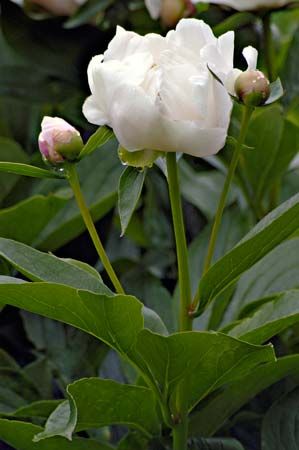
- Paeoniaceae: The peony family, consisting of perennial herbs or small shrubs with large, showy flowers.4
- Altingiaceae: The sweet gum family, consisting of trees characterized by palmately lobed leaves.4
- Haloragaceae: The water milfoil family, which includes various land, marsh, and aquatic herbs.4
- Cercidiphyllaceae: A family of deciduous trees, such as the katsura tree, which were once widely distributed in the Northern Hemisphere.4
Other families include Iteaceae, Peridiscaceae, Aphanopetalaceae, Cynomoriaceae, Daphniphyllaceae, Penthoraceae, and Tetracarpaeaceae.4
Sources
- Saxifragales - Order characteristics — Encyclopædia Britannica
- Saxifragaceae — Encyclopædia Britannica
- saxifrage — Encyclopædia Britannica
- Angiosperm - Annotated classification — Encyclopædia Britannica
- Saxifragales — Encyclopædia Britannica
- Saxifragales - Major families — Encyclopædia Britannica
Published on · 3 min read