Candytuft
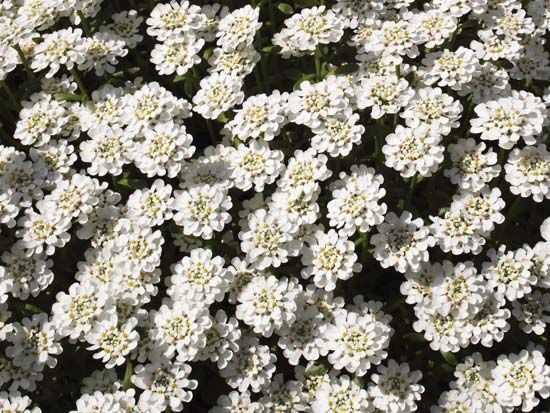
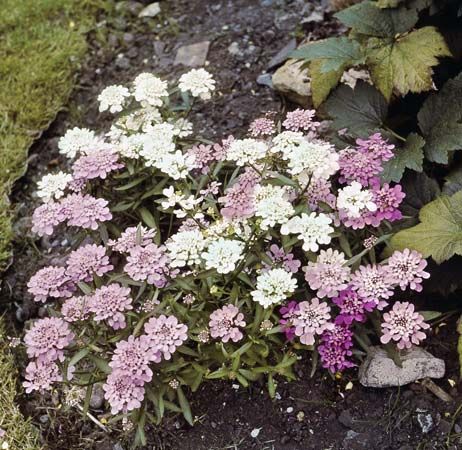
Candytuft refers to the genus Iberis, which consists of approximately 40 species of Eurasian plants belonging to the mustard family (Brassicaceae). These…
What is candytuft?
Candytuft refers to the genus Iberis, which consists of approximately 40 species of Eurasian plants belonging to the mustard family (Brassicaceae). These plants are typically herbaceous annuals or perennials native primarily to the Mediterranean region and are widely cultivated as ornamentals for their showy flowers.1
Common varieties include:
- Globe candytuft (Iberis umbellata): A popular garden annual that produces flat clusters of flowers in various colors, including pink, violet, white, purple, or red.1
- Rocket candytuft (I. amara): Known for its fragrant white flowers and deeply lobed leaves, often found growing in fields or on chalky hills.1
- Evergreen candytuft (I. sempervirens): A matting perennial characterized by its white flowers, frequently used in garden landscaping.1
What are some other common plants in the mustard family?
The mustard family (Brassicaceae), also known as the crucifer family, is a large and diverse group of flowering plants. Beyond candytuft, the family includes many economically important food crops and popular garden ornamentals.
Common Food Crops
Many vegetables familiar in culinary traditions belong to this family, particularly within the genus Brassica:
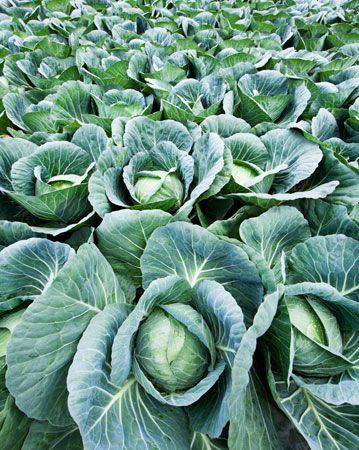
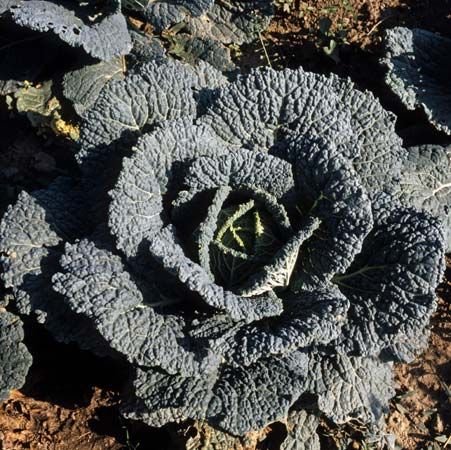
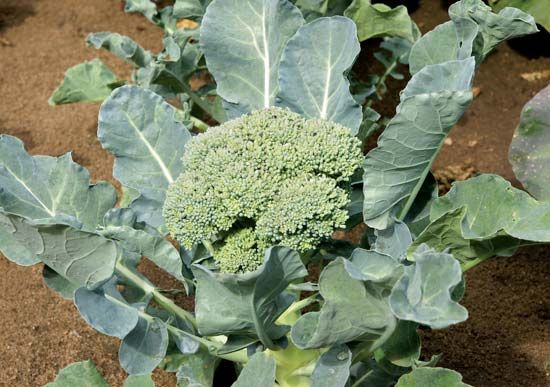
- Cruciferous Vegetables: Broccoli, cabbage, cauliflower, Brussels sprouts, kale, kohlrabi, and bok choy.34
- Root Vegetables and Others: Radish, turnip, rutabaga, and horseradish.34
- Greens and Condiments: Arugula, watercress, brown mustard, and white mustard.35
Popular Ornamentals
In addition to their agricultural value, many species are grown for their showy, cross-shaped flowers:
- Sweet alyssum
- Wallflower
- Rock cress
- Stock
- Basket-of-gold
- Dame’s rocket
- Honesty
- Stonecress354
These plants are characterized by their four-petaled flowers and often contain sulfur-containing compounds called glucosinolates, which provide their signature pungent taste and aroma.54
What is the difference between annual and perennial plants?
The primary difference between annual and perennial plants lies in the duration of their life cycles.
Annual Plants
An annual is a plant that completes its entire life cycle—from germination to seed production—within a single growing season. Once the plant produces seeds, it dies, and the dormant seed is the only part that survives to the next season. Common examples include cereal grains, lettuce, marigolds, and zinnias.7
Perennial Plants
A perennial is a plant that persists for several years. These plants typically regrow and rebloom year after year, often using specialized underground structures like bulbs, rhizomes, or tubers to survive through winter. All trees and shrubs are perennials, as are many herbaceous plants like chrysanthemums, peonies, and asparagus.8
It is also worth noting that some plants are biennials, which complete their life cycle over two growing seasons, such as carrots and parsley.9
How do botanists classify plants into different families?
Botanists classify plants into families and other hierarchical ranks by analyzing their resemblances to and differences from known forms, aiming to reflect their natural evolutionary relationships, or phylogeny.11
Methods of Classification
Modern plant taxonomy relies on a multidisciplinary approach to determine these relationships:
- Molecular Evidence: Scientists measure the degree of similarity in DNA molecules between different plants. Closely related plants share more DNA similarities than unrelated ones, providing a robust basis for grouping.1213
- Morphology: Botanists study the physical structure of plants, including leaves, roots, and flowers. For example, floral construction—such as the number and arrangement of sepals, petals, and stamens—is a key diagnostic feature for many groups.1114
- Chemotaxonomy: This field analyzes the chemical composition of plants. Because different species often produce unique metabolic products, biochemical data can provide objective, quantitative evidence to support or supplement morphological findings.12
- Numerical Taxonomy: Using computer techniques, researchers quantify a wide range of characteristics to determine relationships between species and depict them graphically.1211
Taxonomic Hierarchy
Classification follows an obligatory hierarchy, including domain, kingdom, phylum (or division), class, order, family, genus, and species. While some naming conventions exist—such as specific suffixes for certain zoological ranks—botanical family names are often preserved based on historical usage, and there is no single, universally standardized rule for all high-ranking groups.11
Sources
- candytuft — Encyclopædia Britannica
- Iridaceae — Encyclopædia Britannica
- list of economically important members of the family Brassicaceae — Encyclopædia Britannica
- Brassicales - Brassicaceae , Capparaceae, and Cleomaceae — Encyclopædia Britannica
- brassica — Encyclopædia Britannica
- Brassicaceae — Encyclopædia Britannica
- Is That Plant 'Perennial' or 'Annual'? — Merriam-Webster
- Perennial — Encyclopædia Britannica
- Annual — Encyclopædia Britannica
- Biennial — Encyclopædia Britannica
- Botany - Taxonomic aspects — Encyclopædia Britannica
- Asparagales - Organization and taxonomy — Encyclopædia Britannica
- taxonomy - Ranks — Encyclopædia Britannica
- Angiosperm - Eudicots — Encyclopædia Britannica
- Fern - Critical appraisal — Encyclopædia Britannica
- Plant reproductive system — Encyclopædia Britannica
Published on · 3 min read