Pogonia
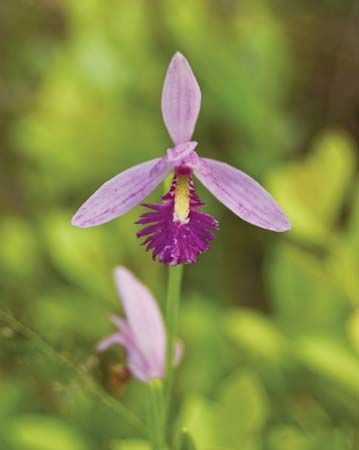
Pogonia is a genus of two species of terrestrial orchids (family Orchidaceae) native to the temperate regions of North America and Asia.
What is Pogonia?
Pogonia is a genus of two species of terrestrial orchids (family Orchidaceae) native to the temperate regions of North America and Asia.1
These plants are characterized by a slender rootstock and typically feature a single leaf positioned midway up the stem, with additional leaves at the base. Their solitary, pinkish flowers are known for a scent reminiscent of raspberries and possess a bearded, toothed lip.1
- Snakemouth (P. ophioglossoides): Also called rose pogonia or adder’s mouth, this species is commonly found in the bogs and swamps of eastern North America.1
- Asian pogonia (P. japonica): This species thrives in the moist, open environments of Korea, Japan, and parts of China.1
The term “pogonia” is also used colloquially for various other genera within the tribe Pogonieae, such as the Isotria (whorled pogonias) and Cleistesiopsis (spreading pogonias) species. Notably, the small whorled pogonia (Isotria medeoloides) is currently recognized as an endangered species in many regions.1
What makes orchids different from other types of flowers?
Orchids are distinguished from other flowering plants primarily by a unique combination of morphological characteristics centered on their flower structure and reproductive strategies.2
Key Floral Distinctions
- The Column: Unlike most flowers, where reproductive parts are separate, orchids have their stamens and pistil fused into a single structure called the column.32
- Bilateral Symmetry: Most orchids are bilaterally symmetrical, featuring a specialized petal known as the lip or labellum, which serves as a landing platform for pollinators.3
- Pollinia: Rather than loose, powdery grains, orchid pollen is typically bound into cohesive masses called pollinia, which are designed to adhere to visiting insects.32
- Resupination: As the flower develops, the ovary or pedicel often twists, causing the lip to rotate from an upward position to a downward one before the flower opens.3
Reproductive Differences
Orchid seeds are exceptionally small and lack endosperm, the nutrient-rich tissue that nourishes embryos in most other flowering plants. Consequently, orchid seeds require a symbiotic relationship with a mycorrhiza (fungus) to provide the necessary nutrients for germination and early development.456
Why are some orchid species considered endangered?
Some orchid species are considered endangered due to a combination of environmental pressures, specialized biological requirements, and human activity. Key factors contributing to their vulnerability include:
- Habitat Loss: Many orchids are highly sensitive to environmental changes. Tropical-deciduous forests, which host numerous orchid species, are frequently cleared for cultivation, leading to rapid habitat destruction.7
- Specialized Symbiosis: Orchids rely on a delicate mycorrhizal association with fungi for germination and early development. This dependency makes them “finicky” and difficult to cultivate, as they cannot thrive without their specific fungal partners.849
- Overharvesting: The survival of many orchid species is directly threatened by collectors who harvest them from the wild for the ornamental plant trade.10
- Restricted Ranges: Some species are endemic to very small areas, such as a single mountain, making them exceptionally susceptible to localized disturbances.7
- Pollinator Loss: Orchids often require specific pollinators to reproduce. When plants colonize new areas where their customary pollinators are absent, they may face reproductive failure, forcing them to rely on self-pollination to avert extinction.11
What are the unique characteristics of plants that grow in bogs?
Plants that inhabit bogs have evolved unique adaptations to survive in environments characterized by high acidity, waterlogged soil, low nutrient availability, and a lack of free oxygen.1213
Key Adaptations
- Nutrient Acquisition: Because bog soils are notoriously poor in nutrients like nitrogen, many plants have evolved to be insectivorous. Species such as pitcher plants and sundews trap and digest insects to supplement their nutrient intake, allowing them to thrive where other plants cannot.1214
- Water Management: In typical bogs, peat mosses (Sphagnum) dominate. These mosses possess large, empty cells that act like a sponge, absorbing and retaining vast quantities of water. They also actively acidify their environment by absorbing minerals and releasing hydrogen ions.12
- Structural Support and Aeration: In tropical bogs, where trees are the primary flora, many species have developed specialized root systems. These include stilt roots that act as buttresses for stability and pneumatophores—upward-growing structures that transport oxygen to roots submerged in anoxic, waterlogged soil.15
- Specialized Flora: Beyond mosses and carnivorous plants, bog vegetation often includes heaths, sedges, orchids, and certain grasses, all of which are adapted to low-electrolyte, high-acidity conditions.1213
Sources
- Pogonia — Encyclopædia Britannica
- orchid - Floral structure — Encyclopædia Britannica
- orchid - Structural diversity — Encyclopædia Britannica
- mycorrhiza — Encyclopædia Britannica
- orchid - Seeds — Encyclopædia Britannica
- orchid - Natural history — Encyclopædia Britannica
- orchid - Ecology — Encyclopædia Britannica
- orchid - Mycorrhizal associations — Encyclopædia Britannica
- The Orchid and the Fungus - Learn more — Encyclopædia Britannica
- orchid - Self-pollination — Encyclopædia Britannica
- conservation - Logging and collecting — Encyclopædia Britannica
- Bog - Flora — Encyclopædia Britannica
- Bog — Encyclopædia Britannica
- Do Carnivorous Plants Eat Their Prey? — Encyclopædia Britannica
- bryophyte - Ecology and habitats — Encyclopædia Britannica
- Bog - Tropical bogs — Encyclopædia Britannica
Published on · 3 min read