Pleurothallis
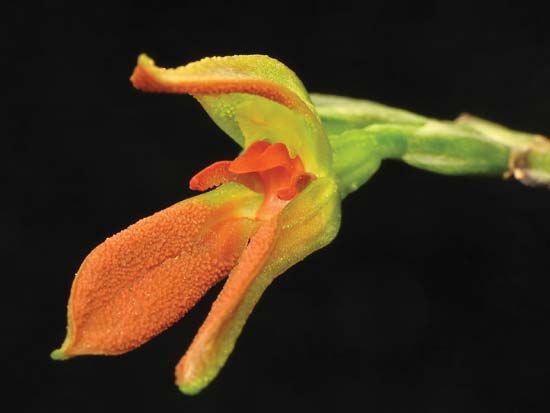
Pleurothallis is a large genus of orchids belonging to the family Orchidaceae. These plants are native to tropical and temperate regions across the Americas.
What is Pleurothallis?
Pleurothallis is a large genus of orchids belonging to the family Orchidaceae. These plants are native to tropical and temperate regions across the Americas.1
While most Pleurothallis species are epiphytes—growing on other plants—some are terrestrial. They exhibit significant variation in size; some, such as P. leptotifolia and P. rowleei, are diminutive and cultivated as novelties, while others are grown for their attractive, hooded flowers, often referred to as bonnet orchids. The flowers typically appear in shades of yellow, white, red, green, or brown, though some species, like the widow orchid (P. macrophylla), feature dark purple blooms.1
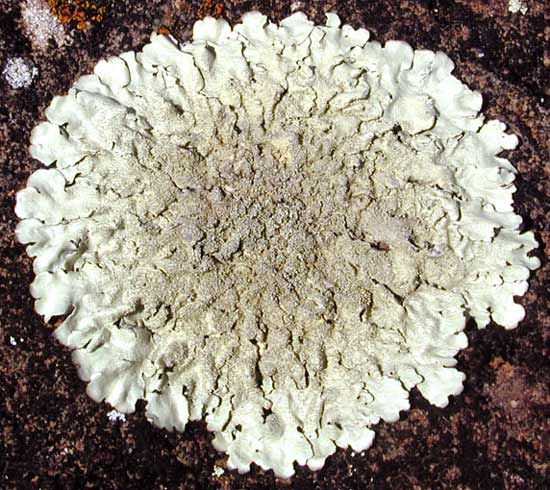
Ecologically, these orchids are highly adaptable. For instance, one species in western Mexico has been observed growing epiphytically on lichens.2
What is an epiphyte and how does it survive?
An epiphyte is a plant that grows on another plant or object solely for physical support, rather than for nourishment. Unlike parasitic plants, epiphytes do not derive nutrients from their host; they are often called “air plants” because they survive without being rooted in the ground.34
To survive, these plants have developed specialized strategies to gather resources in environments like dense forest canopies:
- Water Acquisition: Epiphytes absorb moisture from rain and water vapor in the air. While many use their roots for this purpose, others possess specialized leaves to capture moisture.3
- Nutrient Intake: Minerals are obtained from rain, while essential nutrients are absorbed from organic debris—such as decaying leaves—that accumulates on the host plant.3
- Dispersal: Because they occupy specific, elevated niches, many epiphytes rely on wind to spread their dustlike or feathery seeds. Others produce edible fruits to encourage dispersal by birds and tree-dwelling animals.3
What are the main differences between epiphytic and terrestrial orchids?
The primary differences between epiphytic and terrestrial orchids lie in their growth environments and morphological adaptations.
Ecological Distribution
- Epiphytic Orchids: These are predominantly found in tropical regions, particularly in cloud-forest associations where they grow on trees or other surfaces for physical support rather than nourishment.523
- Terrestrial Orchids: These are typically found in temperate zones, where they grow directly in the soil of bogs, prairies, grasslands, and hardwood forests.523
Morphological Adaptations
- Stem Structure: Many epiphytic orchids have evolved thickened stems known as pseudobulbs, which help them store water and nutrients in their elevated, often dry, canopy habitats. While some terrestrial orchids also possess thickened stem bases, pseudobulbs consisting of a single internode are restricted to primarily epiphytic groups.5
- Growth Habit: Both groups may exhibit sympodial growth (a creeping habit with a rhizome) or monopodial growth (unlimited apical growth), but the specific structural modifications of the stems are often more pronounced in epiphytes to support their “air plant” lifestyle.5
Why do cloud forests provide an ideal habitat for orchids?
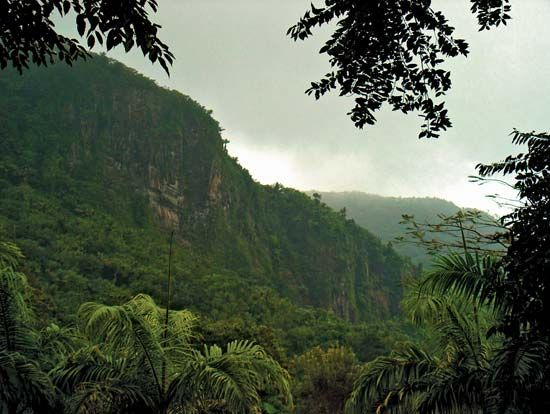
Cloud forests provide an ideal habitat for orchids because they offer a unique combination of persistent moisture and light availability. Located in tropical mountainous regions, these forests experience constant condensation as moisture-laden air currents are deflected upward by mountains, creating a year-round cloud layer at the canopy level.27
This environment is particularly beneficial for epiphytic orchids for several reasons:
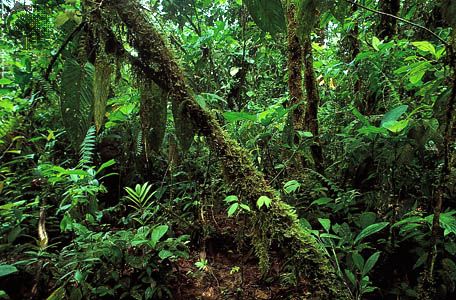
- High Humidity: The persistent mist and heavy rainfall provide the constant moisture that epiphytes require to survive without being rooted in the ground.27
- Supportive Vegetation: The trees in these forests are often covered in thick blankets of mosses and [lichens], which create an ideal substrate for orchids to anchor themselves.27
- Light Penetration: Because these forests are situated on mountainsides, the inclination of the ground allows sunlight to penetrate through the vegetation, reaching the orchids that might otherwise be shaded in flatter, denser rain forests.2
Sources
- Pleurothallis — Encyclopædia Britannica
- orchid - Ecology — Encyclopædia Britannica
- epiphyte — Encyclopædia Britannica
- Did you know? — Merriam-Webster
- orchid - Growth forms — Encyclopædia Britannica
- orchid: Top Questions — Encyclopædia Britannica
- Cloud forest — Encyclopædia Britannica
Published on · 3 min read