Perched Rock
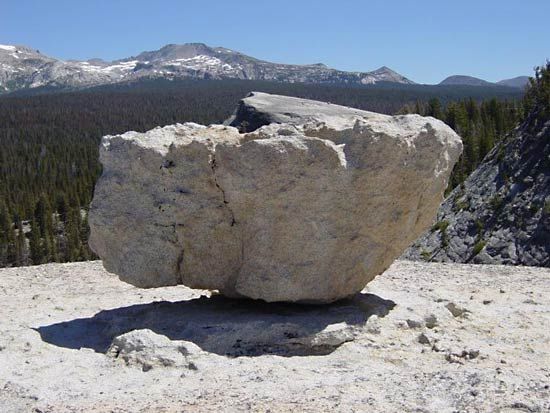
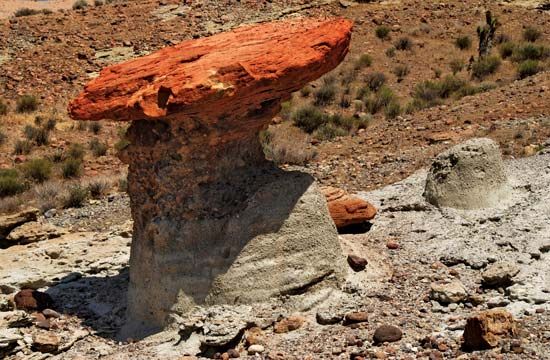
A perched rock is a boulder situated in a precarious or unstable position, such as on a pinnacle or atop another boulder.
What is perched rock?
A perched rock is a boulder situated in a precarious or unstable position, such as on a pinnacle or atop another boulder.1
These formations occur through several processes:
- In-situ formation: Rainwash or wind removes finer material from around a boulder, leaving it balanced in place.1
- Transport: Some are moved by tectonic forces or by glaciers, which deposit them in unsettled locations. When specifically transported and deposited by glacial activity, these are often referred to as erratics or perched boulders.123
Perched rocks frequently feature a hard capping, such as ferruginous duricrust, and often exhibit signs of weathering, such as crumbling or exudation, along their sides.1
How do glaciers transport large boulders?
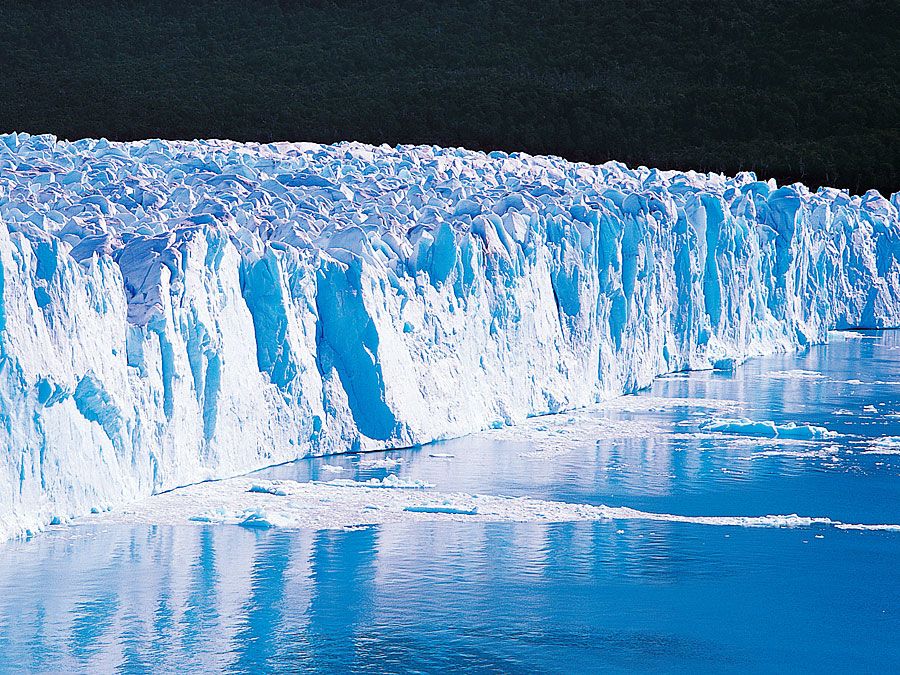
Glaciers transport large boulders through a process where the ice acts like a conveyor belt, carrying debris located beneath, within, and above the glacier toward its terminus or outer margin.3
The mechanisms for acquiring and moving these boulders include:
- Glacial Plucking (Quarrying): Glaciers remove large pieces of rock from their beds through various processes, such as high stress gradients that pull rock apart along existing joints or the pressure of water refreezing within cracks.4
- Surface Accumulation: Boulders may also enter the ice from rockfalls occurring on steep slopes bordering the glacier or by overriding unconsolidated sediments as the glacier advances.4
- Basal Transport: Once incorporated, these rocks become part of a basal debris zone. Much like sandpaper, the glacier uses these embedded fragments to abrade the bedrock beneath it.4
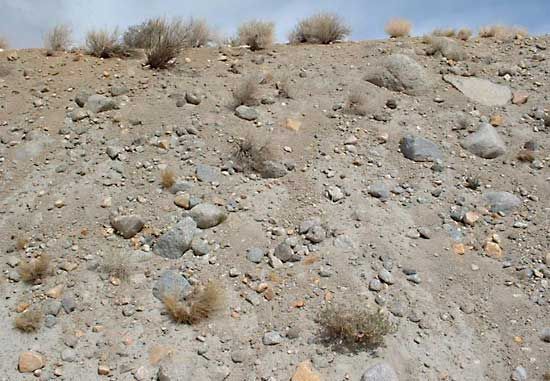
When these boulders are deposited—either directly by the ice as till or left behind as the ice melts—they are often referred to as erratics if their rock type differs from the local bedrock.53
What is the difference between weathering and erosion?
While weathering and erosion are both fundamental geological processes that shape the Earth’s surface, they are distinguished primarily by the movement of material.78
Weathering
Weathering is the disintegration or alteration of rock in its original position (in situ) at or near the Earth’s surface. It involves physical, chemical, and biological processes that break down rock without necessarily transporting the resulting debris away from the site.7
- Physical weathering involves mechanical forces like freeze-thaw cycles or thermal expansion.7
- Chemical weathering involves changes to the mineral composition of the rock through processes like oxidation or carbonation.7
Erosion
Erosion is the removal of surface material—such as soil and rock debris—and its subsequent transportation by natural agencies like water, wind, or ice. While weathering prepares the material, erosion is the active process of moving that material away from the point of degradation.87
In short, weathering breaks the rock down, while erosion carries it away. Often, these processes operate simultaneously to denude and reshape the landscape.87
What are some famous examples of balanced rocks?
A balanced rock is a large boulder that rests precariously on a base, typically formed through the processes of weathering and erosion in situ. These formations are often distinguished from “perched rocks,” which may be transported to their positions by glaciers or tectonic forces.111
One of the most famous examples is Balanced Rock located in Arches National Park in Utah. This iconic feature is a prominent example of how the region’s red sandstone has been sculpted into unusual shapes by wind and water over millions of years.12
While the term “balanced rock” specifically refers to those formed by local degradation, the broader category of “perched rocks” includes boulders left in unsettled positions by various geological agents, such as the erratics deposited by retreating ice sheets.1
Sources
- perched rock — Encyclopædia Britannica
- perched boulder — Merriam-Webster
- erratic — Encyclopædia Britannica
- glacial landform - Glacial deposition — Encyclopædia Britannica
- glacial landform - Glacial erosion — Encyclopædia Britannica
- glacial boulder — Merriam-Webster
- weathering — Encyclopædia Britannica
- erosion — Merriam-Webster
- weathering — Merriam-Webster
- erosion — Encyclopædia Britannica
- Arches National Park — Encyclopædia Britannica
- balanced rock — Merriam-Webster
Published on · 3 min read