Erratic
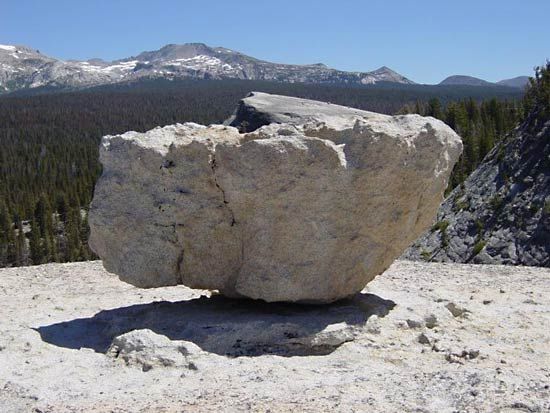
Erratics are rock fragments transported by glaciers that differ significantly from the local bedrock. These boulders, which can range from pebbles to massive…
What can erratics tell us about past ice ages and glacier movements?
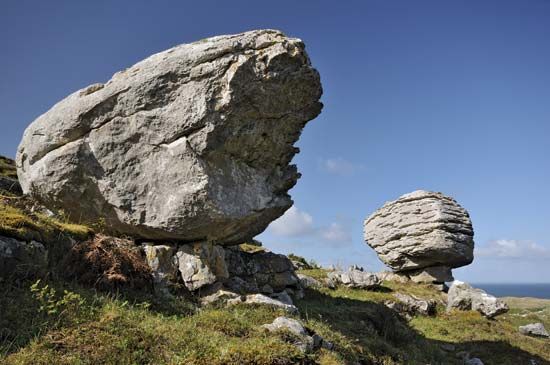
Erratics are rock fragments transported by glaciers that differ significantly from the local bedrock. These boulders, which can range from pebbles to massive stones weighing thousands of tons, serve as vital geological markers for understanding past environmental conditions.12
By analyzing the composition of distinctive erratics, geologists can trace them back to their specific source of origin. This allows researchers to map the flow paths of ancient ice sheets and determine the direction of glacial movement, even in areas where other evidence like striations is absent or obscured.12
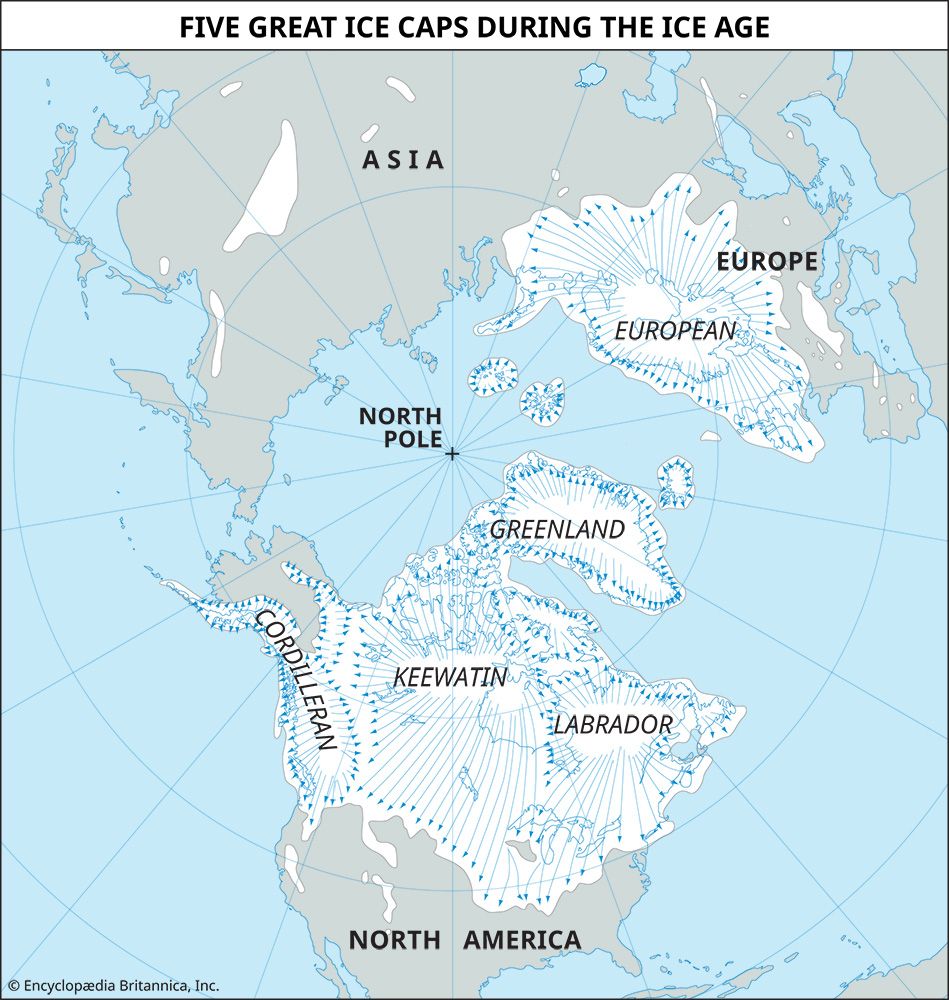
Historically, the study of these displaced rocks was instrumental in the initial recognition of the last ice age. Before the work of Louis Agassiz in 1840, these boulders were often incorrectly attributed to massive floods or ice rafting. Today, they remain essential tools for reconstructing the extent of past glaciations and identifying the movement patterns of ice across the landscape.1
How do geologists use erratics to study climate change and geological history?
Geologists use erratics—rock fragments transported by glaciers that differ from local bedrock—as critical indicators of Earth’s geological history and past climate conditions.
By identifying the unique lithology of these boulders, researchers can trace them back to their specific source of origin. This process allows geologists to map the flow paths of ancient ice sheets and determine the direction of glacial movement, even in regions where other evidence, such as striations, is missing or obscured by vegetation and till.12
Historically, the study of erratics was fundamental to the scientific recognition of the last ice age. Before the 1840 work of Louis Agassiz, these displaced rocks were often misattributed to massive floods or ice rafting. Today, they remain essential for reconstructing the extent of past glaciations and identifying the movement patterns of ice across the landscape. While erratics provide spatial data on ice movement, other methods, such as analyzing ice cores, are used to reconstruct specific temperature variations and atmospheric compositions over time.13
How are erratics transported and deposited by glaciers?
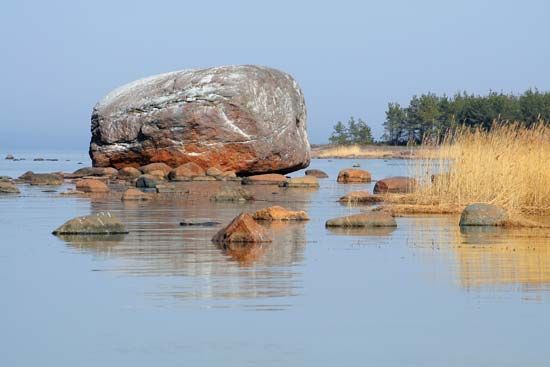
Erratics are rock fragments that have been transported by glaciers and deposited in areas where the local bedrock is of a different type. Their movement and deposition are integral parts of the glacial cycle.
Transportation
As a glacier moves from areas of accumulation to ablation, it functions like a conveyor belt. It transports debris located beneath, within, and above the ice toward its terminus or margin. This debris is sourced from rockfalls off steep slopes, unconsolidated sediments overridden by the glacier, or through glacial plucking, where the ice removes large pieces of rock from its bed. Because erratics must survive the grinding and shattering effects of transport, they are typically composed of rock types resistant to physical weathering.124
Deposition
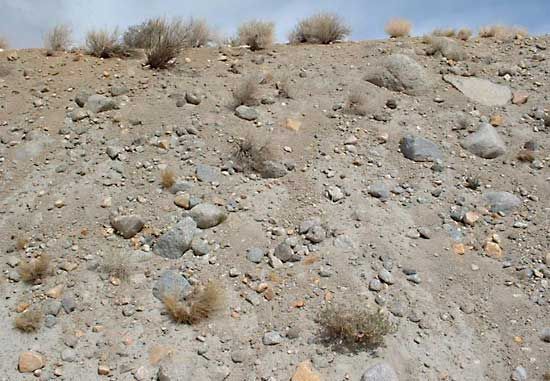
Deposition occurs primarily near the glacier margin, where ice velocity decreases significantly. Erratics are deposited as part of till—the unsorted mixture of rock fragments and boulders laid down directly by ice. Specific depositional processes include:
- Melt-out (Ablation) Till: Debris is laid down in place as the ice melts away around and beneath it.2
- Flow-till: Debris frozen into the ice forms a blanket over the margin, which may slide off as mudflows during melting.2
- Lodgment Till: Material is compressed and sheared between the moving glacier and its bed.2
What role do erratics play in local ecosystems and landscapes?
Erratics are glacier-transported rock fragments that differ from the local bedrock. While they are primarily studied by geologists to map the flow paths of ancient ice sheets and identify the extent of past ice ages, their presence also influences the landscapes and environments in which they are deposited.1
In terms of landscape, erratics are often found embedded within till or resting on the ground surface. Because they are composed of rock types resistant to the grinding and shattering effects of glacial transport, they can persist in the environment for thousands of years after the ice has retreated. These boulders contribute to the physical character of post-glacial terrain, often appearing as prominent, out-of-place features in regions where the underlying geology is otherwise uniform.1
While the provided information focuses on their geological utility, erratics—like other rock outcrops—can serve as substrates for various organisms, contributing to the structural diversity of an ecosystem.8
Sources
- erratic — Encyclopædia Britannica
- glacial landform - Glacial deposition — Encyclopædia Britannica
- Pleistocene Epoch - Ice-core records — Encyclopædia Britannica
- glacial landform - Glacial erosion — Encyclopædia Britannica
- glacial landform - Meltwater deposits — Encyclopædia Britannica
- glacial landform - Small-scale features of glacial erosion — Encyclopædia Britannica
- glacial boulder — Merriam-Webster
- glacier - Glacier hydrology — Encyclopædia Britannica
- Quaternary - Landforms — Encyclopædia Britannica
- bedrock — Encyclopædia Britannica
Published on · 3 min read