Till
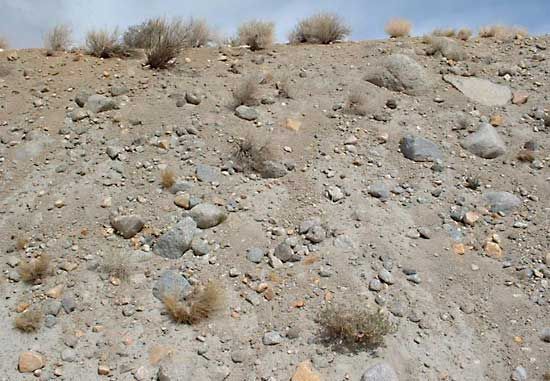
Till is unsorted material deposited directly by glacial ice. While both lodgement and ablation tills are types of glacial deposits, they differ primarily in…
What is the difference between lodgement till and ablation till?
Till is unsorted material deposited directly by glacial ice. While both lodgement and ablation tills are types of glacial deposits, they differ primarily in their transport history and the physical state of the material upon deposition.
Lodgement Till
Lodgement till is a form of basal till that is typically deposited beneath a moving glacier. Because it is subjected to the weight and movement of the overriding ice, this material is often severely sheared, compressed, and “over-compacted” against the bedrock bed.1
Ablation Till
Ablation till consists of debris that was transported on or near the surface of the glacier. Unlike lodgement till, which is pressed into place, ablation till is deposited as the glacier melts. It is often referred to as “melt-out” till because the debris is essentially let down in place as the surrounding ice disappears.21
What can the study of till reveal about past glacial movements and environments?
The study of till—unsorted, unstratified material deposited directly by glacial ice—is a fundamental tool for reconstructing past environments and glacial dynamics. Because till is deposited by ice rather than water, its physical characteristics provide direct evidence of glacial behavior.
Indicators of Glacial Movement
- Flow Direction: The orientation of rock fragments within till can reveal the direction of ice flow, as stones often align their long axes parallel to the glacier’s movement.1
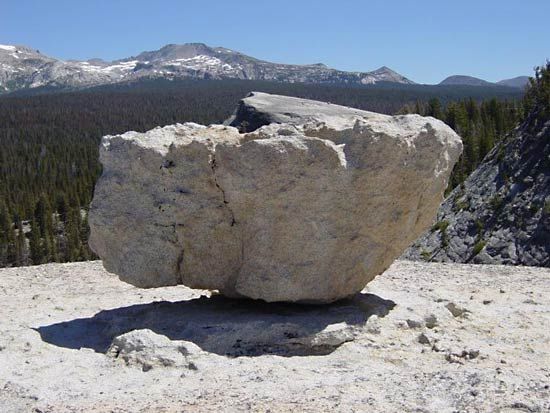
- Indicator Erratics: Erratics—boulders composed of rock types distinct from the local bedrock—can be traced back to their source of origin. This allows geologists to map the flow paths of major ice sheets, even when other surface indicators are absent.34
- Streamlined Landforms: Till is the primary material forming drumlins, which are streamlined hills that align with the direction of former ice movement.5
Environmental and Chronological Insights
- Glacial History: The presence of till in regions currently free of ice serves as evidence of past glaciations. By analyzing the succession of till layers, often interbedded with soils or volcanic deposits, scientists can develop chronologies of glacial advances and retreats.2
- Climatic Records: Tillites—consolidated ancient till—provide evidence of widespread, intense glaciation throughout geologic time, including periods as far back as the Precambrian.6
- Landscape Modification: The distribution of till, along with associated features like moraines, marks the former margins of continental ice sheets and illustrates how glaciers have fundamentally reshaped modern landscapes, including the formation of lakes and the alteration of drainage patterns.5
How does the composition of till vary depending on the source material and glacial processes?
The composition of till is highly variable, as it is fundamentally determined by the materials available to a glacier at the time and location of its passage. Because till is deposited directly by ice without significant water transport, it typically consists of an unsorted mixture of rock fragments, boulders, and fine-grained matrix material like sand, silt, or clay.12
Influence of Source Material
The specific makeup of a till deposit reflects the local geology and terrain the glacier has traversed:
- Local Bedrock: Glaciers often incorporate local rock, meaning the composition of the till often mirrors the underlying bedrock.2
- Reworked Sediments: Glaciers may “bulldoze” and incorporate pre-existing materials, such as river gravels and sands or lake clays, which then become part of the resulting till deposit.2
- Erratics: Tills frequently contain erratics—boulders of a rock type different from the local bedrock—which serve as indicators of the distance and direction the ice has traveled.2
Influence of Glacial Processes
The physical state of the till is also shaped by how it is deposited:
- Basal Processes: Material carried at the base of the ice is often subjected to intense shearing and compression, resulting in “over-compacted” lodgement till. These fragments are frequently faceted or striated from grinding against the bedrock.12
- Ablation Processes: Debris carried on or near the surface is deposited as the ice melts. This ablation till (or melt-out till) is generally less compacted than basal deposits.12
- Flow-till: In some marginal environments, debris-laden ice may collapse or slide as mudflows, creating deposits that reflect the chaotic nature of the glacier’s edge.2
What is till in geology and how is it formed?
In geology, till is an unsorted, unstratified mixture of debris deposited directly by glacial ice. Often referred to as boulder clay, it consists of a chaotic blend of clay, sand, and rock fragments ranging from small pebbles to large boulders.12
Formation and Characteristics
Till is formed as a glacier acts like a conveyor belt, transporting debris located beneath, within, and above the ice toward its margins. Because it is deposited directly by ice rather than water, the material lacks the sorting and layering (stratification) found in water-laid deposits. The rock fragments within till are typically angular and sharp, often bearing striations, grooves, or facets from being ground against the bedrock while lodged in the ice.21
Types of Till
- Basal (or Lodgement) Till: This material is carried at the base of the glacier and is often severely sheared and over-compacted by the weight of the overriding ice.12
- Ablation (or Melt-out) Till: This debris is carried on or near the surface and is deposited as the ice melts away.12
- Flow-till: Formed when debris-laden ice at the glacier margin collapses or slides as mudflows.2
Sources
- till — Encyclopædia Britannica
- glacial landform - Glacial deposition — Encyclopædia Britannica
- Pleistocene Epoch - Glacial records — Encyclopædia Britannica
- Quaternary - Landforms — Encyclopædia Britannica
- erratic — Encyclopædia Britannica
- tillite — Encyclopædia Britannica
Published on · 4 min read