Gyrfalcon
The gyrfalcon (Falco rusticolus) is primarily a circumpolar species, meaning it is found throughout the Arctic region. While they are largely confined to…
Where are gyrfalcons typically found, and what is their natural habitat?
The gyrfalcon (Falco rusticolus) is primarily a circumpolar species, meaning it is found throughout the Arctic region. While they are largely confined to these northern latitudes as breeders, isolated populations also exist in the highlands of Central Asia. Unlike many other birds of prey, the gyrfalcon does not regularly migrate, instead remaining in the Arctic during winter by subsisting on ptarmigan. However, they may occasionally be spotted at lower latitudes during winters when food sources become scarce.123
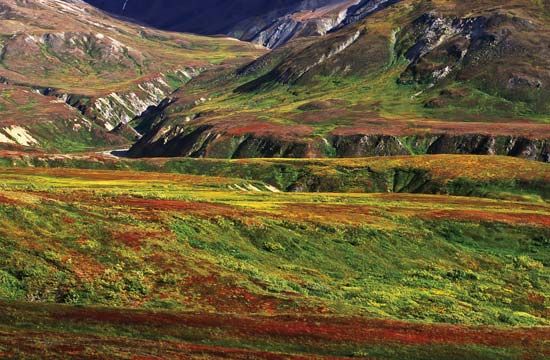
Regarding their natural habitat, gyrfalcons prefer nesting on cliff faces. While they are primarily associated with the tundra and seacoast environments where they hunt for prey such as hares, rodents, and various birds, they will occasionally utilize nests abandoned by ravens in trees.12
What is the gyrfalcon’s diet and hunting behavior?
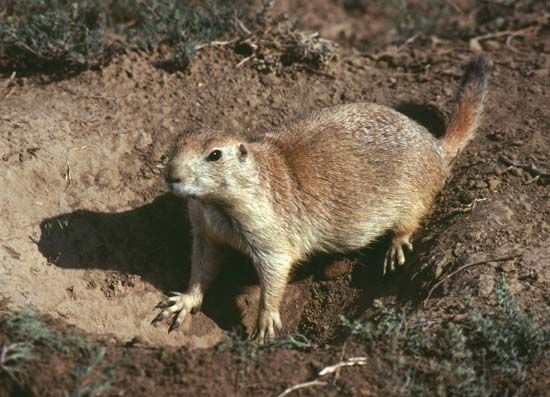
The gyrfalcon (Falco rusticolus) is a formidable predator that primarily hunts near the ground. Its diet consists of various tundra and seacoast species, including rodents, hares, and numerous types of birds. However, it shows a distinct preference for ptarmigan, Arctic hares, and Arctic ground squirrels.1
Regarding its hunting behavior, the gyrfalcon is unique among Arctic birds of prey because it does not regularly migrate. Instead, it remains in the Arctic throughout the winter, subsisting primarily on ptarmigan to survive the harsh conditions. While it is a highly capable hunter, it faces competition from the peregrine falcon, which is noted as its only higher-flying rival. Historically, the bird’s prowess was so highly regarded that it was known as the bird of kings during the Middle Ages, when it was both hunted for food and trained as a companion for falconry.13
What is the cultural significance of gyrfalcons in falconry?
In the context of falconry, the gyrfalcon holds a prestigious historical status. During the Middle Ages, it was famously known as the “bird of kings,” reflecting its high value and the exclusivity of its use by royalty, who trained the birds as hunting companions and also hunted them for food.1
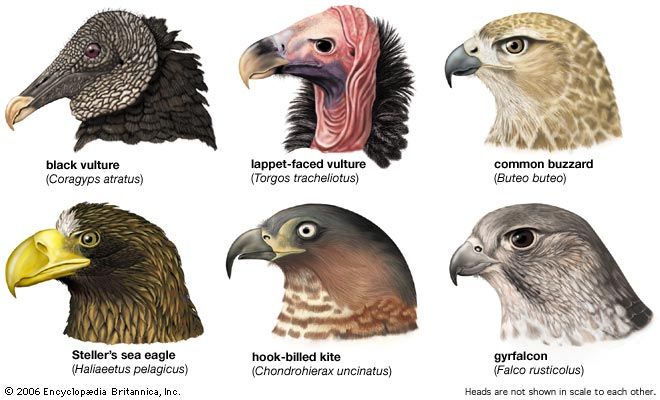
As a “longwing” falcon, the gyrfalcon is physically adapted for hunting other birds in flight over open terrain, such as moorlands or deserts, where a falconer can maintain a clear view of the pursuit. While they remain highly prized in the sport, their rarity and status have led to concerns regarding illegal capture and trade on the black market, where some birds are sold to falconers despite regulations governing the use of wild-caught versus captive-bred raptors. Today, the species is also recognized for its cultural symbolism, serving as the official mascot of the U.S. Air Force Academy.41
What are the physical characteristics and size of the gyrfalcon?
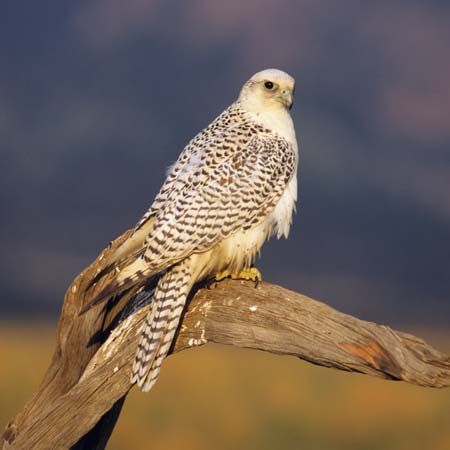
The gyrfalcon (Falco rusticolus) is the world’s largest falcon. Its physical characteristics and size are defined by the following features:
- Size and Weight: The species can reach a length of 60 cm (2 feet). There is significant sexual dimorphism in weight, with females being much larger than males; females typically weigh between 1,400 and 2,100 grams (3.1–4.6 pounds), which is nearly twice the weight of the males.1
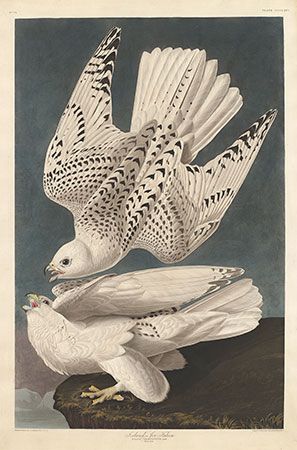
- Plumage: The coloration of the gyrfalcon is highly variable, ranging from pure white with black speckling to dark gray with distinct barring.1
- Physical Adaptations: A notable physical trait of the gyrfalcon is that its legs are fully feathered, an adaptation that helps it survive in its cold Arctic environment.1
As the largest of the falcon species, it is a powerful predator well-adapted to the harsh conditions of the circumpolar region.12
Sources
- Gyrfalcon — Encyclopædia Britannica
- Where Do Falcons Typically Live? — Encyclopædia Britannica
- Falconiform - Migration — Encyclopædia Britannica
- falconry - Types of birds used in falconry — Encyclopædia Britannica
- Polar ecosystem - Biota of the Arctic — Encyclopædia Britannica
Published on · 3 min read