Permian Basin
The Permian Basin, located in western Texas and southeastern New Mexico, has been a cornerstone of American energy production for nearly a century. While…
How has the Permian Basin’s importance in energy production changed over time?
The Permian Basin, located in western Texas and southeastern New Mexico, has been a cornerstone of American energy production for nearly a century. While extraction of petroleum and natural gas began in the region by the mid-1920s, the bulk of its production activity has occurred since the 1950s.1
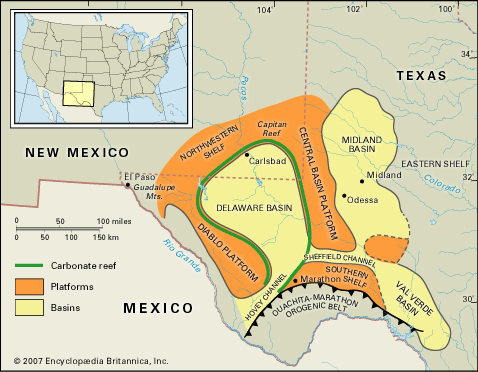
Throughout the 20th century, the basin played a vital role in the economic development of Texas, particularly for cities like Midland and Odessa. Its geological significance is profound, as more than half of the world’s petroleum derived from Permian-aged rocks has been recovered from this specific basin. The region’s complex structures—comprising the Midland Basin, the Delaware Basin, and the Central Basin Platform—created ideal reservoirs for these resources.1
Beyond hydrocarbons, the basin remains a critical source of other industrial materials, including potash and sulfur, with the area near Carlsbad providing approximately 85 percent of American potassium production.1
What is the Permian Basin, and where is it located in Texas?
The Permian Basin is a large, geologically significant sedimentary basin located in western Texas and southeastern New Mexico, U.S.1
It is composed of three distinct structural parts: the eastern Midland Basin, the Central Basin Platform, and the western Delaware Basin. The region is world-renowned for its rich deposits of petroleum, natural gas, and potassium. Its complex geological history, which includes the formation of ancient reef systems during the Permian Period, has made it one of the most extensively studied geologic regions on Earth. Notable features of the basin, such as the Capitan Limestone, are prominently exposed in Guadalupe Mountains National Park.1
How has the Permian Basin impacted the economy of Texas and the United States?
The Permian Basin has served as a vital engine for the economy of both Texas and the United States for nearly a century. By providing a massive supply of petroleum and natural gas, the region has been a cornerstone of American energy production, particularly since the 1950s.1
The basin’s economic impact is characterized by:
- Energy Dominance: More than half of the world’s petroleum derived from Permian-aged rocks has been recovered from this basin, making it one of the most significant geologic regions for global energy supply.1
- Regional Development: The industry has been central to the growth and prosperity of Texas cities such as Midland and Odessa, which became hubs for the oil and gas sector.1
- Industrial Resources: Beyond hydrocarbons, the basin is a major source of potash and sulfur. Notably, the area near Carlsbad provides approximately 85 percent of the total American production of potassium.1
How was the Permian Basin formed, and what geological features make it unique?
The Permian Basin’s formation began with Precambrian tectonic events 1.3 billion to 850 million years ago, followed by significant structural deformation during the Alleghenian, Ouachita, and Marathon orogenies. These events created three distinct structural components: the eastern Midland Basin, the central platform, and the western Delaware Basin.1
Unique Geological Features
The basin is defined by several unique characteristics:
- Reef Systems: During the Middle Permian, the Delaware Basin was rimmed by massive, reeflike carbonate buildups formed by sponges, algae, and microbial organisms. These reefs created the 600-meter-thick Capitan Limestone, famously exposed in Guadalupe Mountains National Park.1
- Evaporite Deposits: In the Late Permian, restricted marine access led to the formation of thick salt and gypsum sequences. These low-permeability evaporites are so stable they are used for long-term radioactive waste storage.1
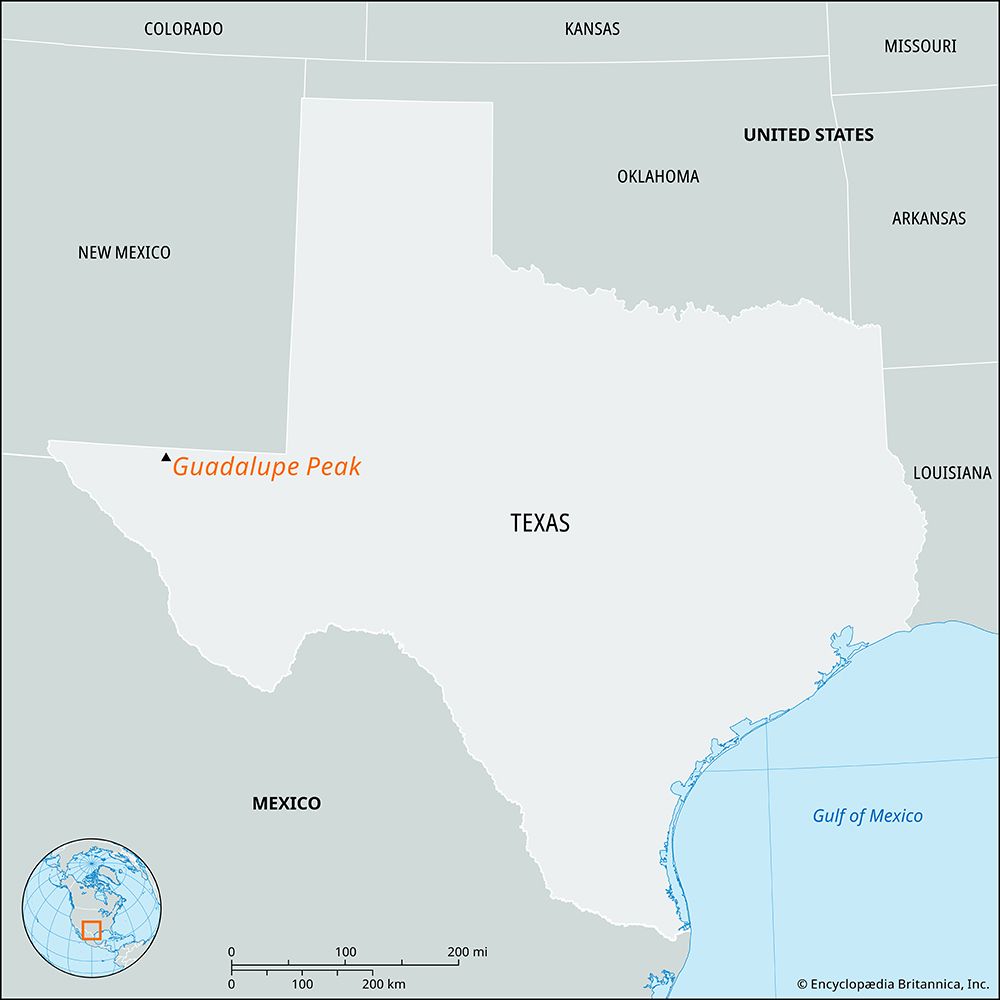
- Topography: The modern landscape reflects ancient underwater topography; resistant reefal limestones now form a dramatic rim around the former Delaware Basin, creating significant elevation changes like those seen at Guadalupe Peak.1
Sources
- Permian Basin — Encyclopædia Britannica
- Permian Period - Economic significance of Permian deposits — Encyclopædia Britannica
- Permian Period - Carbonate provinces — Encyclopædia Britannica
Published on · 3 min read