Predeal Pass
Predeal Pass is a significant mountain pass located in southeastern Romania. It serves as a vital transportation corridor, connecting the city of Brașov and…
What is Predeal Pass?
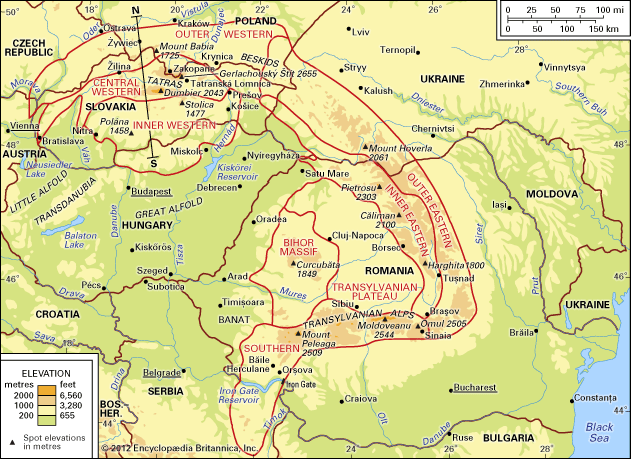
Predeal Pass is a significant mountain pass located in southeastern Romania. It serves as a vital transportation corridor, connecting the city of Brașov and the Bîrsei Depression in the north with the city of Ploiești and the Danube Plain in the south.1
Situated across the Transylvanian Alps, also known as the Southern Carpathians, the pass acts as a geographic divide between the Bucegi Massif to the west and the Baiu Mountains of the Eastern Carpathians to the east. Because of its strategic location, the pass hosts major road and rail lines that follow the Prahova River valley southward, passing through a series of eight settlements. It is distinct from the nearby Bran Pass, which provides an alternative route between Brașov and Câmpulung.1
What are the Southern Carpathians?
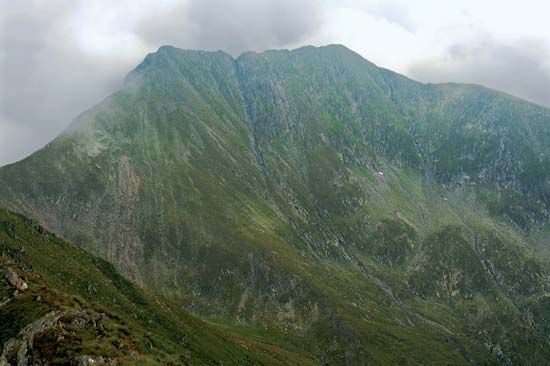
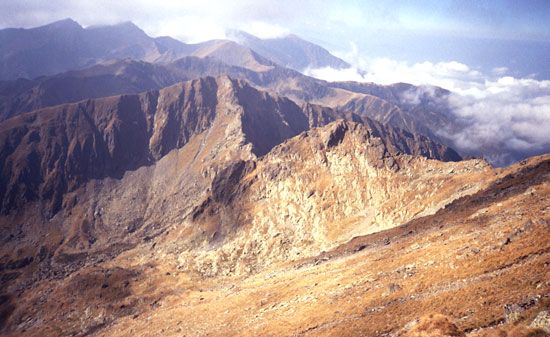
The Southern Carpathians, also known as the Transylvanian Alps, are a mountainous region in south-central Romania that forms a major subdivision of the Carpathian Mountains. Stretching approximately 155 miles (250 km), the range extends from the Prahova River valley in the east to the gap formed by the Timiș and Cerna rivers in the west.23
Key characteristics of the Southern Carpathians include:
- Geology and Relief: Unlike other segments of the Carpathians, this region is composed primarily of hard crystalline and volcanic rocks, giving it a massive, rugged, and continuous character. It features Alpine-type relief and contains the highest elevations in Romania, including Mount Moldoveanu (8,346 feet) and Mount Negoiu (8,317 feet) in the Făgăraș Mountains.23
- Subdivisions: Major massifs within the region include the Făgăraș, Bucegi, Parâng, and Retezat-Godeanu ranges.3
- Human Geography: The region contains important intermontane depressions, such as the Petroșani basin, where agriculture and industry are concentrated. While high passes like Bran facilitate communication, major transport routes primarily follow river valleys like the Olt and Jiu.23
How do mountain passes influence trade and travel?
Mountain passes serve as critical geographic conduits that transform rugged, impassable terrain into vital corridors for trade, travel, and communication. By bridging isolated valleys and regions, these natural routes have historically dictated the flow of commerce and the movement of people across otherwise formidable barriers like the Alps or the Southern Carpathians.
The influence of these passes is multifaceted:
- Economic Connectivity: Passes function as essential links for regional and international trade. For example, the Khyber Pass was a key segment of the Silk Road, facilitating the exchange of goods between the Indian subcontinent and Central Asia.
- Strategic Importance: Throughout history, passes have been focal points for military strategy and territorial control. The Khyber Pass served as a gateway for numerous invasions, from Alexander the Great to the Mughal Empire, and more recently acted as a vital supply route for NATO during the Afghanistan War.
- Infrastructure Evolution: Over time, simple mountain paths have evolved into sophisticated transportation networks featuring paved highways, bridges, and railways, such as the Khyber Pass Railway. Modern engineering, particularly the construction of tunnels, has further minimized the barrier effect of mountains, enabling year-round transit and fueling the growth of tourism.
What is the significance of the Prahova River valley?
The Prahova River valley is a significant geographic and economic corridor in Romania, serving several key functions:
- Transportation Gateway: The valley acts as a vital transit route, hosting major road and rail lines that connect the city of Ploiești and the Danube Plain to the south with Brașov and the Bârsei Depression to the north via the Predeal Pass.1
- Geographic Boundary: The valley serves as a natural demarcation point within the Carpathian Mountains. It marks the southern terminus of the Eastern Carpathians and the eastern boundary of the Southern Carpathians (also known as the Transylvanian Alps).174
- Economic and Industrial Hub: The region is central to Romania’s petroleum industry. The city of Ploiești, located between the Prahova and Teleajen river valleys, is a primary center for oil refining and petrochemical production. Additionally, the valley supports diverse economic activities, including agriculture, chemical manufacturing, and tourism, with historic sites such as Peleș Castle located in the town of Sinaia.28
Sources
- Predeal Pass — Encyclopædia Britannica
- Transylvanian Alps — Encyclopædia Britannica
- Carpathian Mountains - Physiography of the Carpathian Mountains — Encyclopædia Britannica
- Romania - Relief — Encyclopædia Britannica
- Khyber Pass — Encyclopædia Britannica
- Alps - Transportation — Encyclopædia Britannica
- Prahova — Encyclopædia Britannica
- Ploieşti — Encyclopædia Britannica
Published on · 3 min read