Prickly Pear
Prickly pear cacti, belonging to the genus Opuntia, play a significant role in their native ecosystems by providing essential resources for wildlife. These…
What role do prickly pear cacti play in their ecosystem, particularly for wildlife?
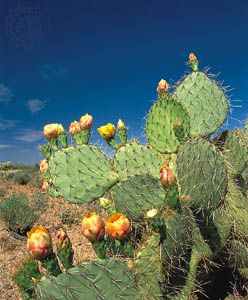
Prickly pear cacti, belonging to the genus Opuntia, play a significant role in their native ecosystems by providing essential resources for wildlife. These plants are well-adapted to arid environments, where their succulent stems and fruits serve as vital sources of hydration and nutrition for various animals.123
The plant’s structure is particularly beneficial to the ecosystem:
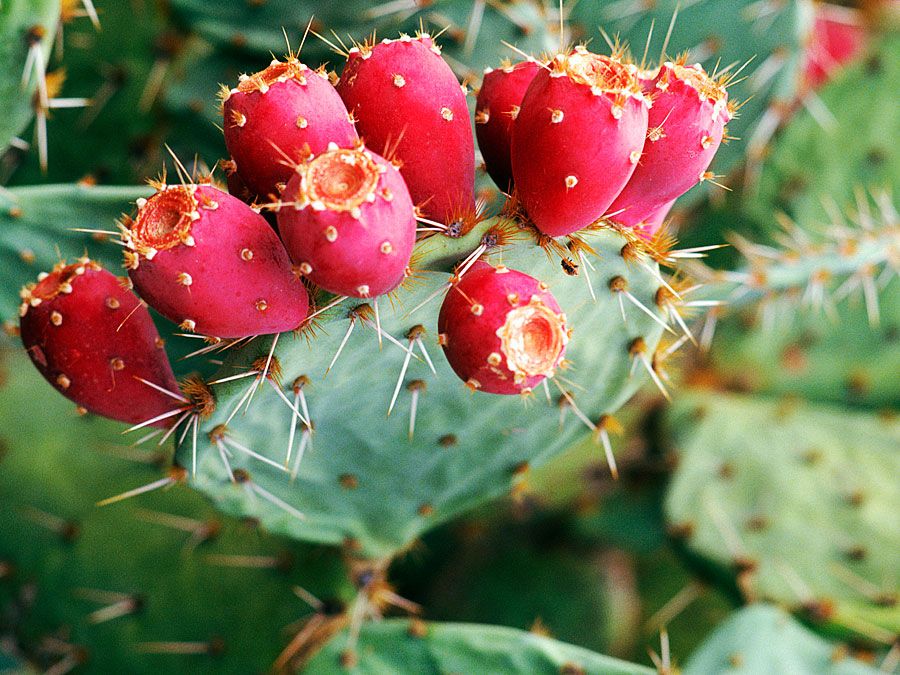
- Food Source: The edible fruits (often reddish berries) and the flattened, succulent stems—known as cladodes or pads—are consumed by a wide range of wildlife.123
- Pollination: The showy flowers, which bloom in colors like yellow, pink, and orange, attract insect pollinators. Many species feature stamens that move when touched, a specialized trait that helps increase the pollen load transferred by visiting insects.1
- Survival: Due to their high water content, these cacti act as a critical resource during periods of drought, supporting local fauna when other water sources may be scarce.2
How have prickly pear cacti been used in land reclamation and erosion control?
Sorry, the Britannica knowledge base does not contain information regarding the specific use of prickly pear cacti in land reclamation or erosion control. While the provided sources detail their roles as food, ornamentals, living fences, and emergency livestock fodder, they do not address their application in soil stabilization or land restoration projects.
What are the key characteristics that distinguish prickly pear cacti from other types of cacti?
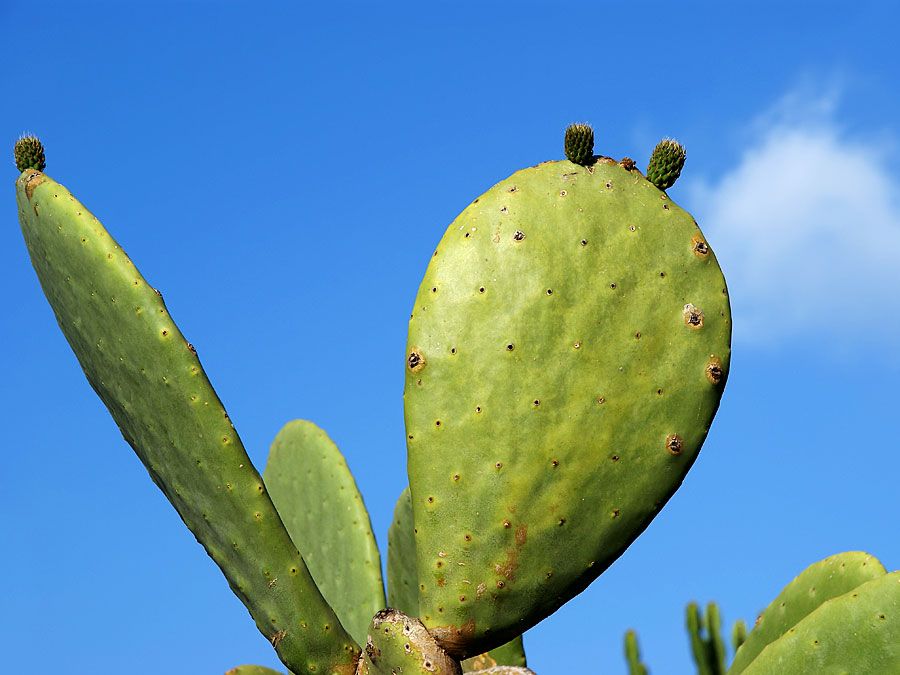
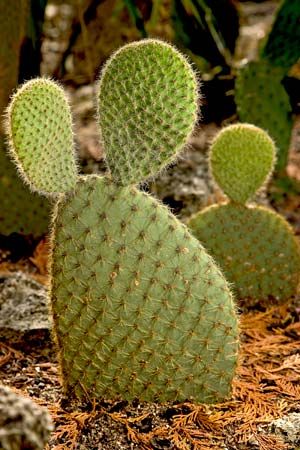
Prickly pear cacti, belonging to the genus Opuntia, are distinguished from other cacti by several unique morphological characteristics:
- Flat-Jointed Stems: Unlike the columnar or globular forms of many other cacti, Opuntia species are composed of flat, paddle-like cladodes (photosynthetic stem segments) that grow in a jointed, chain-like fashion.125
- Glochidia: A defining feature of prickly pears is the presence of glochidia—tiny, hair-like bristles found in the areoles. These bristles possess backward-facing barbs that make them notoriously difficult to remove from human skin.1
- Transient Leaves: While most cacti lack functional leaves, Opuntia species produce small, succulent, conical leaves on young stem joints. These leaves are temporary and typically fall off after a month or more of growth.5
- Sensitive Stamens: Many prickly pear flowers feature stamens that exhibit thigmonasty, meaning they move in response to touch. This specialized trait is believed to help the plant maximize the pollen load transferred to visiting insect pollinators1.
How do prickly pear cacti impact agricultural practices in areas where they grow abundantly?
Prickly pear cacti (Opuntia) significantly influence agricultural practices in both beneficial and detrimental ways.
Beneficial Agricultural Uses
- Food Crop: The Indian fig is widely cultivated in tropical and subtropical regions for its edible fruits and paddles, serving as an important food source for many populations.2
- Livestock Fodder: Due to their high water content, the stems of prickly pears—particularly spineless varieties—are utilized as essential emergency feed for livestock during periods of drought.24
- Living Fences: In parts of Central and South America, Opuntia species are planted to serve as living fences, providing a natural barrier for agricultural land.4
- Oil Production: The hard seeds of the plant are processed to produce oil.2
Challenges and Invasive Risks
When introduced outside their native ranges, some prickly pear species can become highly invasive. Without their natural parasites and competitors, they can spread rapidly and become agricultural pests. In regions like Australia and southern Africa, these infestations have required biological control measures, such as the introduction of moths of the genus Cactoblastis, to manage their population and protect land utility.2
Sources
- Opuntia — Encyclopædia Britannica
- prickly pear — Encyclopædia Britannica
- Caryophyllales - Cactaceae — Encyclopædia Britannica
- cactus — Encyclopædia Britannica
- Caryophyllales - Cactaceae — Encyclopædia Britannica
- prickly pear — Merriam-Webster
Published on · 3 min read